
Latin America's Environmental Crossroads
In the misty foothills of Colombia’s Sierra Nevada de Santa Marta, where rivers still run clear despite encroaching mining claims, community leader Rosa Elena Pérez tends the same plots her Afro-descendant ancestors defended for generations. Her story captures the fierce contradiction now defining Latin America: a region holding 40 percent of the planet’s biodiversity and 25 pe
In the misty foothills of Colombia’s Sierra Nevada de Santa Marta, where rivers still run clear despite encroaching mining claims, community leader Rosa Elena Pérez tends the same plots her Afro-descendant ancestors defended for generations. Her story captures the fierce contradiction now defining Latin America: a region holding 40 percent of the planet’s biodiversity and 25 percent of its forests yet bleeding environmental defenders at an unprecedented rate.
Latin America's Environmental Crossroads: Leaders Promise Protection Amid Crisis
Bogotá, Colombia — 12 May 2026 —
A Region at a CrossroadsColombia’s Bold Promise — Petro's environmental agenda and Escazú implementation
President Gustavo Petro’s “Paz con la Naturaleza” framework places Colombia at the forefront of regional environmental diplomacy. Bogotá hosted major summits in early 2026, including the Foro Económico Internacional in January where Petro proposed a hemispheric “pacto por la vida” and the March CELAC-Africa High-Level Forum that brought heads of state together to discuss shared biodiversity safeguards. Vice-President Francia Márquez declared that “the two regions together safeguard the planet’s greatest biodiversity,” underscoring the strategic alliance. Colombia ratified the Escazú Agreement through Law 2273 of 2022 and participated as a State Party at COP4 in the Bahamas in April 2026. The Environment Ministry has created protection mechanisms for defenders and strengthened 73 citizen oversight bodies. Petro’s administration has blocked new oil exploration and fracking contracts, advancing a fossil-fuel phase-out. COP30 in Belém, Brazil, in November 2025 marked a milestone for Latin American climate leadership. Critics rightly note persistent implementation gaps and impunity rates above 90 percent across the region, yet the institutional architecture now exists to translate promises into enforceable rights.

Brazil and the Amazon — Lula's COP30 legacy and the deforestation battle
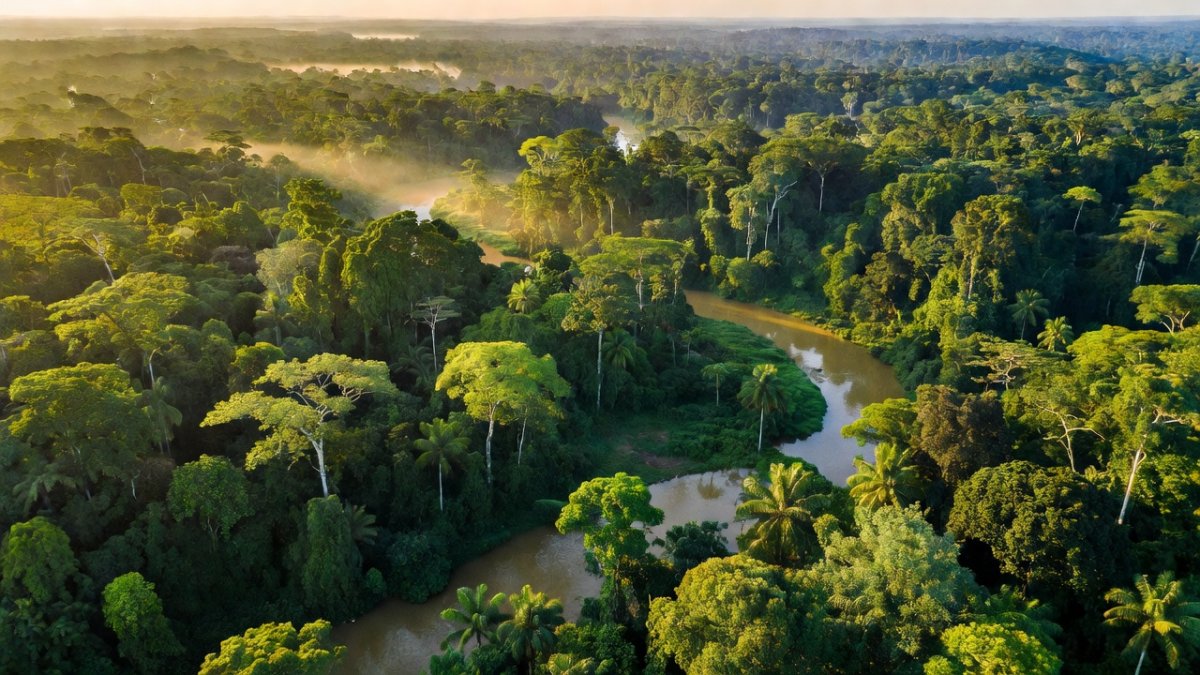
President Lula da Silva hosted COP30 in Belém, deep in the Amazon, in November 2025, transforming the city into a global climate stage. Under his government, IBAMA has sharply increased enforcement actions while expanding the Amazon Fund to protect the Pantanal and Cerrado biomes. Brazil committed to ending deforestation by 2030 and deployed more than 4,300 brigadistas supported by additional firefighting helicopters. Amazon deforestation rates declined significantly after Lula took office in 2023, reversing the surge recorded during the previous administration. These measures demonstrate that political will can bend the curve of destruction. Regional frameworks such as the Amazon Cooperation Treaty Organization and environmental provisions in the Mercosur-EU trade deal reinforce Brazil’s leadership. Yet the country still faces intense pressure to expand mining for lithium and copper demanded by the global energy transition. Lula’s approach combines enforcement with international diplomacy, offering a model other nations are studying. The 2025 UN International Year of Glaciers’ Preservation further highlighted Latin American leadership on water security tied to Andean ice fields.
The Deadly Reality for Defenders — Global Witness data and impunity
The numbers reveal a brutal reality. Global Witness recorded roughly 120 killings or disappearances of environmental defenders in Latin America in 2024 alone, representing 82 percent of the worldwide total of 146. From 2012 to 2024, more than 2,200 defenders lost their lives globally, the overwhelming majority in our region. Colombia’s 48 cases in 2024, Guatemala’s approximately 20 and Mexico’s 18 killings plus one disappearance illustrate the concentrated danger. Mining, agribusiness, logging and infrastructure projects remain the primary drivers, often backed by powerful economic interests. Impunity rates exceed 90 percent across the region, allowing perpetrators to act with near-total certainty of escaping justice. Colombia’s creation of 73 strengthened citizen oversight bodies and new protection mechanisms under the Escazú Agreement represent concrete steps, yet defenders continue to face threats daily. The Escazú framework guarantees access to information, public participation and justice, but implementation remains uneven. Without sustained funding and political backing for these mechanisms, the killings will persist. The human cost is measured not only in lives lost but in silenced communities unable to defend their territories.
The Extraction Paradox — Green transition vs resource extraction pressures
Latin America holds solutions to the climate crisis yet remains trapped as the world’s resource periphery. Our nations produce some of the cleanest electricity grids on the planet, powered by hydro, Chilean solar and Brazilian wind. At the same time, surging global demand for lithium, copper and critical minerals drives new extractive frontiers that threaten the very ecosystems we are pledged to protect. The “resource periphery” dynamic means our countries supply raw materials for the green transition while bearing the environmental and social costs. Indigenous and Afro-descendant communities stand at the intersection of protection and extraction, defending territories that are simultaneously biodiversity hotspots and mining targets. CELAC cooperation and the Amazon Cooperation Treaty Organization seek to balance these pressures through coordinated policy, yet economic incentives often favor extraction. The paradox is clear: we cannot protect the Amazon and the Andes while expanding open-pit mines that destroy watersheds and displace communities. A just transition requires that the benefits of the green economy reach local populations rather than repeating historical patterns of plunder.
The Bottom Line — What Comes Next
The path forward demands that Latin American governments convert summit declarations into binding national action. Colombia’s Escazú implementation, Brazil’s deforestation reductions and regional CELAC coordination provide foundations, yet impunity and extractive pressures threaten progress. Funding for defender protection, independent monitoring of mining projects and genuine consultation with Indigenous and Afro-descendant communities must become non-negotiable. The 2026 CELAC-Africa Forum and upcoming regional meetings offer opportunities to lock in commitments. Without decisive enforcement, the 2,200 cumulative killings since 2012 will continue climbing. Latin America possesses the biodiversity, renewable energy potential and political momentum to lead globally, but only if governments prioritize life over extraction. The defenders on the front lines have already paid the highest price; the rest of the world must now match their courage with concrete support. By Elena Vasquez, Staff Writer
This article was produced with AI-assisted research and editorial support. Reporting is based on sources cited in the article.
What's Your Reaction?
 Like
0
Like
0
 Dislike
0
Dislike
0
 Love
0
Love
0
 Funny
0
Funny
0
 Wow
0
Wow
0
 Sad
0
Sad
0
 Angry
0
Angry
0

Latin America Correspondent at Global1.News. Based in Mexico City, covering politics, economics, energy, and culture across the region. Brings an on-the-ground perspective to stories spanning from the Rio Grande to Patagonia.













Comments (0)