
The clearest sign Father Time is closing in on Djokovic?
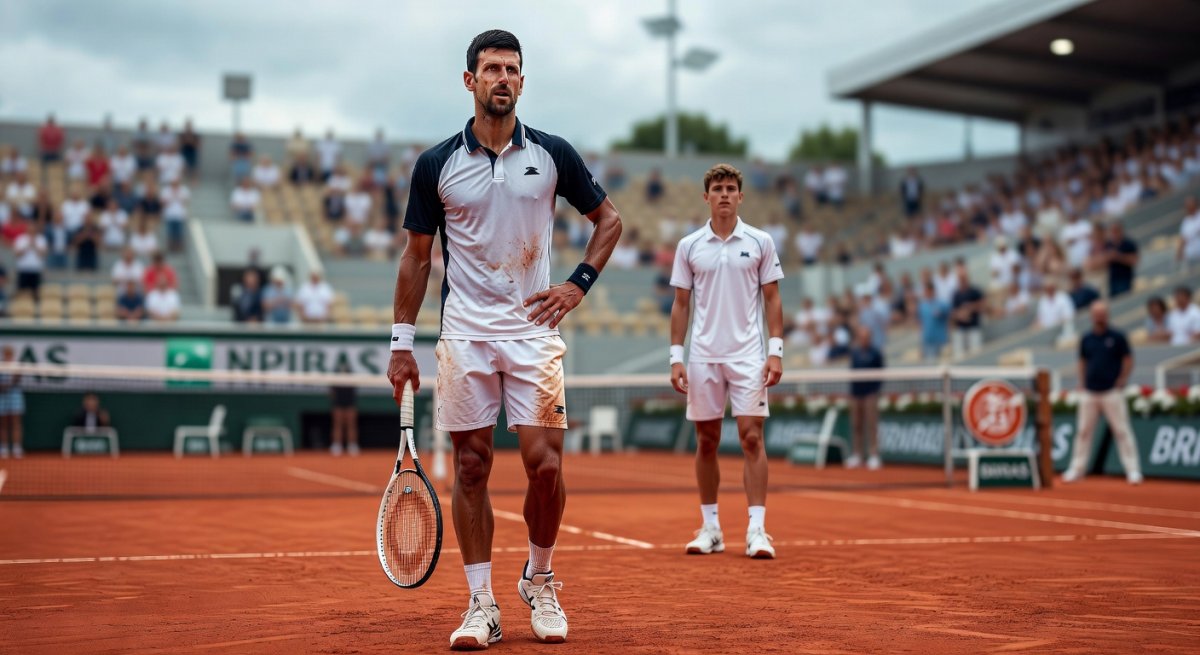
The French Open has delivered its clearest warning yet that even the most durable champion in men’s tennis is running out of time. Novak Djokovic, the last remaining Grand Slam winner in the draw, survived a five-set, nearly five-hour battle against 18-year-old Joao Fonseca that tested every layer of his experience and resilience. What unfolded on Court Philippe-Chatrier was more than a classic; it was a match that exposed how much physical and mental capital the 24-time major champion must now spend simply to keep advancing.
The contest carried all the ingredients of a generational clash. Djokovic brought the tactical mastery and return game that have defined his era, while Fonseca arrived with fearless ball-striking and the athletic freedom of youth. Five sets later, the scoreboard told only part of the story. The match stretched close to five hours, featuring momentum swings that left both players visibly drained. For Djokovic, reaching the next round came at a cost that younger rivals will look to exploit.
A lone survivor under the lights
Djokovic entered the tournament as the sole active Grand Slam champion on the men’s side still standing after earlier rounds eliminated every other major winner. That distinction placed extra weight on his every match. When Fonseca pushed him to the limit, the narrative shifted from routine progression to a test of whether experience alone could offset the physical demands of a best-of-five encounter on clay.
The absence of other major champions in the draw magnified the stakes. Djokovic could no longer rely on the psychological buffer of knowing fellow veterans were also navigating the bracket. Every point against Fonseca carried the added pressure of protecting the last link to recent history. The five-set outcome confirmed both his competitive fire and the narrowing margin for error that now accompanies it.
The physical toll of extended warfare
Matches that stretch toward five hours on the slow red clay of Roland Garros extract a cumulative price. Djokovic has long prided himself on recovery and preparation, yet the visible exertion required to close out Fonseca suggested that even elite conditioning has limits. The Brazilian’s willingness to trade heavy groundstrokes from the baseline forced Djokovic into longer rallies and more defensive slides than he typically prefers at this stage.
Clay rewards patience and consistency, qualities Djokovic has mastered across three French Open titles. Against a teenager with nothing to lose, however, those same qualities demanded sustained intensity for hour after hour. The match statistics reflected repeated service breaks and extended games that tested concentration as much as legs. Observers noted how Djokovic occasionally shortened points later in the fifth set, a subtle adaptation that spoke to the need to conserve energy for whatever lies ahead.
Fonseca and the new generation’s arrival
Joao Fonseca’s performance illustrated why the sport continues its rapid turnover. The teenager’s ability to sustain aggression across five sets against the most accomplished returner in the game marked a clear statement of intent. While Djokovic ultimately prevailed, Fonseca demonstrated the power, movement, and composure that modern coaching and athletic development can produce at remarkably young ages.
Such encounters accelerate the learning curve for rising players. Fonseca left the court with invaluable experience and the knowledge that he can push a multiple-time champion to the edge on one of tennis’s biggest stages. For the tour at large, these battles compress timelines: veterans must adapt faster or risk being overtaken by athletes who have studied their patterns since childhood.
Strategic adjustments and bracket realities
Djokovic’s path forward now hinges on how quickly he recovers from the physical demands of this match. The French Open rewards players who can manage their effort across two weeks, yet the Fonseca encounter consumed reserves that would normally be banked for later rounds. Subsequent opponents will study footage for signs of fatigue in movement or decision-making during long rallies.
The draw offers no easy passages on clay. Djokovic’s experience remains a formidable weapon, particularly in reading opponents and constructing points, yet the match against Fonseca showed that tactical superiority must now be paired with greater physical economy. Any further five-set tests would compound the challenge of maintaining peak performance through the later stages.
Looking ahead at Roland Garros
The remainder of Djokovic’s campaign will serve as a live laboratory for how far longevity can stretch in an increasingly physical sport. Each subsequent match will reveal whether the five-hour investment against Fonseca leaves lasting effects or whether his renowned preparation can reset the clock once more. Fonseca, meanwhile, exits with momentum that could reshape expectations for the next wave of contenders.
The French Open has always tested the boundary between youth and experience. This year’s early clash simply made that test more explicit, confirming that even the most decorated champion must now fight for every additional round with diminishing room for recovery.
By Dante Williams, Staff Writer
This article was produced with AI-assisted research and editorial support. Reporting is based on sources cited in the article.
What's Your Reaction?
 Like
0
Like
0
 Dislike
0
Dislike
0
 Love
0
Love
0
 Funny
0
Funny
0
 Wow
0
Wow
0
 Sad
0
Sad
0
 Angry
0
Angry
0

Dante Williams
Breaking News and Investigations Correspondent at Global1.News. Based in London, covering global breaking news, security, and investigative stories. Known for digging deeper and connecting the dots across continents.













Comments (0)