
Why beating Djokovic is coming of age moment for Fonseca
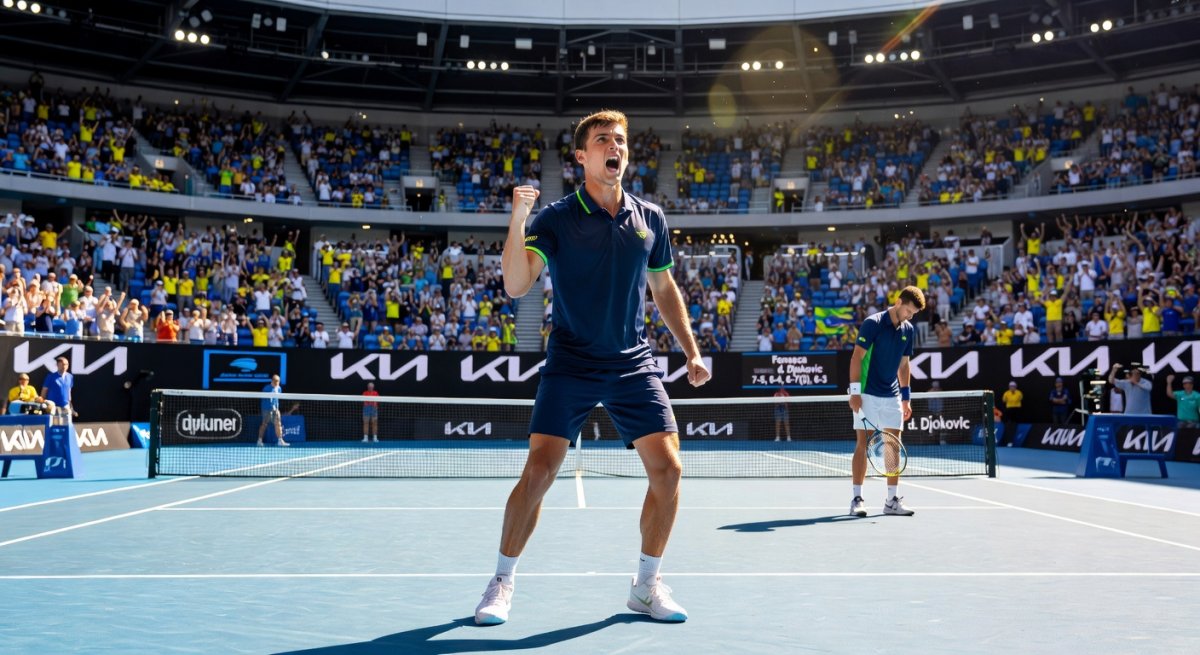
In the electrifying atmosphere of the 2025 Australian Open, 18-year-old Joao Fonseca delivered a performance that instantly elevated his status from promising prospect to established force. By reaching the fourth round on his Grand Slam debut, the Brazilian became the first man from his country to achieve that feat since Thomaz Bellucci in 2011. His run included a stunning victory over ninth seed Andrey Rublev, a result that drew immediate respect from none other than Novak Djokovic. Those accomplishments signal more than a strong start to a career; they mark a genuine coming-of-age moment for a player whose talent has long been discussed in theoretical terms.
This breakthrough carries weight because it arrives at a time when tennis is hungry for new faces capable of challenging established hierarchies. Fonseca’s success in Melbourne demonstrates that raw ability, when paired with composure under pressure, can translate into results against seasoned professionals. The moment resonates far beyond one tournament, offering a glimpse of how emerging talents reshape the sport’s narrative.
A Milestone Rooted in Brazilian Tennis History
Fonseca’s fourth-round appearance revives memories of a lean period for Brazilian men’s tennis on the biggest stages. Bellucci’s run in 2011 stood as an isolated high point, with few compatriots matching that level of consistency at majors in the years since. The gap underscores the challenges of developing elite players in a country where football dominates sporting culture and resources for individual sports remain limited. Yet Fonseca’s arrival changes that conversation. His path to the second week at Melbourne Park reflects steady progress through junior ranks and early professional events, culminating in a debut that exceeded expectations. Reaching this stage against a deep field validates years of preparation and positions him as the standard-bearer for the next wave of South American talent. The achievement also highlights how breakthroughs at this level can inspire infrastructure investment and youth participation back home.Djokovic’s Seal of Approval and Its Lasting Impact
After witnessing Fonseca dismantle Rublev, Novak Djokovic offered a concise but telling assessment: “He’s got the goods.” Coming from a player with 24 major titles and unmatched experience against young challengers, the remark carries significant weight. Djokovic has seen countless prospects arrive with hype only to fade; his willingness to acknowledge Fonseca’s tools suggests the Brazilian possesses qualities that endure beyond a single match. Such endorsements accelerate a player’s trajectory. They attract attention from coaches, sponsors, and fans while providing Fonseca himself with external confirmation that his game belongs at the highest level. The comment also frames the Rublev victory not as an upset but as evidence of a complete skill set—power, movement, and tactical awareness—that can trouble top competition consistently.The Anatomy of an 18-Year-Old’s Grand Slam Debut
Fonseca’s run through the early rounds showcased maturity rare for someone still navigating the transition from junior to senior tennis. Facing Rublev, a proven hard-court performer with multiple titles, required more than physical ability; it demanded mental resilience to handle shifting momentum and high-stakes points. The Brazilian executed his game plan with clarity, converting opportunities while limiting unforced errors against an opponent known for aggressive baseline play. On a Grand Slam debut, the pressure of expectation can overwhelm even experienced players. Fonseca’s ability to navigate that environment without visible nerves indicates strong preparation and self-belief. Each match added layers to his profile: improved serve placement, willingness to take the ball early, and composure in tiebreaks. These elements combined to produce results that exceeded statistical projections for a player of his age and ranking.Why This Moment Defines a Career Trajectory
Beating established stars like Rublev and earning praise from Djokovic transforms Fonseca from a name on the rise into a player opponents must study. The psychological shift is profound. Future matches will no longer carry the same element of surprise; instead, rivals will prepare specifically for his patterns and strengths. This adjustment period tests whether Fonseca can maintain his level when the element of novelty disappears. The Australian Open performance also sets measurable benchmarks. Reaching the second week provides a platform for deeper runs at subsequent majors and a higher seeding trajectory on the ATP Tour. More importantly, it establishes a reference point against which future progress will be judged. Success at this age creates momentum that can compound over multiple seasons if managed correctly.Looking Ahead: Building on the Melbourne Momentum
Fonseca’s next steps will determine whether the 2025 Australian Open represents a peak or the foundation of sustained excellence. The immediate schedule offers opportunities to test his form on different surfaces and against varied styles. Maintaining physical conditioning while refining tactical variety will be essential as the tour moves into the European swing. Coaching teams will likely emphasize recovery protocols and mental preparation to handle the increased attention that follows such a breakthrough. For Brazilian tennis, the focus shifts to supporting his development through better domestic facilities and international exposure. Fonseca’s story now serves as both inspiration and blueprint for younger players aspiring to follow the same route. The sport benefits when young athletes convert potential into results at the highest level. Fonseca’s debut has already injected fresh energy into discussions about the next generation. How he navigates the expectations that accompany this early success will shape not only his career but also the broader narrative of emerging talent challenging tennis’s established order.By Dante Williams, Staff Writer
This article was produced with AI-assisted research and editorial support. Reporting is based on sources cited in the article.
What's Your Reaction?
 Like
0
Like
0
 Dislike
0
Dislike
0
 Love
0
Love
0
 Funny
0
Funny
0
 Wow
0
Wow
0
 Sad
0
Sad
0
 Angry
0
Angry
0

Dante Williams
Breaking News and Investigations Correspondent at Global1.News. Based in London, covering global breaking news, security, and investigative stories. Known for digging deeper and connecting the dots across continents.















Comments (0)