
Bonkers manager merry-go-round! Top league now has no plan
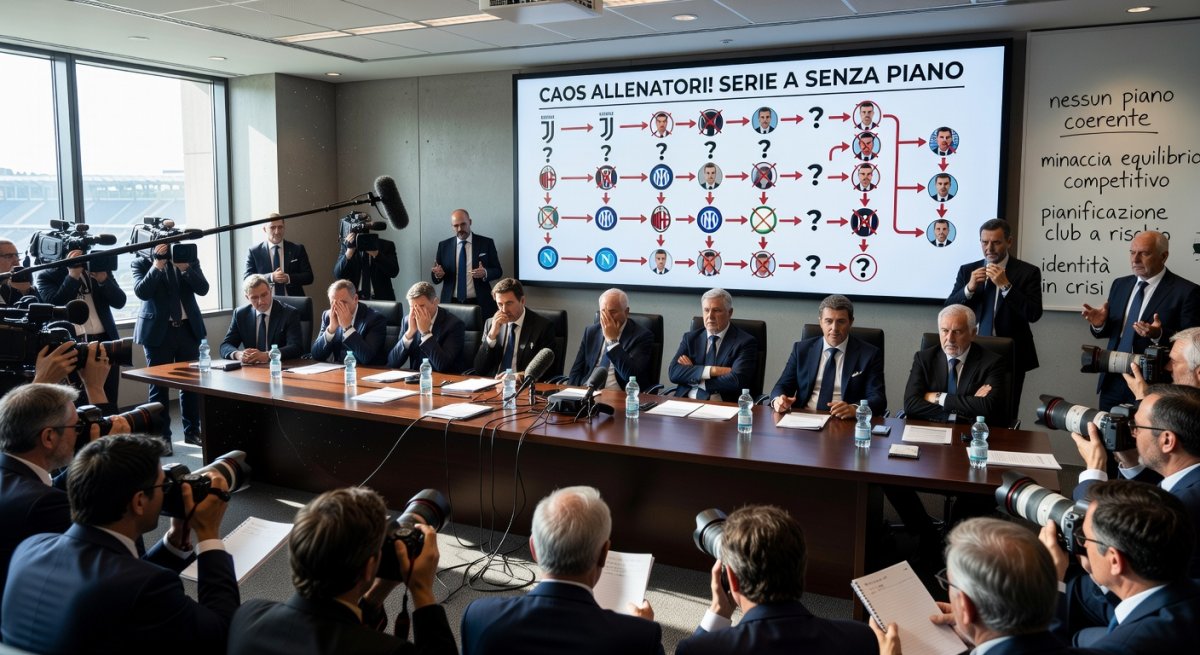
The managerial chaos engulfing Serie A has left Italy’s premier football competition without a coherent roadmap at a critical juncture in the season. What began as isolated dismissals has spiraled into a league-wide reshuffle that threatens competitive balance, club planning and the very identity of one of Europe’s historic top flights.
Recent days have seen Maurizio Sarri, until recently in charge at a leading club, removed from his post amid a broader pattern of rapid turnover. The result is a situation the source material bluntly labels a “bonkers manager merry-go-round,” leaving the league appearing to operate without a clear plan for stability or long-term direction.
The Immediate Trigger and Its Ripple Effects
Serie A entered this period already under pressure from inconsistent results across several clubs. The abrupt exit of Sarri accelerated a chain reaction in which boards sought quick fixes rather than measured adjustments. In a league where points margins between mid-table and European qualification spots are often narrow, each change alters squad dynamics, training methods and tactical identity overnight. Supporters, accustomed to seeing familiar faces in the dugout for entire campaigns, now face weekly speculation about the next departure. This volatility does not merely affect one or two teams; it distorts the overall narrative of the season and complicates forecasting for broadcasters and sponsors who rely on predictable storylines.Why Managerial Stability Matters in Modern Football
Coaching continuity has long been a hallmark of successful Serie A sides. Clubs that maintained the same manager across multiple seasons historically built cohesive defensive structures and developed young players within a consistent system. The current merry-go-round reverses that advantage. New managers require time to implement their philosophies, yet the compressed calendar leaves little margin for adaptation. Training-ground chemistry suffers, and players must repeatedly adjust to different expectations regarding pressing triggers, set-piece routines and even basic positional play. Over a 38-match campaign, these repeated resets accumulate into measurable drops in performance. Data from previous seasons shows that teams changing managers mid-campaign rarely recover the points-per-game average they posted under their predecessors, a pattern now at risk of repeating across multiple clubs simultaneously.Background: Serie A’s Evolving Landscape
Italian top-flight football has experienced cycles of upheaval before, most notably during the post-Calciopoli reconstruction and the financial tightening that followed the 2008 global downturn. In those eras, however, change was driven by structural or regulatory forces rather than a compressed sequence of sackings. The present episode stands out because it lacks an obvious external catalyst such as a financial crisis or major corruption scandal. Instead, it appears rooted in heightened expectations from ownership groups seeking immediate returns on investment. This shift mirrors trends across Europe, yet Serie A’s traditional emphasis on tactical discipline and collective organisation makes it particularly vulnerable to constant disruption. When every club attempts to copy the same short-term model, the league loses the distinctive identity that once set it apart from faster-paced leagues elsewhere on the continent.Competitive and Commercial Implications
A league without a discernible plan faces tangible risks. On the pitch, the absence of settled squads reduces the likelihood of sustained title challenges or deep European runs, diminishing Italy’s coefficient in UEFA competitions. Off the pitch, sponsors and television partners prefer stable narratives that allow long-term marketing campaigns. When headlines focus on managerial upheaval rather than on-pitch achievements, attention drifts toward more settled leagues. Younger supporters, already courted by social-media-friendly competitions, may find fewer reasons to invest emotionally in clubs whose identity changes every few weeks. For mid-sized clubs operating on tight budgets, the cost of severance packages and recruitment of replacements further strains resources that could otherwise support academy development or infrastructure.Looking Ahead: Paths Toward Equilibrium
Clubs and the league itself must now decide whether to accept continued volatility or impose greater discipline on hiring practices. Some observers argue that stricter contractual clauses or collective agreements on notice periods could slow the cycle, while others contend that owners will continue to prioritise short-term results. The next round of fixtures will test whether interim appointments can stabilise results or whether further changes are inevitable. Whatever path is chosen, the current situation has already altered the season’s trajectory and reminded everyone connected to Serie A that sustained success still depends on coherent, long-term planning rather than perpetual rotation in the technical area.By Dante Williams, Staff Writer
This article was produced with AI-assisted research and editorial support. Reporting is based on sources cited in the article.
What's Your Reaction?
 Like
0
Like
0
 Dislike
0
Dislike
0
 Love
0
Love
0
 Funny
0
Funny
0
 Wow
0
Wow
0
 Sad
0
Sad
0
 Angry
0
Angry
0

Dante Williams
Breaking News and Investigations Correspondent at Global1.News. Based in London, covering global breaking news, security, and investigative stories. Known for digging deeper and connecting the dots across continents.













Comments (0)