
Thailand Ends 60-Day Visa-Free Stay, Reverts to 30 Days
Thailand's government has reversed its 60-day visa-free entry programme for visitors from 93 countries, returning instead to the previous 30-day exemption structure. Tourism and Sports Minister Surasak Phancharoenworakul announced the cabinet decision on May 19, 2026, following the weekly meeting in Bangkok. The move responds to documented cases of visa misuse, illegal business
The Cabinet Decision and Announcement
Tourism and Sports Minister Surasak Phancharoenworakul delivered the announcement immediately after the May 19, 2026, cabinet session at Government House in Bangkok. The decision ends the 60-day visa-free entry introduced in July 2024 for 93 countries and restores immigration rules that existed before that date. Surasak stated that the revision aims to prevent visa misuse, criminal activities, scams, and illegal labour.
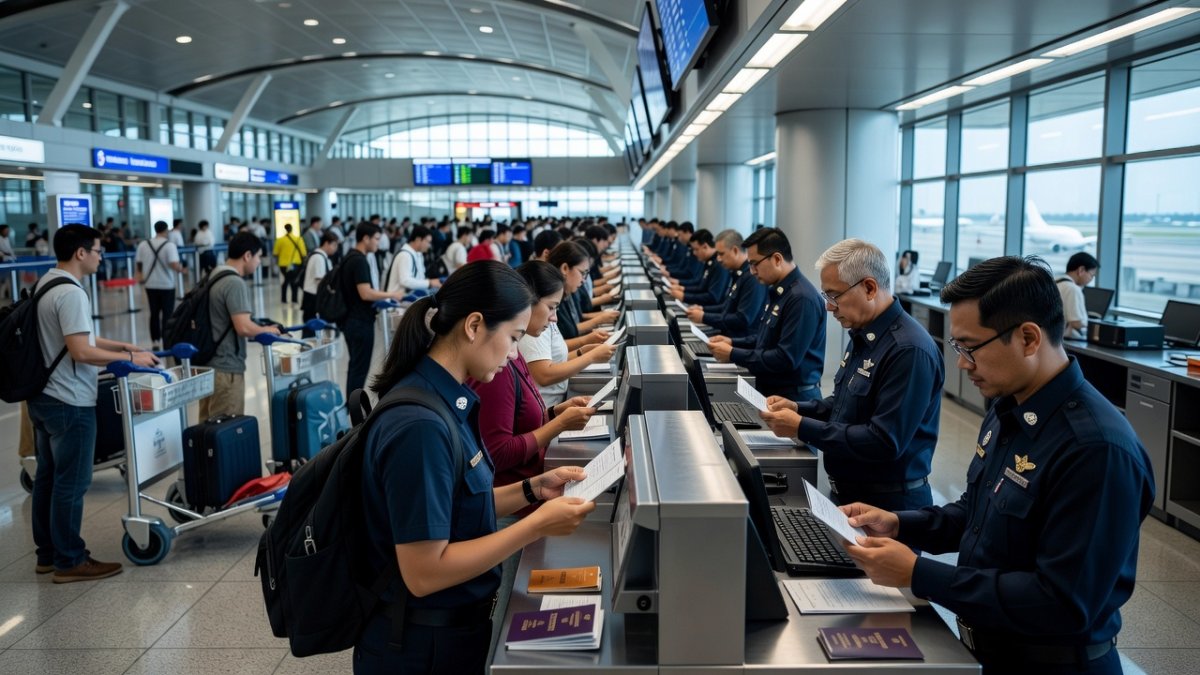
Consular Affairs Director-General Mungkorn Pratoomkaew of the Ministry of Foreign Affairs explained that multiple overlapping exemption schemes had created confusion among travellers at Suvarnabhumi and Don Mueang airports. He cited reciprocity concerns and security risks as additional factors behind the cabinet vote. Foreign Minister Sihasak Phuangketkaew added that 60 days exceeds typical tourist needs and that future reviews will focus on visitor behaviour rather than nationality.
Visitors already in Thailand before the Royal Gazette publication will retain their existing 60-day allowances. The Immigration Bureau will issue clear instructions to officers at all entry points once the publication date is confirmed.
Updated Visa Exemptions and Entry Limits
Under the new framework, 54 countries receive 30-day visa exemptions, down from the previous 57. China, the United States, most European nations, Japan, Russia, and Israel remain on the 30-day list. Seychelles, Maldives, and Mauritius receive 15-day exemptions instead.
Visa-on-arrival privileges shrink from 31 countries to four: Azerbaijan, Belarus, Serbia, and India. India moves from visa-free exemption to visa-on-arrival status. Travellers face a limit of two visa-exempt entries per calendar year, with a third entry denied unless the visitor holds a passport from Malaysia, Brunei, Indonesia, or Singapore.
These limits directly affect short-haul travellers from ASEAN neighbours who previously combined multiple short visits. Tourism operators in Phuket, Samui, and Krabi have begun preparing 30-day cultural itineraries that include temple visits and beach stays to fit the revised window.
Official Explanations from Thai Ministers
Foreign Minister Sihasak Phuangketkaew emphasised that the 60-day period proved too long for standard tourist travel. He noted that the policy review examined actual visitor conduct rather than country of origin. Ministry of Foreign Affairs staff will monitor compliance through existing reporting channels at provincial immigration offices.
Director-General Mungkorn Pratoomkaew highlighted how overlapping exemption categories created administrative confusion at border checkpoints. He pointed to cases where travellers misunderstood their permitted stay length, leading to overstay fines and enforcement actions by the Royal Thai Police.
Tourism and Sports Minister Surasak Phancharoenworakul linked the reversal to the need for clearer rules that protect both tourists and local communities. He stated that the cabinet sought to maintain Thailand's appeal while closing loopholes that allowed extended stays without proper business or long-term visas.
Addressing Security Risks and Visa Misuse
Officials documented a rise in foreigners establishing roots in Thailand to operate businesses through Thai nominees, particularly in Phuket and Pattaya. These arrangements often bypassed foreign business ownership restrictions and created unfair competition for local operators in the hotel sector.
The Royal Thai Police reported increased incidents of criminal activity, scams, and illegal labour tied to extended visa exemptions. Surasak Phancharoenworakul cited these patterns as key reasons for the cabinet's May 19 decision. Enforcement actions have already targeted several establishments in Pattaya's tourist zones.
Ministry of Foreign Affairs representatives stressed that the two-entry annual limit will reduce opportunities for repeated short-term entries that masked longer-term unauthorised activities. Genuine tourists visiting Ayutthaya temples or Krabi beaches can still complete their trips within the 30-day window.
Tourism Performance and Future Projections
Thailand recorded 12.9 million foreign arrivals between January and May 2026, representing a 3.3 percent decline compared with the same period in 2025. The full-year 2025 total reached 33 million arrivals, down 7 percent from 2024 figures. The National Economic and Social Development Council forecasts 32 million arrivals for 2026.
Data from the Tourism Authority of Thailand shows that approximately 90 percent of visitors already stay 30 days or fewer, while only 10 percent used the full 60-day allowance. This distribution suggests the policy change will affect a relatively small segment of arrivals.
Some short-haul tourism from ASEAN markets may shift toward Malaysia and Vietnam as travellers adjust to the new entry limits. Tourism Council of Thailand leaders expect continued dialogue within ASEAN frameworks to address cross-border travel patterns.
Voices from Foreign Residents and Industry Leaders
Long-term foreign residents in Bangkok's Sukhumvit district expressed concern over impacts on family visits and short-term business travel. Several residents noted that repeated entries for regional ASEAN meetings will require more careful planning under the two-entry annual cap.
Ratchaporn Poolsawadee, Vice-President of the Tourism Council of Thailand, welcomed the crackdown on misuse while urging clear guidance for genuine investors. She called for a one-stop service to streamline legal business registration and long-stay visa applications to prevent unfair competition from tax-avoiding foreign operations.
Some expats based in Chiang Mai's Nimmanhaemin area indicated they will apply for the Destination Thailand Visa, a five-year multiple-entry option allowing up to 180 days per entry. Applicants must provide proof of income and submit documents through Thai embassies abroad.
What to Watch For
The exact publication date in the Royal Gazette will determine when the new rules activate. Tourism operators in Phuket, Samui, and Krabi are preparing updated 30-day itineraries that highlight cultural sites and shorter beach stays to match the revised exemption periods.
Further ASEAN-level discussions are expected as neighbouring countries assess shifts in regional travel flows. The Ministry of Foreign Affairs will issue additional guidance on the Destination Thailand Visa to support remote workers and long-term visitors who require stays beyond 30 days.
Thailand's tourism sector continues to balance recovery goals with regulatory clarity. The cabinet's decision reflects ongoing efforts to maintain the Kingdom's reputation as a welcoming destination while protecting communities from exploitative practices.
By Ann Srisawat, Staff WriterThis article was produced with AI-assisted research and editorial support. Reporting is based on sources cited in the article.
What's Your Reaction?
 Like
0
Like
0
 Dislike
0
Dislike
0
 Love
0
Love
0
 Funny
0
Funny
0
 Wow
0
Wow
0
 Sad
0
Sad
0
 Angry
0
Angry
0

Southeast Asia Correspondent at Global1.News. Based in Bangkok, covering Thai and Southeast Asian politics, economy, technology, and culture. Deep regional perspective on one of the world's most dynamic regions.















Comments (0)