
De Beers Halts Production at South Africa's Biggest Diamond Mine for Two Years
De Beers is suspending production at South Africa’s Venetia diamond mine for two years due to falling prices, reduced Chinese demand, and competition from lab-grown gems. The mine produces over 40% of SA diamonds and employs 4,000+ workers. The decision reflects Anglo American’s shift toward copper and raises serious concerns about jobs in a sector vital to national GDP. Historical links to Cecil Rhodes’ colonial exploitation add depth to community anxiety. Unions warn of wider economic impac...
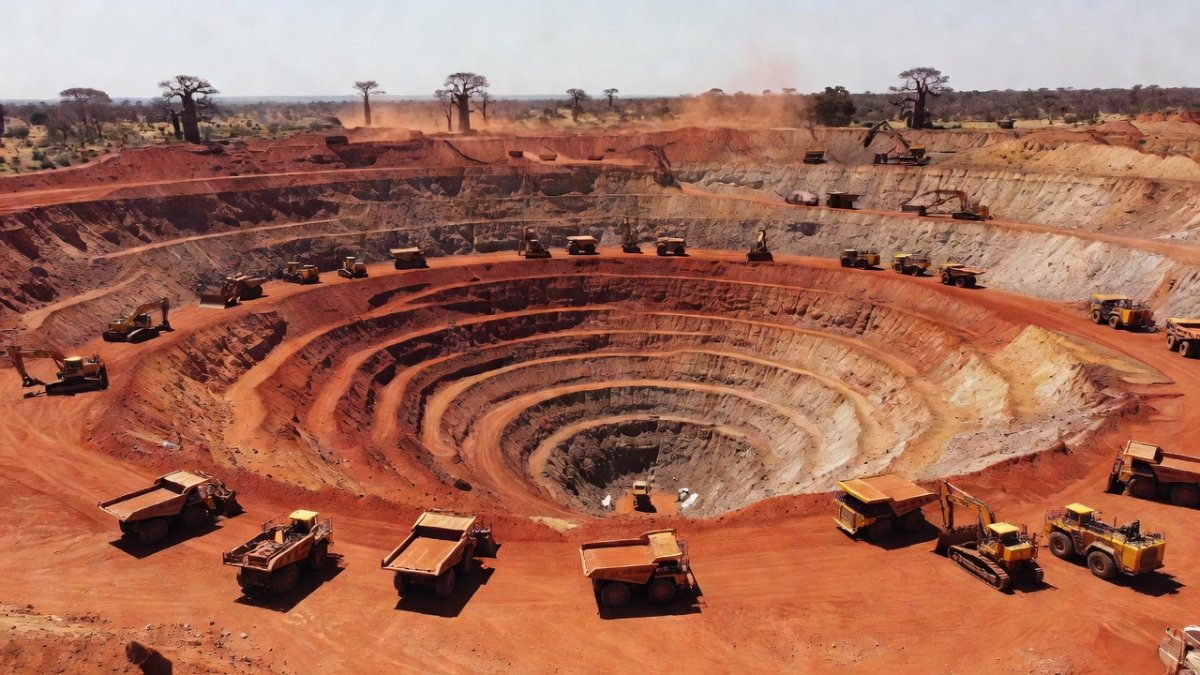
South Africa's Diamond Heartbeat Goes Quiet
In the red earth of Limpopo Province, where baobab trees stand like ancient sentinels and the Limpopo River snakes its way toward Mozambique, a profound silence is about to fall. The Venetia diamond mine, South Africa’s largest and most productive diamond operation, will suspend production for two years starting later this year. For the communities that have grown around its fences, from Musina to Alldays and across the Vhembe district, this news lands like dust after a long drought — expected, yet still painful.
As a Senegalese journalist who has spent years walking alongside African mining communities, from the gold pits of Bambouk to the platinum shafts of Rustenburg, I see this not merely as a corporate announcement but as another chapter in the complicated relationship between Africa’s mineral wealth and the lives of its people. The decision by De Beers, announced on 14 July 2026, reflects seismic shifts in global consumer behaviour, technological disruption, and the enduring contradictions of extractive economies on our continent.
The Scale of Venetia and Its Place in South African Life
Located approximately 30 kilometres east of Musina in the far north of Limpopo, Venetia has been a colossus in South Africa’s diamond industry since it opened in 1992. The open-pit mine accounts for more than 40 percent of the country’s total diamond production by value. Its workforce directly employs over 4,000 people, while thousands more depend on it indirectly — the women who sell fat cakes and cold drinks at the mine gates, the mechanics in Polokwane who service the heavy machinery, the teachers in local schools funded partly by mining royalties.
In a country where the mining sector still employs nearly half a million people and contributes more than 4 percent to national GDP, the temporary closure of Venetia sends ripples that will be felt from the shabeens of Johannesburg’s townships to the rural homesteads of Venda and Tsonga communities. Union leaders from the National Union of Mineworkers (NUM) and the Association of Mineworkers and Construction Union (AMCU) have already voiced deep concern, warning that job losses in the sector could exacerbate South Africa’s already alarming unemployment rate, which hovers near 32 percent.
Global Forces Reshaping the Diamond Trade
The reasons for the suspension are both economic and cultural. According to the International Diamond Consultants’ rough diamond price index, prices have almost halved since 2022. This collapse stems from two powerful trends: declining demand, particularly from Chinese consumers who once formed a critical pillar of the global diamond market, and the explosive rise of laboratory-grown diamonds that can be produced for a fraction of the cost of those extracted from the earth.
Younger consumers across the world, especially millennials and Generation Z, are increasingly questioning the ethics of traditional diamonds. Many cite concerns over environmental damage, community displacement, and the historical links between diamond mining and conflict. In response, lab-grown diamonds — chemically identical but created in controlled environments — have gained significant market share. Interestingly, De Beers itself has entered this space, producing lab-grown stones through its Lightbox Jewelry brand, a strategic pivot that acknowledges changing realities while protecting its legacy business.
Anglo American, which holds the majority stake in De Beers, is reportedly looking to divest from diamonds entirely as it shifts focus toward copper, a mineral critical for the global energy transition. Copper demand is soaring due to electric vehicles, renewable energy infrastructure, and data centres. This strategic repositioning reflects a broader truth: the minerals the world values are changing, and Africa’s extractive economies must adapt or risk being left behind.
Cecil Rhodes, Colonial Ghosts and the Diamond Legacy
To understand the full weight of Venetia’s closure, one must travel back to the dusty streets of Kimberley in the 1870s. It was there that Cecil Rhodes, the English-born businessman and fervent imperialist, laid the foundations of what would become De Beers Consolidated Mines in 1888. Rhodes’ methods were ruthless. His forces dispossessed indigenous African communities of their land, denied them basic political rights, and established the migrant labour system that would come to define South African mining for more than a century.
The diamond trade in southern Africa was built on a foundation of colonial violence and racial capitalism. From the compounds where Black miners were housed in cramped, single-sex hostels to the pass laws that restricted their movement, the industry enriched a small white elite while extracting both minerals and dignity from African workers. Even today, when one drives through former mining towns like Kimberley or visits the Big Hole — that vast, man-made crater that symbolises both wealth and exploitation — the contradictions remain visible in the architecture, the inequality, and the collective memory.
De Beers has worked hard in recent decades to rebrand itself as a responsible corporate citizen. The company now speaks of “beneficiation,” community development projects, and ethical sourcing. Yet for many South Africans, particularly those whose grandparents laboured in the diamond fields under apartheid, the name De Beers still carries the echo of Cecil Rhodes’ shadow. As one retired miner in Musina told me last year, “They took our diamonds and our land. Now even the jobs are disappearing.”
Impact on Communities Around Venetia
The villages surrounding Venetia — places like Schroda, Gumtree, and the town of Musina itself — have been shaped by the mine’s rhythms for more than three decades. Local economies revolve around mine salaries. When the monthly payroll arrives, the spaza shops fill with customers, taxi operators do brisk business, and livestock markets see increased activity. A two-year suspension threatens to unravel these fragile economic webs.
Women will be particularly affected. In many mining communities across southern Africa, women form the backbone of informal economies that service male-dominated industries. When the men lose formal employment, the entire household economy suffers. Schools may see rising dropout rates as families struggle to pay fees. Health clinics could face reduced funding through corporate social responsibility programmes that De Beers has maintained.
NUM regional secretary in Limpopo, Johannes Mokoena, has called for urgent government intervention. “We cannot allow another Marikana,” he warned, referring to the 2012 massacre of platinum miners. While no one expects violence on that scale, the anxiety is real. South Africa’s mining unions have historically played a crucial role in both worker protection and the broader anti-apartheid struggle. Their voice remains important as the nation navigates this latest transition.
What This Means for Africa
The Venetia suspension is not an isolated corporate decision — it is a bellwether for Africa’s resource economies. Across the continent, from the copperbelt of Zambia and the Democratic Republic of Congo to the gold mines of Ghana and Mali, governments and communities are confronting the same fundamental questions: How do we move beyond being mere exporters of raw materials? How do we ensure that our children inherit more than holes in the ground?
For South Africa specifically, the closure highlights the urgent need for economic diversification. The country has long been too dependent on mining and commodities. The rise of the African Continental Free Trade Area (AfCFTA) offers opportunities for intra-African trade in processed goods rather than raw diamonds. Countries like Botswana have shown what is possible through smart management of diamond revenues, investing in education, health, and infrastructure. South Africa could learn from its neighbour.
The environmental dimension cannot be ignored. Diamond mining, particularly open-pit operations like Venetia, leaves significant scars on the landscape. The two-year pause offers an opportunity for land rehabilitation, groundwater monitoring, and biodiversity protection in an area that forms part of the Limpopo River Basin, ecologically vital for both South Africa and its neighbours Zimbabwe, Botswana, and Mozambique.
On a deeper cultural level, this moment invites African societies to reconsider our relationship with luxury goods that have historically been tied to our exploitation. The diamond engagement ring, popularised by brilliant marketing campaigns in the 20th century, now faces ethical scrutiny from the very generation that should be buying them. African consumers, particularly the growing middle class in Dakar, Nairobi, Lagos, and Johannesburg, are beginning to ask whether our own stories of love and commitment need to be symbolised by stones extracted from our soil at such high human cost.
Yet there is also cautious hope. De Beers has pledged to use this downtime to upgrade infrastructure, improve efficiency, and prepare Venetia for eventual reopening when market conditions improve. The company says it remains committed to South Africa. If managed transparently with genuine community consultation, this period could become an opportunity to renegotiate the social contract between mining companies, government, labour, and host communities — something that has rarely happened equitably in Africa’s mining history.
The Broader Diamond Industry in Transition
The challenges facing Venetia mirror those across the global diamond sector. Major producers in Russia, Canada, and Australia are all feeling the pressure. In Namibia and Botswana, where De Beers operates joint ventures with governments, similar conversations about sustainability are taking place. The company’s decision to produce lab-grown diamonds itself represents an attempt to hedge against market disruption while maintaining control over both ends of the value chain.
Industry analysts suggest that natural diamonds may increasingly become luxury items for the ultra-wealthy, while lab-grown stones serve the mass market. This bifurcation could actually preserve some demand for African diamonds, particularly those that can genuinely demonstrate community benefit and environmental stewardship. The Kimberley Process, despite its limitations, has at least established some standards around conflict diamonds. The next frontier is ensuring that “ethical” also means equitable economic outcomes for producing communities.
For young Africans entering the job market, the lesson is clear. The future lies not in digging deeper holes but in developing the technical skills to process minerals locally, to innovate in renewable energy, to build the digital economies that will define the 21st century. Countries like Rwanda and Kenya are showing leadership in technology and innovation. South Africa, with its sophisticated industrial base, should be leading this transition rather than reacting to it.
Looking Ahead With African Realism
As the machinery at Venetia falls silent for two years, the people of Limpopo will do what African communities have always done — adapt, improvise, and look after one another. Some miners will seek opportunities on platinum mines further south. Others may return to small-scale agriculture, livestock rearing, or the informal economy that sustains so much of our continent. Government programmes through the Department of Mineral Resources and Energy, alongside initiatives from the Industrial Development Corporation, must provide meaningful support during this transition.
The story of Venetia is ultimately the story of Africa itself — rich in resources, burdened by history, full of resilient people determined to build better futures for their children. The diamonds will still be there beneath the earth when the market recovers. The question is whether, when production resumes, the benefits will finally flow more equitably to the descendants of those who lost their land to Cecil Rhodes’ vision more than 150 years ago.
In the end, perhaps the greatest value of these diamonds was never their sparkle in a jewellery store in Shanghai or New York, but the lessons they continue to teach us about power, equity, and what true development should look like on African terms.
By Amara Diop, Staff Writer
This article was produced with AI-assisted research and editorial support. Reporting is based on sources cited in the article.
What's Your Reaction?
 Like
0
Like
0
 Dislike
0
Dislike
0
 Love
0
Love
0
 Funny
0
Funny
0
 Wow
0
Wow
0
 Sad
0
Sad
0
 Angry
0
Angry
0

West Africa/Sahel Correspondent at Global1.News. Dakar-based journalist covering politics, security, climate, and development across Francophone and Anglophone West Africa. Tells the stories of a region undergoing profound transformation.












Comments (0)