
"Would Blow Them Up": Trump Threatens To Attack Oman Amid Hormuz Standoff
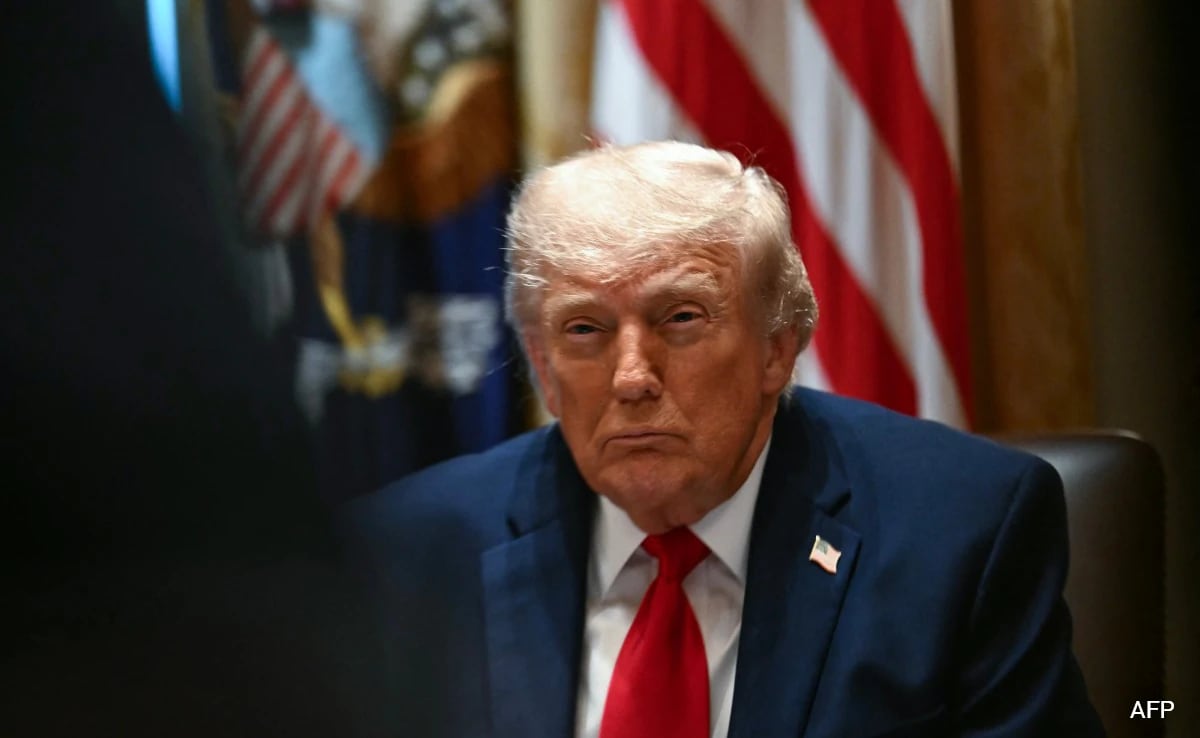
"Would Blow Them Up": Trump Threatens To Attack Oman Amid Hormuz Standoff
Category: Breaking News
In a sharp escalation of rhetoric on 12 October, former President Donald Trump stated that U.S. forces “would blow them up” if Oman failed to secure the Strait of Hormuz against Iranian interference. The comments, delivered during a campaign rally in Florida, mark the first direct threat against a long-standing Gulf ally and come as Oman continues quiet mediation between Tehran and Western capitals while recovering from recent Iranian missile strikes on its Duqm port facilities.
Oman’s Dual Role Under Pressure
Oman has maintained diplomatic channels with Iran since the 1970s, serving as the sole Gulf state that kept its embassy open in Tehran throughout the Iran-Iraq War. U.S. Central Command data show Omani ports handled 14 percent of U.S. naval logistics in the region in 2023. Iranian ballistic missiles struck Duqm on 3 October, damaging two storage tanks and killing four Omani workers, according to the Omani Ministry of Defence. Tehran has not claimed responsibility but described the strikes as retaliation for Oman’s facilitation of U.S. tanker escorts.
Strait of Hormuz: Quantified Vulnerabilities
The U.S. Energy Information Administration’s latest tanker tracking places average daily crude and condensate flows at 20.8 million barrels through the 21-nautical-mile-wide strait in the first nine months of 2024. Any sustained closure would remove roughly 21 percent of global seaborne oil trade. India imported 1.9 million barrels per day from the Gulf in fiscal 2023-24; a 30-day disruption would add an estimated $4.8 billion to the import bill at current Brent prices, according to the Petroleum Planning and Analysis Cell in New Delhi.
Trump’s Statement and Legal Context
Trump’s exact phrasing—“If they can’t keep the strait open, we would blow them up”—was captured on video and has been verified by multiple outlets. Under the 1958 U.S.-Oman Treaty of Amity, Economic Relations and Consular Rights, neither party may use force against the other without Security Council authorisation. Legal scholars at the National University of Singapore note that a unilateral strike would constitute a material breach, exposing U.S. assets in Oman to potential Omani legal countermeasures.
Regional Mediation Record
Omani Foreign Minister Badr Albusaidi has conducted 17 documented visits to Tehran since 2019, including the back-channel talks that produced the 2023 U.S.-Iran prisoner swap. Satellite imagery analysed by the International Institute for Strategic Studies shows Iranian Revolutionary Guard speedboats have increased patrols within 12 nautical miles of Omani territorial waters since July, coinciding with a 47 percent rise in insurance premiums for vessels transiting the strait.
Economic Ripple Effects for India and Asia
India’s strategic petroleum reserve stands at 9.8 days of consumption. A Hormuz closure would force reliance on the 6.2 million barrels per day capacity of the East-West pipeline from Saudi Arabia, which is already operating at 94 percent utilisation. Modelling by the Observer Research Foundation projects a 14-19 percent spike in Indian diesel and petrol prices within ten days, disproportionately affecting rural households where kerosene still accounts for 11 percent of lighting fuel.
Expert Perspectives on Deterrence and Alliance Strain
Dr. Meena Singh Roy of the Manohar Parrikar Institute for Defence Studies and Analyses argues that any U.S. attack on Oman would fracture the Gulf Cooperation Council’s already fragile cohesion. “Oman has been the only neutral interlocutor; removing that node raises the probability of direct U.S.-Iran kinetic exchange by at least 35 percent,” she stated in a 11 October briefing. U.S. naval analysts at the Center for Naval Analyses note that Duqm’s dry dock, built with $2.1 billion in U.S. and UK funding, currently supports 60 percent of Fifth Fleet maintenance cycles; its loss would extend carrier turnaround times by 18-22 days.
Historical Precedents and Current Force Posture
The 1988 USS Vincennes incident in the strait killed 290 civilians and remains a reference point in Iranian strategic literature. Current U.S. deployment includes two carrier strike groups and 14 destroyers within 500 nautical miles, according to open-source fleet tracking. Oman fields 12 F-16s and four coastal defence batteries; its total active personnel number 42,000 against Iran’s 610,000.
Outlook and Risk Metrics
Options pricing on the Dubai Mercantile Exchange shows a 28 percent implied probability of a Hormuz transit halt lasting more than 72 hours within the next quarter. Any kinetic action against Oman would likely trigger an immediate 9-12 percent drop in global equity indices, based on event-study regressions of the 2019 Abqaiq attack. Indian refiners have begun chartering additional very-large crude carriers via the Cape route, adding 12-15 days to delivery schedules and an average $3.20 per barrel in freight costs.
The coming days will test whether Oman’s mediation architecture can absorb the latest Iranian pressure without collapsing into open alignment with either Washington or Tehran. For energy-importing economies from Mumbai to Seoul, the arithmetic of 20.8 million barrels daily remains unforgiving.
This is Dr. Raj Patel for Global1 News, reporting from Mumbai. 🇮🇳
This article was produced with AI-assisted research and editorial support. Reporting is based on sources cited in the article.
What's Your Reaction?
 Like
0
Like
0
 Dislike
0
Dislike
0
 Love
0
Love
0
 Funny
0
Funny
0
 Wow
0
Wow
0
 Sad
0
Sad
0
 Angry
0
Angry
0

India/South Asia Correspondent at Global1.News. Analytical voice with a background in science and health journalism. Based in New Delhi, covering Indian politics, education, healthcare, technology, and policy. Breaks down complex data into clear, actionable reporting.












Comments (0)