
Rocinha Favela Murals Fuel Brazil 2026 World Cup Push
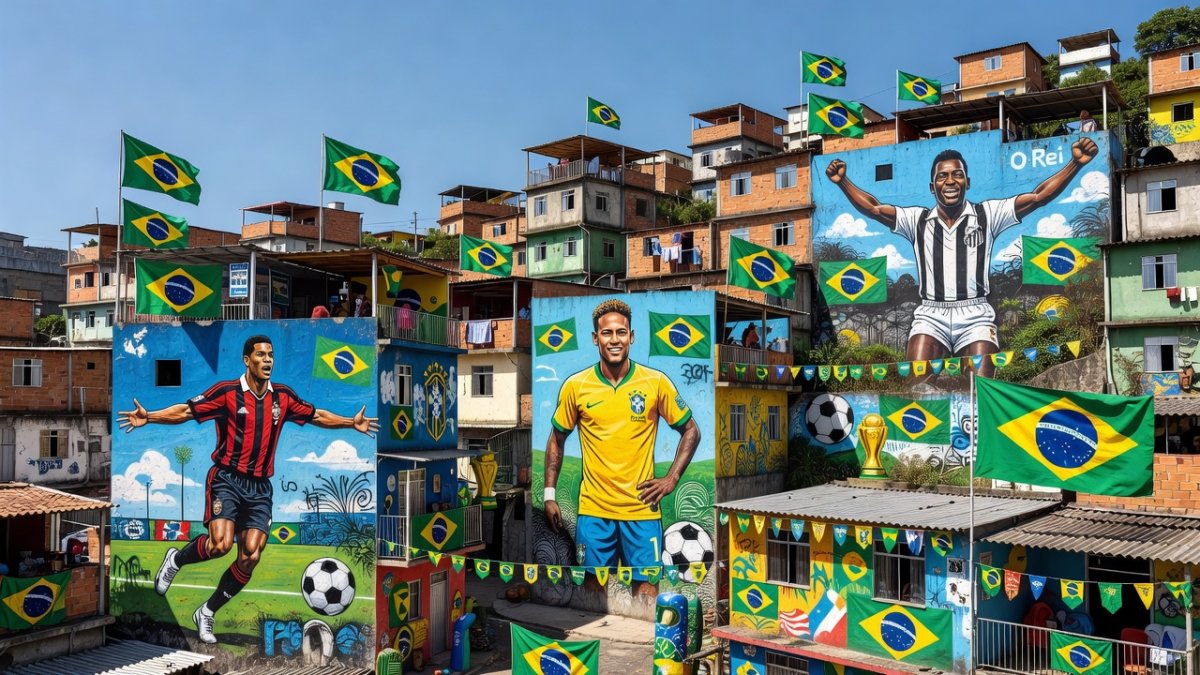
Rio de Janeiro's largest favela, Rocinha, home to approximately 72,000 residents on a hillside between São Conrado and Gávea, has transformed its streets with murals celebrating Brazil's five World Cup triumphs in 1958, 1962, 1970, 1994 and 2002. Local artists painted these works in recent weeks as Brazil prepares for the 2026 FIFA World Cup, which opened on June 11 at Estadio
Rio de Janeiro's largest favela, Rocinha, home to approximately 72,000 residents on a hillside between São Conrado and Gávea, has transformed its streets with murals celebrating Brazil's five World Cup triumphs in 1958, 1962, 1970, 1994 and 2002. Local artists painted these works in recent weeks as Brazil prepares for the 2026 FIFA World Cup, which opened on June 11 at Estadio Azteca in Mexico City where co-hosts Mexico defeated South Africa 2-0. The murals depict scenes from those past victories and the current squad's pursuit of a record sixth title under manager Carlo Ancelotti.
Rocinha's Vibrant Murals Fuel Brazil's Sixth World Cup Push
Rio de Janeiro, Brazil – June 12, 2026 — Al Jazeera English captured this street art movement in their report on Rio's painted favela streets as part of ongoing World Cup coverage. Every alley and building facade now carries images of Ronaldo, Ronaldinho and Rivaldo from the 2002 final win over Germany, alongside fresh portraits of Neymar returning to the national team, Vinicius Jr, Marquinhos and Rodrygo. These concrete details turn ordinary favela pathways into open-air tributes that residents pass daily on their way to work or school.
Brazil's Rocky Road to 2026 and Ancelotti's Arrival
Brazil's CONMEBOL qualifying campaign produced their worst record this century with five wins, two draws and six losses, prompting the Brazilian Football Confederation to replace Dorival Junior with Italian Carlo Ancelotti. The change came after the team struggled to secure automatic qualification, yet the murals in Rocinha and neighbouring favelas show no sign of doubt. They instead highlight the squad's attacking talent and the belief that Ancelotti can deliver the sixth star before Brazil's first group match, which remains to be played.
South African fans watching the tournament opener at Estadio Azteca saw their own Bafana Bafana side fall 2-0 to Mexico, a result that underscores the gap between aspiration and execution at the highest level. The same pressure now sits on Brazil's shoulders 24 years after their last title in 2002. Ancelotti's tactical adjustments will be tested immediately once the group stage begins, with every mural in Rocinha serving as a daily reminder of what success looks like.
Football as Youth Pathway in Rocinha and South African Townships
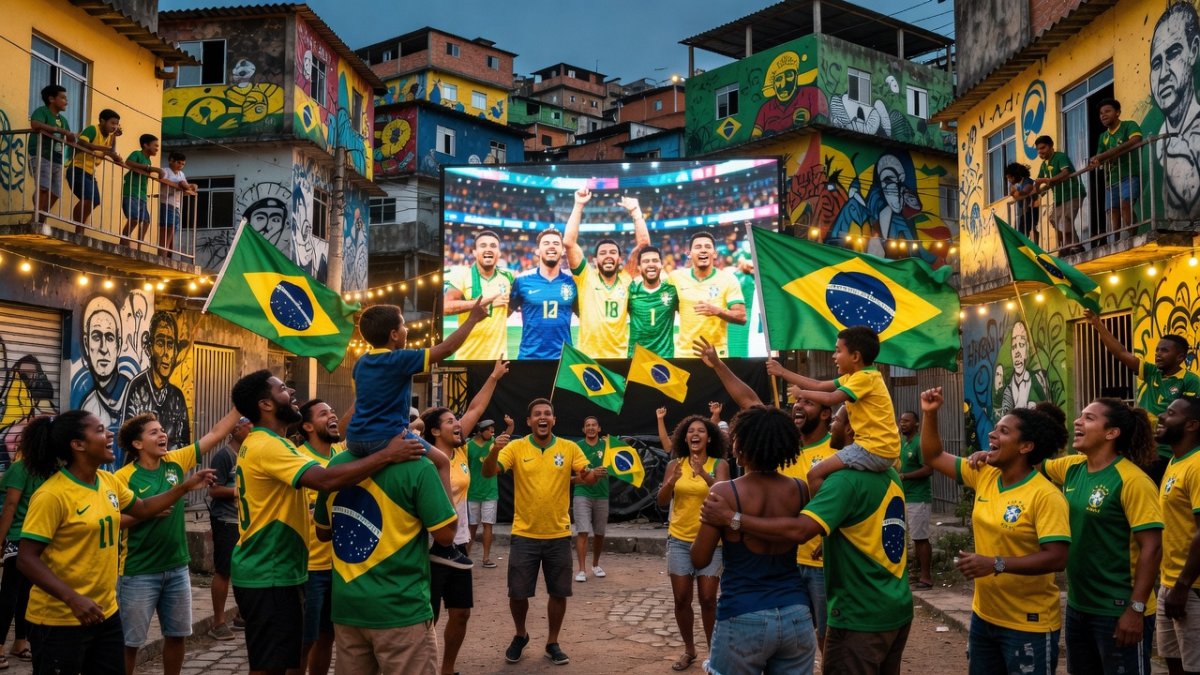
Residents of Rocinha view the street art and the national team as proof that football remains the clearest route out of poverty for young players. The same dynamic exists in South African townships where SAFA's MultiChoice Diski Challenge and grassroots programmes give township talents their first structured exposure to the game. Both communities treat the sport as more than entertainment; it functions as structured development that channels energy and builds discipline from an early age.
The parallel runs deeper because Brazil and South Africa share BRICS membership and similar social realities where sport acts as a unifying force across economic divides. When Rocinha artists paint Neymar's return alongside Vinicius Jr's dribbling style, they are not simply decorating walls. They are reinforcing the message that disciplined training in the favela can lead to the Seleção, just as township academies feed players into Bafana Bafana and the Premier Soccer League.
Lessons for SAFA and Grassroots Development in South Africa
South African sports administrators at SAFA and SASCOC can draw direct lessons from how Brazilian favela communities embed World Cup culture into daily life. The murals create constant visual motivation that no government programme alone could replicate. In contrast, many South African township fields still lack basic maintenance despite the presence of the MultiChoice Diski Challenge and school-level competitions run through the Department of Sport, Arts and Culture.
When Brazil's squad featuring Marquinhos and Rodrygo steps onto the pitch for their opening fixture, the pride felt in Rocinha will mirror the pride South African fans feel when Bafana Bafana players emerge from township backgrounds. The difference lies in sustained visual storytelling. Rocinha's artists have made the sixth title dream impossible to ignore, while South African football still struggles to translate township passion into consistent national team results.
National Pride, BRICS Ties and the Road Ahead
The connection between Brazil and South Africa extends beyond football results to the shared experience of sport knitting together diverse populations. The 2026 tournament, already underway after Mexico's 2-0 win over South Africa on June 11, offers both nations a platform to showcase how grassroots culture feeds elite performance. Brazil's five previous titles give them historical weight, yet the 24-year drought since 2002 makes the current murals an act of collective will rather than celebration.
Carlo Ancelotti's first matches will reveal whether the favela art translates into on-field cohesion. For South African supporters, the images from Rocinha serve as both inspiration and challenge. They demonstrate how a nation can turn its most marginalised spaces into engines of national ambition, something SAFA must replicate if Bafana Bafana are to close the gap that was evident in the 2-0 defeat at Estadio Azteca.
Why the Murals Matter Beyond the Pitch
Every painted wall in Rocinha carries names and dates that South African fans recognise from their own football history: the 1958 and 1962 triumphs under Pelé, the 1970 masterpiece, the 1994 redemption and the 2002 golden generation. These specific references keep the sixth title quest grounded in lived memory rather than abstract hope. The same principle applies in South African townships where older fans recount the 1996 Africa Cup of Nations victory to younger players still chasing World Cup qualification.
The street art movement reported by Al Jazeera English shows that Brazil's football culture remains rooted in community spaces even as the national team operates under a foreign coach. South African football governance would benefit from similar integration between elite ambitions and township realities. Until that connection strengthens, the gap between passionate support and consistent results will persist, regardless of how many murals appear on Brazilian hillsides.
What to Watch For
Brazil's opening group fixture will be the first real test of Ancelotti's system and whether the renewed belief painted across Rocinha's streets matches the team's actual form. For South African fans, the lesson from Brazil is clear: grassroots football culture, when celebrated visibly and consistently, builds a pipeline that sustains elite performance. Bafana Bafana's 2-0 loss to Mexico on opening night showed the mountain remains steep, but the favela murals prove that the climb begins with how a community chooses to see itself.
By Dante Williams, Staff Writer
This article was produced with AI-assisted research and editorial support. Reporting is based on sources cited in the article.
What's Your Reaction?
 Like
0
Like
0
 Dislike
0
Dislike
0
 Love
0
Love
0
 Funny
0
Funny
0
 Wow
0
Wow
0
 Sad
0
Sad
0
 Angry
0
Angry
0

Breaking News and Investigations Correspondent at Global1.News. Based in London, covering global breaking news, security, and investigative stories. Known for digging deeper and connecting the dots across continents.









Comments (0)