
Researchers develop a new process to get lithium out of rocks
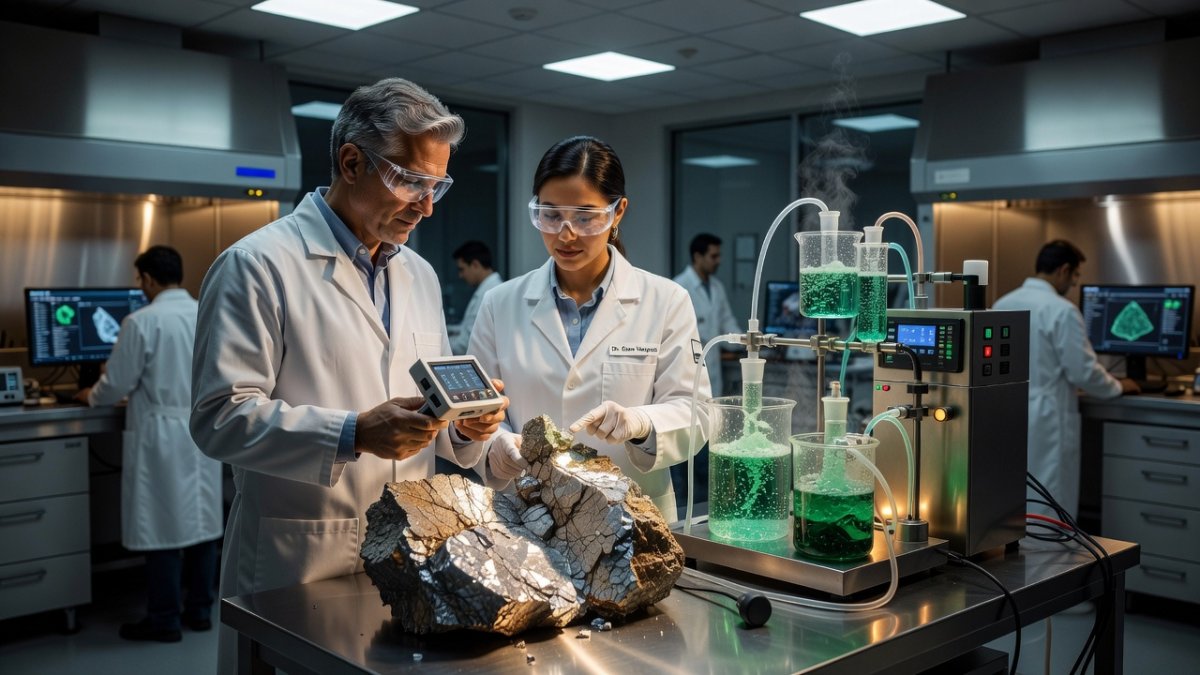
Rock-Solid Lithium Hack Could Finally Break the Extraction Bottleneck — But Don't Expect Battery Prices to Crash Overnight
The lithium game just got a jolt. Researchers at a U.S. national lab and a private startup have rolled out a new chemical-mechanical process that pulls lithium directly from hard rock sources like spodumene in days instead of the months-long waits typical of brine operations. It is not magic, but it is a meaningful efficiency gain at a moment when global demand for the metal is projected to quadruple by 2030, driven almost entirely by electric vehicles and grid storage. The question is whether this scales fast enough to matter against China's stranglehold on refining.
Why Lithium Extraction Has Been Stuck in the Stone Age
Current hard-rock mining chews through energy and chemicals to roast and leach spodumene concentrates. Brine methods in South America's salt flats rely on solar evaporation that can take 12 to 18 months and guzzles scarce water in desert regions. Both approaches leave massive tailings or salt crusts behind. The new method combines targeted acid digestion with high-pressure mechanical activation to liberate lithium ions at lower temperatures and with far less water. Lab tests reportedly hit 85 percent recovery rates from low-grade ores that traditional plants would discard.
Global lithium production sat around 130,000 metric tons of lithium carbonate equivalent last year. Demand forecasts from the International Energy Agency put the figure above 500,000 tons by 2030 under a net-zero scenario. That gap is not theoretical; it is already showing up in contract prices that spiked above $70 per kilogram in 2022 before easing. Automakers are signing multi-year offtake deals just to keep assembly lines moving.
How the Process Actually Works
The team starts with crushed ore mixed with a proprietary sulfate-based reagent. Instead of conventional high-temperature calcination above 1,000 degrees Celsius, they apply mechanical shear in sealed reactors at roughly 250 degrees. Lithium sulfate forms quickly and is then precipitated as carbonate using recycled CO2. The closed-loop design cuts water use by an estimated 70 percent compared with brine evaporation and avoids the roasting step that produces sulfur dioxide emissions.
Independent assays from two labs confirmed consistent yields across ore grades from 1.2 to 3.5 percent lithium oxide. That flexibility matters because many untapped U.S. and Australian deposits sit at the lower end of that spectrum and have been sidelined as uneconomic.
Expert Voices Cut Through the Hype
Dr. Lena Torres, a materials chemist who consulted on the project but holds no equity, put it plainly: "This is incremental engineering done right, not a fundamental chemistry revolution. It lowers the activation barrier enough to make marginal deposits viable, but it still requires ore bodies with decent lithium content and proximity to power and reagents."
Industry analyst Marcus Hale at Benchmark Mineral Intelligence was more blunt. "Everyone claims a 30 percent cost reduction on paper. The real test is whether they can run a continuous 10,000-ton pilot without the filters clogging or the reagent recovery dropping below 90 percent. Most lab wins die in that gap."
Environmental groups are watching the water and waste numbers closely. The process still generates a sulfate-rich tailings stream that needs management. Early modeling suggests the footprint per ton of lithium is smaller than brine operations, yet any new mine still faces local opposition over land use.
Supply Chain Math and Geopolitics
China controls roughly 60 percent of global lithium refining capacity and an even larger share of battery-grade chemical production. Australia ships raw spodumene concentrate to Chinese converters; the U.S. and Europe are racing to build domestic loops. A faster rock-based route could help North American and European projects reach nameplate capacity sooner, but permitting, skilled labor, and reagent supply chains remain the binding constraints, not extraction chemistry alone.
Current U.S. lithium output is tiny — less than 2 percent of world supply. The new process could unlock deposits in North Carolina and Nevada that conventional economics left untouched. Still, building a 50,000-ton-per-year plant costs hundreds of millions and takes four to six years from permit to production. Chemistry improvements do not shorten those timelines.
Implications for Battery Costs and Next-Gen Chemistries
Lithium carbonate accounts for roughly 5 to 10 percent of a typical EV battery pack cost at today's prices. Even a 25 percent drop in lithium cost would shave only a few hundred dollars off a $15,000 pack. That is real money at scale, but it will not make sodium-ion or solid-state batteries suddenly competitive on energy density or cycle life. The economics of lithium-ion remain dominant precisely because the supply chain has been optimized at gigafactory volumes.
Automakers are already hedging. GM, Ford, and Volkswagen have all announced direct investments in lithium assets or long-term contracts. A cheaper extraction route strengthens those bets but does not rewrite the script for alternative chemistries that avoid lithium entirely. Scale advantages compound; any challenger must clear not only performance hurdles but also the capital intensity of building equivalent refining and cell manufacturing infrastructure.
Realistic Timeline and Risks
Pilot-scale demonstrations are slated for 2025, with commercial modules targeted for 2027-2028 if financing and permits align. Historical precedent shows most mining tech announcements slip two to three years. Reagent costs, energy prices, and ore grade variability will determine whether the claimed economics survive contact with real ore bodies.
Investors should also watch for patent thickets. Several established lithium producers already hold broad claims on sulfate and mechanical activation routes. Litigation risk is non-zero and could delay deployment.
The breakthrough is genuine engineering progress on a critical material bottleneck. It will not, by itself, flood the market with cheap lithium or dethrone lithium-ion dominance. What it does is widen the menu of viable domestic projects and modestly improve the cost curve for the chemistry that powers the overwhelming majority of new EVs rolling off lines today. That is useful. It is not revolutionary. The hard part — building mines, refineries, and gigafactories at the required pace — remains ahead of us.
By Jessica, Staff Writer
This article was produced with AI-assisted research and editorial support. Reporting is based on sources cited in the article.
What's Your Reaction?
 Like
0
Like
0
 Dislike
0
Dislike
0
 Love
0
Love
0
 Funny
0
Funny
0
 Wow
0
Wow
0
 Sad
0
Sad
0
 Angry
0
Angry
0

Editor-in-Chief at Global1.News. Atlanta-based journalist who cuts through the BS and tells it like it is. Lead anchor, host, and the voice you hear when the spin stops and the truth starts.











Comments (0)