
Reporters slam Marcoleta's 'bayaran' remark
Senate Media Reporters Condemn Marcoleta Remark Journalists covering the Senate issued a direct statement on Thursday, June 4, rejecting Sen. Rodante Marcoleta's description of media workers as "paid hacks" during a Blue Ribbon Committee hearing. The reporters labeled the comment irresponsible and a reckless attack on an institution viewed as essential to any functioning democr
Senate Media Reporters Condemn Marcoleta Remark
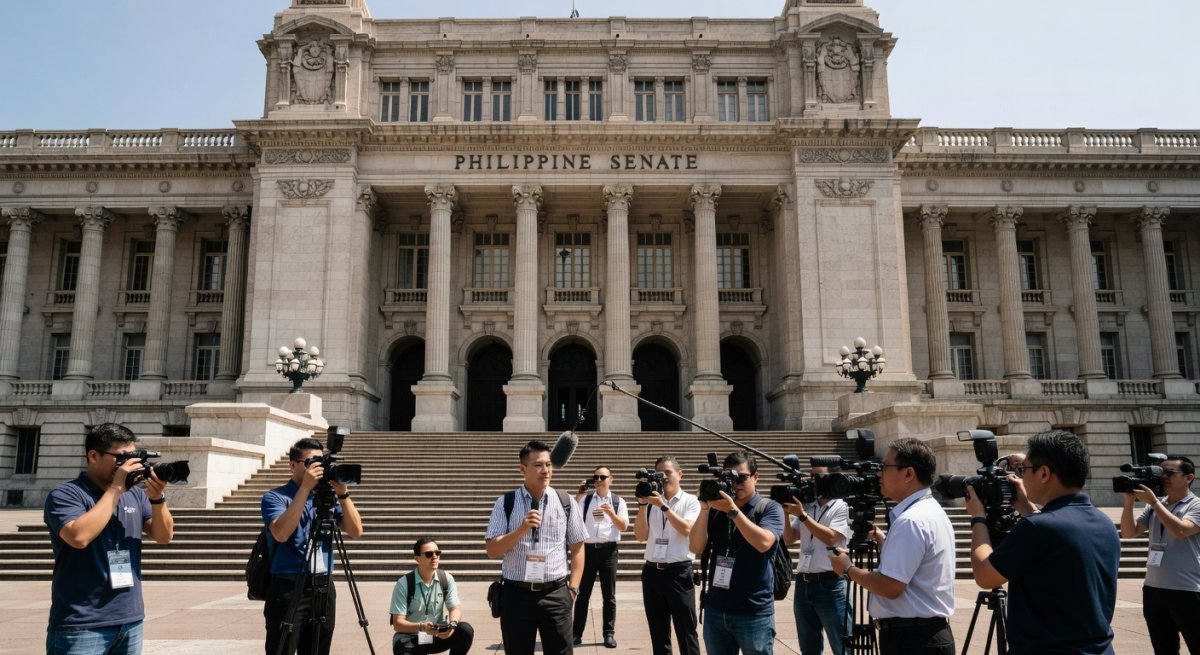
Journalists covering the Senate issued a direct statement on Thursday, June 4, rejecting Sen. Rodante Marcoleta's description of media workers as "paid hacks" during a Blue Ribbon Committee hearing. The reporters labeled the comment irresponsible and a reckless attack on an institution viewed as essential to any functioning democracy.
The Senate media statement stressed that Marcoleta's words unfairly maligned professionals who face intimidation, harassment, and threats to their lives while informing the public and holding power accountable. Reporters emphasized that such language arrives precisely when disinformation and political polarization already weaken public discourse, urging government officials to show greater restraint.
They further warned that the remark risks eroding public trust in legitimate journalism and fostering hostility toward media practitioners simply performing their duties. The statement positioned the Fourth Estate as an entity that pursues facts, verifies information, questions those in power, and reports without fear or favor.
Marcoleta Explains His Frustration
After the hearing, Marcoleta requested a replay of his remarks and denied using the exact phrasing attributed to him. He attributed his comments to deep frustration over coverage by The Philippine STAR and the Philippine Daily Inquirer of an Iglesia ni Cristo rally for peace.
Marcoleta noted that the broadsheets listed other speakers with their full names, including middle names, yet omitted his own despite his participation as a speaker at the event. This perceived slight, he indicated, contributed to his reaction during the committee proceeding.
The senator's clarification came amid the hearing itself, which featured 18 Marines serving as resource speakers and claiming they acted as bagmen for lawmakers. His defense focused on personal omission in news reports rather than a broader defense of the media's institutional role.
PTFOMS Warns of Safety Risks
The Presidential Task Force on Media Security described Marcoleta's statements as unfounded and a significant threat to the security and safety of journalists. The task force highlighted how sweeping generalizations can damage media credibility and expose reporters to potential harm.
PTFOMS underscored that journalists hold a duty to report accurately and impartially, and that public officials must respect this watchdog function in matters of accountability and truth. It called on Marcoleta to provide evidence supporting his claims or to withdraw the statements and issue an apology.
The task force added that vague aspersions against the media hinder constructive dialogue and undermine democratic processes by attempting to turn public opinion against those tasked with holding power to account. This response directly links official rhetoric to the physical and professional vulnerabilities faced by Filipino journalists.
Blue Ribbon Hearing Proceeds Amid Leadership Dispute
The hearing took place even after Senate President Pro Tempore Sherwin Gatchalian directed that Blue Ribbon Committee sessions resume on June 8 under the chairmanship of Sen. Erwin Tulfo. The Alan Peter Cayetano-led bloc of 11 senators maintained that no legal change had occurred in the panel's leadership and that Sen. Pia Cayetano remains chair.
Marcoleta, aligned with the Cayetano bloc, presided over the session. The proceeding occurred without the Senate secretary or stenographers present, indicating it was not recognized as an official Senate activity. Under standard practice, the Senate livestreams committee hearings through its own channels, but only media networks carried this session.
Sen. Erwin Tulfo confirmed in a phone patch interview that the Senate intends to continue hearings under his chairship starting Monday, with invitations already issued to resource persons. The parallel claims of authority illustrate ongoing divisions following Wednesday's leadership changes that also installed Gatchalian as Senate president pro tempore.
Press Freedom and Political Rivalries in Context
The Senate media statement explicitly cautioned against dragging journalists into the rivalries, feuds, or power struggles of political figures. It stressed that the media serves the public interest and should not function as a weapon for one camp against another or as collateral damage in political contests.
This episode occurs against the backdrop of Philippine political dynamics where Senate committees often become arenas for competing blocs. The insistence by one group that the hearing lacked official status, contrasted with its actual conduct, shows how procedural disputes can intersect with public messaging about the press.
Ordinary Filipinos rely on Senate coverage to understand investigations involving public funds and security forces. When accusations of bias target reporters covering these matters, the flow of verified information to households and communities can be disrupted, particularly in regions where local outlets depend on national reporting.
Implications for Accountability and Public Trust
By naming specific risks faced by journalists—intimidation, harassment, and threats to life—the Senate media statement connects rhetoric from elected officials to real-world pressures on the profession. The PTFOMS response reinforces this link by calling the remarks a threat to journalist safety.
The absence of official Senate support staff and livestreaming during the disputed hearing further complicates the record available to the public. Without stenographers or the Senate secretary, the proceedings rest solely on media accounts, placing additional weight on reporters already criticized in the same forum.
For communities across the Philippines, consistent access to accurate Senate reporting supports informed participation in democratic processes. When officials question the legitimacy of that reporting without evidence, the resulting uncertainty can affect how citizens evaluate investigations into alleged wrongdoing by lawmakers.
The call from both Senate media and PTFOMS for evidence or retraction underscores a shared expectation that public discourse on institutional roles should rest on verifiable grounds rather than generalized frustration. This expectation remains central as the Senate navigates its internal leadership questions and scheduled inquiries.
By Bella Reyes, Staff WriterThis article was produced with AI-assisted research and editorial support. Reporting is based on sources cited in the article.
What's Your Reaction?
 Like
0
Like
0
 Dislike
0
Dislike
0
 Love
0
Love
0
 Funny
0
Funny
0
 Wow
0
Wow
0
 Sad
0
Sad
0
 Angry
0
Angry
0

Africa Correspondent at Global1.News. Based in Lagos, covering politics, business, technology, and culture across the continent. Focused on telling African stories beyond the headlines — the innovation, entrepreneurs, and communities shaping the region's future.















Comments (0)