
KFC Japan Crisis: Nichirei Cyberattack Disrupts Supply
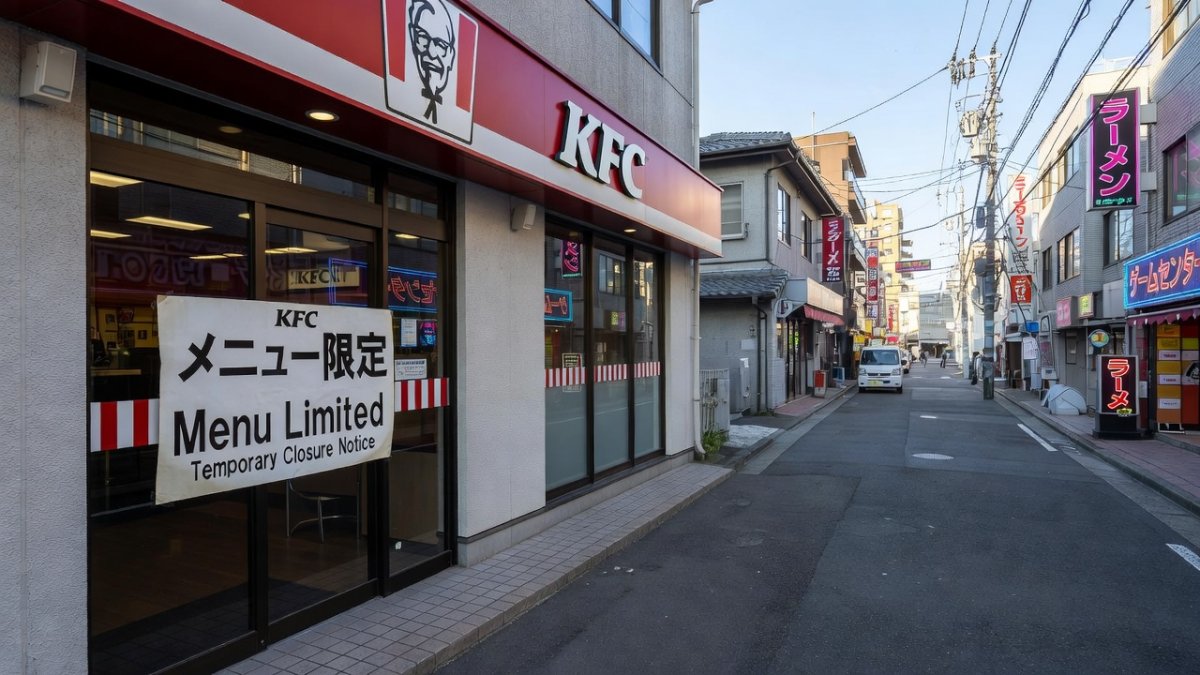
KFC Japan Faces Menu Cuts as Cyberattack Cripples Supply Chain Tokyo, Japan — The cyberattack on Nichirei Corporation on July 13, 2026, has triggered immediate operational constraints for KFC Japan, which relies on the company for essential frozen ingredients. With over 1,100 stores nationwide, KFC Japan announced on July 14 that limited stock levels would force menu reductions, shorter operating hours, and potential temporary closures in multiple locations.
KFC Japan Faces Menu Cuts as Cyberattack Cripples Supply Chain
Tokyo, Japan — The cyberattack on Nichirei Corporation on July 13, 2026, has triggered immediate operational constraints for KFC Japan, which relies on the company for essential frozen ingredients. With over 1,100 stores nationwide, KFC Japan announced on July 14 that limited stock levels would force menu reductions, shorter operating hours, and potential temporary closures in multiple locations. Mobile ordering through the official app and third-party delivery platforms has been suspended to manage inventory uncertainty. This incident underscores the fragility of just-in-time logistics in Japan's food sector, where a single provider's failure can cascade rapidly to retail endpoints. Nichirei's share price declined 5 percent in initial trading following the breach disclosure, reflecting investor concerns over recovery timelines that remain undefined.
The Attack: What Happened at Nichirei
Unauthorized access to Nichirei Corporation's information systems on July 13, 2026, produced a widespread failure in its logistics and shipment management platforms. The intrusion disrupted the processing and routing of frozen food products without immediate evidence of data exfiltration or ransomware demands. Nichirei, Japan's largest frozen food manufacturer and logistics operator, confirmed that core operational software controlling cold storage and distribution had been compromised, halting scheduled deliveries. The precise entry vector has not been disclosed, yet the event aligns with broader patterns of targeted attacks on industrial control systems. No timeline for full system restoration has been provided, leaving clients dependent on alternative arrangements where feasible.
The cyberattack on Nichirei targeted industrial control systems integral to its cold storage and distribution network, employing sophisticated ransomware that disrupted temperature regulation and inventory tracking across multiple facilities. Unlike opportunistic breaches, the intrusion showed signs of prior reconnaissance, focusing on SCADA interfaces vulnerable to lateral movement from corporate IT networks. According to a post-incident analysis by cybersecurity firm Trend Micro, the attackers exploited unpatched remote access points, leading to encrypted operational data and forced shutdowns of automated conveyor systems. Recovery involved isolating affected segments and restoring from offline backups, a process that took 72 hours at key sites in Chiba and Osaka. In comparison, the 2022 ransomware incident at Kojima Industries, a Toyota supplier, similarly halted parts delivery through supply chain infiltration, costing the automaker an estimated 100,000 vehicle production losses. Nichirei’s breach potentially exposed proprietary client shipment schedules, temperature logs for perishable goods, and supplier contracts, raising concerns over competitive intelligence theft. Japanese authorities, including the National Police Agency’s cyber division, collaborated on forensic imaging, emphasizing the need for air-gapped ICS environments in future resilience planning.
From Logistics Provider to Restaurant Tables
KFC Japan's supply agreement with Nichirei covers critical items including chicken and potatoes that require temperature-controlled transport. The logistics interruption directly translates to reduced availability of these components at store level, compelling menu adjustments and service limitations. Mobile and third-party delivery channels were paused to prevent order fulfillment failures. Other retailers utilizing Nichirei's network face comparable constraints, amplifying the attack's reach beyond a single chain. This linkage demonstrates how contractual dependencies in Japan's concentrated logistics market can convert a corporate network breach into visible consumer-level shortages within 24 hours.
Nichirei: The Backbone of Japan's Cold Chain
Nichirei Logistics Group maintains a leading position among Japan's top five frozen food logistics operators, which collectively account for 40 to 45 percent of sector revenue. Approximately 92 percent of Nichirei Logistics sales derive from external clients, positioning the firm as a central node in the national cold chain. Its infrastructure supports the movement of temperature-sensitive goods from processors to retailers and restaurants across wide geographic areas. The July 13 incident exposed the concentration risk inherent in this structure, where dominance by a limited number of providers creates single points of failure that affect multiple downstream businesses simultaneously.
Nichirei, founded in 1942 as a frozen seafood processor, has evolved into Japan’s dominant cold chain operator with annual revenues exceeding 580 billion yen as of fiscal 2023. Its market position stems from controlling over 40 percent of the nation’s commercial frozen storage capacity, supported by 120 distribution centers spanning from Hokkaido to Kyushu. The broader Japanese cold chain sector, valued at 2.3 trillion yen, relies on fragmented networks of mid-sized carriers and wholesalers, yet Nichirei’s vertical integration—from processing plants to last-mile delivery—creates concentrated risk points. Its infrastructure includes IoT-enabled warehouses maintaining precise -25°C environments for 1.2 million tons of inventory annually, serving clients ranging from major QSR chains like KFC Japan to pharmaceutical distributors. Geographic reach extends to 85 percent of prefectures through dedicated rail and truck fleets, while client diversity includes 3,500 food manufacturers and retailers. This centrality amplifies systemic exposure, as disruptions cascade faster than in less consolidated Asian markets like South Korea’s fragmented logistics providers.
Wider Implications for Japan's Food Industry
The disruption extends beyond KFC Japan to numerous participants in the frozen food distribution network, illustrating systemic exposure within Japan's food supply architecture. Concentration among a handful of logistics providers heightens the potential for widespread shortages when one operator experiences technical failure. Retailers and food service operators lacking diversified transport contracts encounter elevated operational risk. The episode also raises questions about inventory buffering practices, as many firms optimize for minimal holding costs rather than resilience against extended outages. Analytical assessment indicates that similar vulnerabilities could surface in adjacent sectors if comparable cyber events target other specialized logistics entities.
The incident rippled beyond KFC Japan to other Nichirei clients, including Lawson convenience stores and several hospital food service providers that faced delayed frozen meal deliveries, prompting temporary menu substitutions and inventory drawdowns. Japan’s just-in-time food supply model, honed for efficiency with average stock buffers under 48 hours, proved acutely vulnerable, as halted Nichirei shipments triggered spoilage risks for temperature-sensitive items like dairy and seafood. Economic projections from the Japan Food Industry Association estimate direct losses at 45 billion yen industry-wide, factoring in lost sales and expedited air freight alternatives. Historical precedents underscore this fragility: the 2011 Tohoku earthquake severed cold chain links for weeks, causing 120 billion yen in food waste, while the 2020 cyberattack on a Mitsubishi Foods subsidiary similarly exposed JIT weaknesses through ransomware-induced warehouse halts. These events highlight recurring patterns where natural disasters and digital threats converge to strain lean inventories, urging diversification of logistics partners.
Japan's Cybersecurity Landscape
Japanese authorities have intensified regulatory attention on cybersecurity protections for critical infrastructure, including transportation and distribution networks. The Nichirei incident reinforces the necessity of these measures by revealing how digital intrusions can interrupt physical supply flows essential to daily consumption. Existing frameworks emphasize incident reporting and resilience planning, yet the attack suggests gaps in implementation across private sector logistics operators. Policymakers may examine requirements for enhanced segmentation of operational technology systems and mandatory third-party audits to reduce propagation risks within interconnected supply chains.
Japan’s National Center of Incident Readiness and Strategy for Cybersecurity (NISC) has advanced critical infrastructure guidelines since 2022, mandating risk assessments for sectors like logistics under METI’s supply chain security framework. These initiatives promote zero-trust architectures and mandatory incident reporting within 24 hours, yet lag behind global benchmarks such as the EU’s NIS2 Directive, which imposes stricter fines and cross-border coordination. Private sector adoption remains uneven, with only 35 percent of mid-sized manufacturers implementing ICS segmentation per a 2023 METI survey, leaving gaps in legacy system upgrades. Following the Nichirei event, analysts anticipate tightened regulations, including expanded subsidies for cybersecurity audits and potential requirements for third-party penetration testing in food logistics. Such measures could align Japan closer to U.S. CISA standards, though implementation delays risk perpetuating exposure in an economy where digital maturity trails policy ambitions.
What to Watch For
Recovery progress at Nichirei will determine the duration of KFC Japan's restrictions and the extent of secondary effects on other clients. Observers should monitor announcements regarding restored system functionality and any interim logistics partnerships formed to bypass the outage. Regulatory responses, including potential updates to critical infrastructure guidelines, represent another focal area. Long-term, the episode may accelerate adoption of redundant transport arrangements and diversified supplier strategies across the food service industry. Continued analysis of the breach's technical details will inform assessments of whether similar attacks could target additional nodes in Japan's cold chain infrastructure.
By Kenji Tanaka, Staff Writer
This article was produced with AI-assisted research and editorial support. Reporting is based on sources cited in the article.
What's Your Reaction?
 Like
0
Like
0
 Dislike
0
Dislike
0
 Love
0
Love
0
 Funny
0
Funny
0
 Wow
0
Wow
0
 Sad
0
Sad
0
 Angry
0
Angry
0

Japan Correspondent at Global1.News. Tokyo-based voice covering Japanese politics, technology, economy, and culture. Tracks the intersection of tradition and innovation in one of the world's most dynamic societies.















Comments (0)