
Putumayo Coca Substitution Faces 2026 Colombia Election Test
In the fertile lowlands of Putumayo, Colombia's Amazon piedmont, more than 8,000 farming families have staked their futures on a bet—that replacing coca bushes with cacao trees and chili pepper plants would give them a legal livelihood while sparing the rainforest from further destruction. With Colombia's presidential runoff election just two days away, that bet now hangs in th
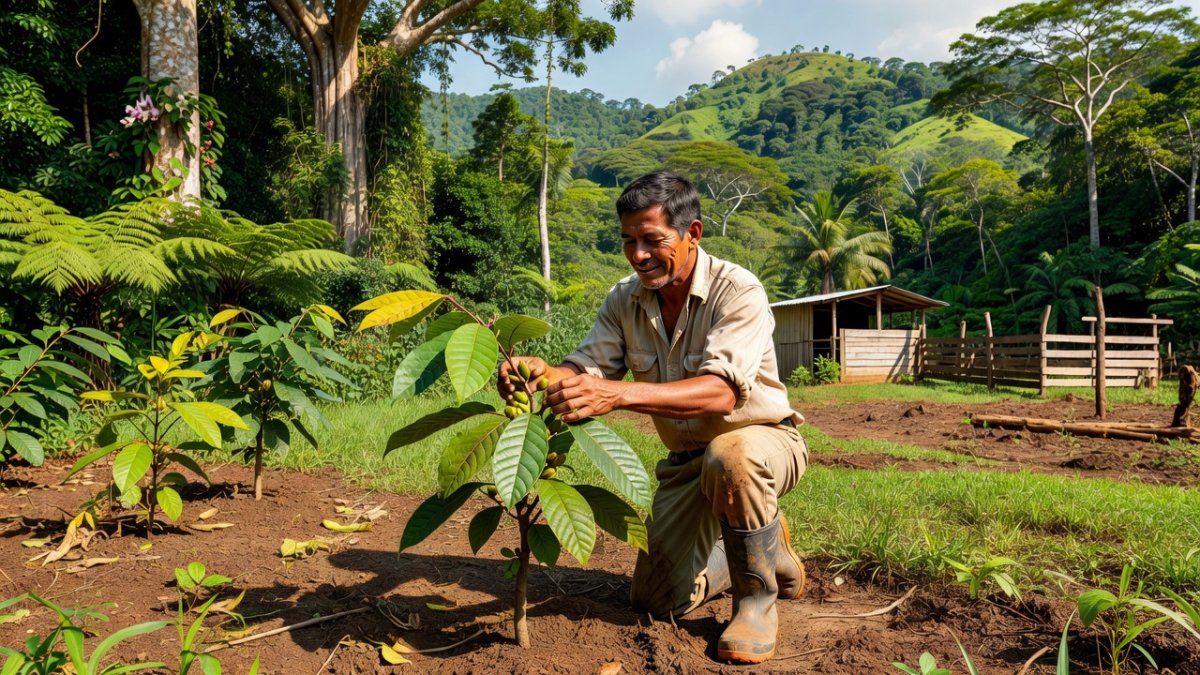
In the fertile lowlands of Putumayo, Colombia's Amazon piedmont, more than 8,000 farming families have staked their futures on a bet—that replacing coca bushes with cacao trees and chili pepper plants would give them a legal livelihood while sparing the rainforest from further destruction. With Colombia's presidential runoff election just two days away, that bet now hangs in the balance.
Putumayo’s Coca-to-Cacao Experiment Hinges on Colombia’s June 21 Election
 Putumayo, Colombia - June 19, 2026
Putumayo's Coca Substitution by the Numbers
More than 8,000 families across Putumayo have already replaced coca with cacao, coffee, ají chili, and plantain on 14,500 hectares. Nationally the Programa Nacional Integral de Sustitución de Cultivos de Uso Ilícito (PNIS) has enrolled 31,000 families and converted between 41,000 and 42,000 hectares. The Colombian government has earmarked 82 billion COP specifically for cacao value chains, aiming to link smallholders to export markets before the June 21 runoff. Joint police-farmer eradication teams began operations in Putumayo in June 2026, marking the first time voluntary agreements coincided with manual removal rather than aerial spraying. These figures stand against a national coca crop that reached a record 253,000 hectares in 2023 and climbed above 260,000 hectares in both 2024 and 2025, producing an estimated 2,600 to 3,600 metric tons of cocaine annually. Putumayo therefore represents both the largest single department-level experiment in substitution and the most direct test of whether rural development can outpace the economic pull of illicit crops. Every additional hectare converted reduces pressure on the Amazon while demonstrating that 8,000 families can sustain themselves without coca when markets and security align.
Environmental Toll in the Amazon
Colombia’s Amazon lost 71,700 hectares of forest in 2022, 44,300 hectares in 2023, 77,100 hectares in 2024, and another 72,400 hectares in 2025. Cumulative deforestation from 2015 through 2024 exceeds 800,000 hectares, much of it driven by coca expansion followed by cattle ranching once plots are cleared. The Putumayo River and its Amazon tributaries carry gasoline, sulfuric acid, and potassium permanganate used in cocaine processing, while illegal mining introduces mercury that bioaccumulates in fish consumed by local communities. After eradication, cattle expansion frequently causes more deforestation than coca itself because ranchers claim larger areas than the original coca plots. Substitution to cacao and ají offers a perennial canopy that maintains soil cover and reduces the need for further clearing. With 14,500 hectares already shifted in Putumayo alone, the program has prevented an estimated additional 20,000 hectares of forest loss that would have occurred under continued coca cycles. These numbers illustrate why the environmental stakes of the June 21 election extend far beyond drug policy into the long-term viability of the Amazon biome.
The Election Choice Facing Rural Colombia
Voters in coca-heavy municipalities gave Iván Cepeda a first-round lead, signaling support for his platform of voluntary substitution, no fumigation, Paz Total, and sustained rural development. His opponent, Abelardo de la Espriella, known as “El Tigre,” advocates resuming glyphosate aerial spraying, launching new military offensives, and setting a 330,000-hectare eradication target. The June 21 runoff therefore functions as a national referendum on drug policy. Cepeda’s continuity with President Petro’s approach would protect the 31,000 families already enrolled in PNIS and the 82 billion COP committed to cacao chains. De la Espriella’s hardline stance would likely dismantle voluntary agreements and return Putumayo to forced eradication, risking renewed violence and forest clearance. With only two days remaining, the 8,000 families who have already substituted crops in Putumayo wait to learn whether their transition will receive continued state support or face reversal under a new administration committed to different metrics of success.
Latin America Watches Colombia's Experiment
Neighboring countries monitor Colombia’s substitution results because coca cultivation has spread into Ecuador, Peru, and Venezuela. UNODC data showing 260,000-plus hectares under coca in Colombia underscore the regional scale of the challenge. If Cepeda wins and PNIS expands, Ecuador and Peru may adopt similar voluntary models tied to cacao and specialty crops. Conversely, a de la Espriella victory and return to fumigation could push cultivation deeper into protected areas across borders. The 41,000–42,000 hectares already substituted nationally represent the largest coordinated effort in Latin America to replace illicit crops with legal agroforestry. Success in Putumayo would provide a replicable template; failure would reinforce arguments for militarized approaches that have historically displaced rather than reduced cultivation. Regional environmental agencies therefore treat the June 21 outcome as a precedent-setting decision for Amazon governance.
Voices from Putumayo's Fields
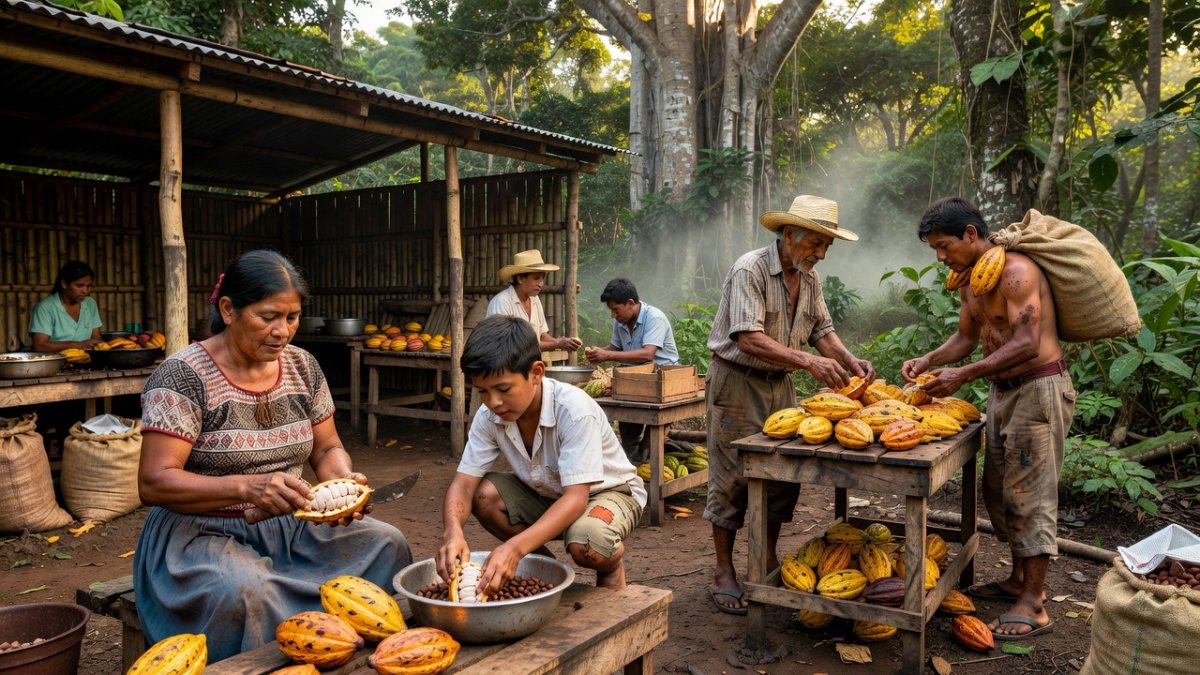
Farmers who signed PNIS contracts describe the shift from coca to cacao and ají as both economically precarious and environmentally necessary. One cooperative leader noted that the 82 billion COP investment in post-harvest infrastructure has finally given them access to drying facilities and export contracts previously unavailable. Another family explained that joint police-farmer eradication in June 2026 allowed them to remove the last coca plants without fear of retaliation. Yet uncertainty over the election clouds every decision. If Cepeda prevails, the 8,000 families in Putumayo expect continued technical assistance and market linkages. If de la Espriella wins, many fear the return of fumigation that would kill both remaining coca and newly planted cacao alike. These voices reveal that substitution is not merely an agricultural change but a wager on state commitment that will be settled at the ballot box in two days.
Chemical Legacy and Forest Recovery
Decades of cocaine production have left Putumayo soils saturated with precursor chemicals. Gasoline, acids, and potassium permanganate dumped into rivers have reduced fish stocks and contaminated drinking water. Mercury from illegal mining compounds the damage. When coca plots are abandoned without substitution, secondary forest regrowth is slow and often overtaken by cattle pasture. Cacao and ají systems, by contrast, establish permanent cover within three years, allowing soil microbes to begin breaking down chemical residues. IDEAM monitoring shows that areas under PNIS agreements exhibit measurably lower rates of new clearing compared with zones that experienced only eradication. The 14,500 hectares already converted in Putumayo therefore serve as living laboratories for forest recovery, demonstrating that legal crops can reverse part of the chemical legacy while supporting 8,000 families. Continued funding and security will determine whether these gains scale or stall after the election.
Institutional Challenges and Monitoring
MinAmbiente, IDEAM, MinDefensa, UNODC, PNIS, INDEPAZ, and UNODC SIMCI each play distinct roles in tracking substitution outcomes. IDEAM supplies annual deforestation statistics, while UNODC SIMCI maps coca hectares at 253,000 in 2023 and above 260,000 in subsequent years. PNIS manages the 31,000 family contracts and the 82 billion COP cacao fund. INDEPAZ documents security incidents that could derail voluntary agreements. Coordination gaps between these institutions have delayed payments and market access for some Putumayo cooperatives. The June 21 election will decide whether these agencies receive sustained political backing or face budget cuts and policy reversals. Without reliable monitoring, claims of success or failure remain contested, leaving the 8,000 families who have already substituted crops vulnerable to shifting institutional priorities.
The Bottom Line — What Comes Next
Colombia’s Amazon cannot absorb another cycle of record coca expansion followed by cattle-driven deforestation. The 8,000 families and 14,500 hectares already converted in Putumayo prove that substitution is technically feasible when markets and security align. The June 21 runoff between Iván Cepeda’s voluntary, development-focused approach and Abelardo de la Espriella’s hardline eradication agenda will determine whether these gains expand to the remaining 31,000 families or collapse under renewed fumigation. With 800,000 hectares of Amazon lost since 2015 and chemical pollution continuing to degrade rivers, the environmental cost of policy reversal is measurable in hectares and water quality. The coming days will reveal whether Colombia chooses to scale a working conservation alternative or returns to strategies that have repeatedly displaced rather than resolved the underlying drivers of deforestation.
By Elena Vasquez, Staff Writer
This article was produced with AI-assisted research and editorial support. Reporting is based on sources cited in the article.
What's Your Reaction?
 Like
0
Like
0
 Dislike
0
Dislike
0
 Love
0
Love
0
 Funny
0
Funny
0
 Wow
0
Wow
0
 Sad
0
Sad
0
 Angry
0
Angry
0

Latin America Correspondent at Global1.News. Based in Mexico City, covering politics, economics, energy, and culture across the region. Brings an on-the-ground perspective to stories spanning from the Rio Grande to Patagonia.














Comments (0)