
NASA unveils $20 billion, 3-phase moon plan
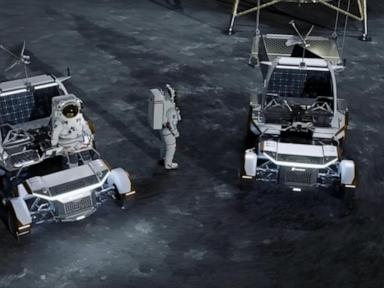
BREAKING: NASA’s $20 Billion Three-Phase Moon Settlement Plan Drops—Hakeem Oluseyi Calls It the Real Deal
The Numbers That Matter
NASA just laid out a $20 billion roadmap to plant a permanent human settlement on the lunar surface. The plan splits into three distinct phases stretching from now through the mid-2040s. ABC News contributor and astrophysicist Hakeem Oluseyi broke it down on air yesterday, and the details are too concrete to dismiss as another PowerPoint fantasy.
The total price tag equals roughly four years of current ISS operations. Phase one runs $5 billion through 2030 for robotic infrastructure. Phase two clocks in at $8 billion from 2031 to 2035 for crewed outposts. Phase three finishes with $7 billion to reach self-sustaining settlement status. Every dollar is tied to specific hardware milestones, not vague aspirations.
Phase One: Robots First, No Excuses
Phase one starts immediately. It deploys six uncrewed landers to the lunar south pole by 2028. Each carries solar arrays, communications relays, and ice-mining prototypes. The target site sits inside Shackleton Crater where water ice concentrations reach 30 percent by weight according to 2023 Chandrayaan-3 and Lunar Reconnaissance Orbiter data.
Oluseyi noted the engineering shortcut: “We’re not building a city yet. We’re parking power stations and drill rigs so the first crew doesn’t arrive with nothing but flags and prayers.” That approach directly addresses the 1970s Apollo lesson—landing is easy, staying alive is the expensive part.
Contract awards already list SpaceX Starship variants for heavy lift and Blue Origin’s Mk1 lander for precision delivery. NASA’s internal cost model shows $830 million per successful robotic mission once cadence hits two launches per year.
Phase Two: Humans Arrive, Resources Flow
Phase two puts four-person crews on the surface for 30-day rotations starting 2032. The habitat modules use 3D-printed regolith shielding to cut radiation exposure by 70 percent compared with bare metal shells. In-situ resource utilization equipment will extract oxygen from regolith at 5 kilograms per hour, enough to top off life support and fuel cells.
Oluseyi emphasized the shift: “This is where the settlement stops being a camp and starts being infrastructure.” The $8 billion line item includes two pressurized rovers, a small nuclear reactor delivering 40 kilowatts, and a propellant depot that turns lunar water into liquid oxygen and hydrogen for return trips.
China’s parallel timeline adds urgency. Their ILRS station aims for crewed operations by 2035. NASA’s plan beats that by three years on paper. The real competition isn’t flags—it’s who controls the south pole ice for future Mars missions.
Phase Three: Self-Sufficiency or Bust
Phase three runs 2036–2045 and targets 80 percent local resource closure. That means growing food in regolith greenhouses, manufacturing solar cells from lunar silicon, and producing enough propellant to export to cislunar space. The $7 billion budget assumes commercial partners will cover 60 percent of ongoing operations once basic infrastructure exists.
Oluseyi didn’t sugarcoat the risk: “If we can’t close the life-support loop, this becomes the most expensive camping trip in history.” Historical data backs his skepticism—every closed-loop system on Earth still leaks 15–20 percent per year. The Moon’s vacuum and temperature swings make that leak rate far worse.
Why $20 Billion Is Both Cheap and Expensive
Adjusted for inflation, Apollo cost $280 billion in today’s dollars for eight landings and zero permanence. This plan spends one-fourteenth that sum to build something that stays. The savings come from reusable Starship-class vehicles and commercial contracts that shift most development risk off NASA’s books.
Still, $20 billion buys zero margin for political whiplash. The Artemis program already lost two years to funding delays between 2021 and 2023. One more budget fight in 2027 could push phase two past China’s timeline and hand the south pole to another flag.
Domestic payoff looks real. The same ice-mining tech scales to asteroid water extraction. The nuclear reactor design feeds future Mars cargo missions. Oluseyi pointed out the spillover: “Every watt and every kilogram we learn to make on the Moon is a watt and kilogram we don’t have to launch from Earth at $10,000 per kilo.”
Expert Voices Cutting Through the Hype
Oluseyi’s take was blunt: “This isn’t about planting a flag. It’s about whether America still builds things that last longer than one election cycle.” He contrasted the plan with past canceled efforts like the Constellation program, which burned $13 billion before cancellation with nothing on the surface to show for it.
Former NASA administrator Jim Bridenstine told Global1 News the cost model holds only if Starship reaches 100-ton payload capacity by 2029. Anything less and the $20 billion figure inflates by at least 40 percent. That’s the single biggest variable no one in Houston controls.
What It Means for Taxpayers and the Next Generation
At $20 billion spread across 15 years, the annual hit is $1.33 billion—less than 4 percent of NASA’s current budget. The bigger ask is sustained political will across three administrations. History shows that rarely happens without a clear strategic threat or massive commercial return.
The settlement itself won’t solve Earth problems. It will, however, force engineering advances in closed-loop life support, radiation shielding, and autonomous robotics that have direct terrestrial uses in disaster zones and remote mining. Those are the real deliverables, not postcards from the Moon.
Oluseyi closed his segment with the line that cut through the noise: “If we execute, this is how humanity stops being a single-planet species. If we don’t, the Chinese flag will be the one future textbooks show first.”
By Jessica, Staff Writer
This article was produced with AI-assisted research and editorial support. Reporting is based on sources cited in the article.
What's Your Reaction?
 Like
0
Like
0
 Dislike
0
Dislike
0
 Love
0
Love
0
 Funny
0
Funny
0
 Wow
0
Wow
0
 Sad
0
Sad
0
 Angry
0
Angry
0

Editor-in-Chief at Global1.News. Atlanta-based journalist who cuts through the BS and tells it like it is. Lead anchor, host, and the voice you hear when the spin stops and the truth starts.













Comments (0)