
Pope Leo declares ‘just war’ theory outdated in Vatican document
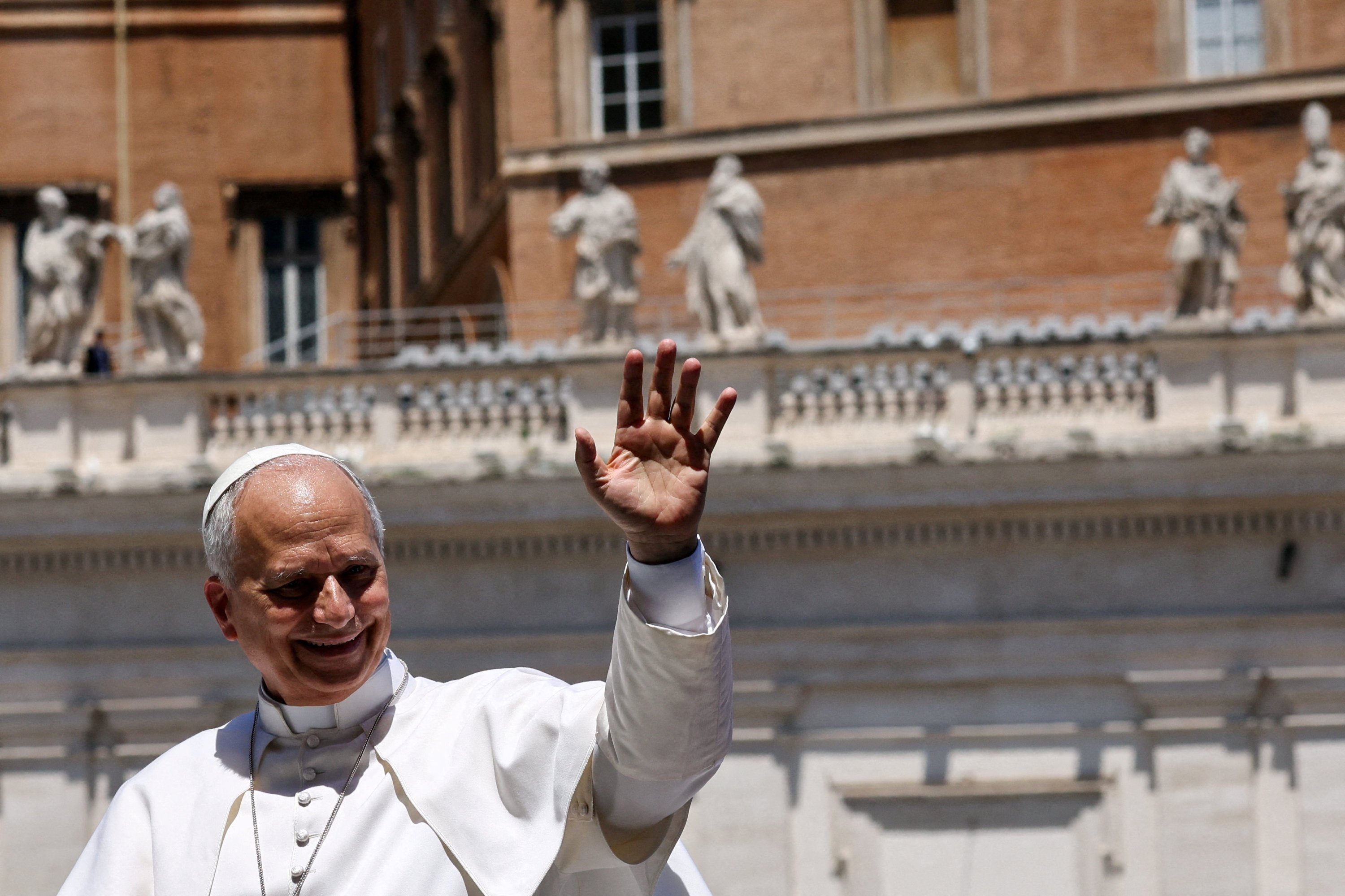
Pope Leo declares ‘just war’ theory outdated in Vatican document
In a sweeping Vatican document released this week, Pope Leo XIV has formally declared the centuries-old “just war” doctrine outdated, marking one of the most significant shifts in Catholic moral teaching on conflict since the fifth century. The 42-page apostolic exhortation, titled Pacem in Veritate Renovata, argues that modern warfare’s scale, technology, and indiscriminate nature render traditional criteria for justifying armed conflict both morally insufficient and practically obsolete. For observers in the Middle East, where layered conflicts from Gaza to the Levant continue to test religious and ethical frameworks, the pronouncement carries immediate weight.
Roots of the Doctrine and Its Modern Rejection
Just war theory traces its formal articulation to St. Augustine of Hippo around 426 AD, later refined by Thomas Aquinas in the thirteenth century. It established conditions under which a war could be considered morally permissible: legitimate authority, just cause, right intention, proportionality, last resort, and reasonable prospect of success. The framework guided Catholic responses to conflicts from the Crusades through the twentieth-century world wars and informed positions on nuclear deterrence during the Cold War.
Pope Leo’s document explicitly supersedes these criteria. Drawing on data from contemporary armed conflicts, it notes that between 2010 and 2024, over 70 percent of civilian casualties in major wars occurred through precision-guided munitions and drone strikes—technologies that have blurred the line between combatant and non-combatant far beyond what medieval theologians could envision. “The presumption of ‘last resort’ collapses when states possess arsenals capable of ending millions of lives in hours,” the text states. Vatican sources confirm the drafting process involved consultations with bishops from conflict zones, including Lebanon, Iraq, and the Holy Land.
Lebanese and Regional Context
From Beirut, the implications resonate immediately. Lebanon’s own history—civil war, Israeli incursions, Hezbollah’s arsenal, and the 2023-2025 border clashes—has repeatedly forced local Catholic communities to navigate questions of self-defense versus escalation. Maronite Patriarch Cardinal Bechara Rai welcomed the document in a statement issued from Bkerke, noting that “Lebanon has paid the price of repeated cycles of justified retaliation that produced only more orphans and displaced families.”
Local analysts point to specific data. The Lebanese Ministry of Public Health recorded 1,842 civilian deaths in southern Lebanon between October 2023 and March 2025, many from cross-border exchanges initially framed by both sides as proportionate responses. Pope Leo’s rejection of proportionality as a reliable moral yardstick challenges narratives long used by political actors across the confessional spectrum.
Expert Perspectives on the Shift
Dr. Nayla Tabet, professor of moral theology at the Université Saint-Joseph in Beirut, described the change as “not merely pastoral but structurally disruptive.” She argues that Catholic military chaplains and defense officials in countries such as France, Poland, and the Philippines will now face doctrinal pressure to reassess training manuals that still reference just war categories. “When the Holy See removes the ethical scaffolding, governments lose a convenient theological fig leaf,” Tabet said.
Meanwhile, Jesuit Father Michel Younes, who contributed to early drafts of the exhortation, emphasized empirical drivers behind the decision. “We examined satellite imagery of destroyed hospitals in Gaza, Raqqa, and Mariupol. The evidence showed that even when states claim adherence to discrimination and proportionality, the human cost remains unacceptable. The theory no longer functions as a restraint.”
Global Political Reactions
Diplomatic responses have been measured but revealing. The Holy See’s permanent observer at the United Nations, Archbishop Paul Gallagher, briefed member states on the document’s release, prompting private expressions of concern from several NATO capitals. A senior European Union diplomat, speaking on condition of anonymity, noted that Catholic members of parliament in Italy and Spain have already tabled questions about continued arms export licenses to the Middle East.
In contrast, Russian Orthodox officials issued a cautious statement acknowledging the Vatican’s right to update its teachings while defending Russia’s own military actions in Ukraine as defensive. Ukrainian Catholic leaders, however, expressed unease that the new stance could weaken arguments for international support against aggression.
Implications for Arms and Deterrence
The document stops short of endorsing absolute pacifism, instead advancing a framework of “active nonviolence” that prioritizes conflict prevention through economic justice, refugee integration, and verified disarmament. It cites the 2017 Treaty on the Prohibition of Nuclear Weapons as an example of moral progress that just war reasoning had previously hindered.
Defense analysts tracking Middle East arms flows estimate that Catholic-majority countries account for approximately 18 percent of global conventional weapons exports. Should episcopal conferences in those nations begin questioning the morality of such transfers, procurement contracts worth billions could face renewed scrutiny. Already, advocacy groups in Brussels are circulating the Vatican text alongside proposed EU regulations on dual-use technology exports to the region.
Longer-Term Effects on Catholic Communities
Within the Church itself, the shift is expected to influence seminary formation and lay education. The Pontifical Council for Justice and Peace has been tasked with producing updated catechetical materials by 2027. In Lebanon, where Catholics constitute roughly 30 percent of the population, parish discussion groups have begun examining how the new teaching intersects with calls for national defense reform and Hezbollah disarmament.
Critics within traditionalist circles have already labeled the document an overreach, arguing that it weakens the moral clarity needed to confront groups designated as terrorist organizations. Supporters counter that clinging to an outdated theory has too often served to sanctify violence rather than restrain it.
The coming months will test whether Pope Leo’s intervention translates into concrete policy shifts among Catholic legislators and military personnel. For now, the document stands as a deliberate rupture with a 1,600-year tradition, one whose reverberations will be felt most acutely in regions where war has become a chronic condition rather than an exceptional event.
This is Malik Hassan for Global1 News, reporting from Beirut. 🇱🇧
This article was produced with AI-assisted research and editorial support. Reporting is based on sources cited in the article.
What's Your Reaction?
 Like
0
Like
0
 Dislike
0
Dislike
0
 Love
0
Love
0
 Funny
0
Funny
0
 Wow
0
Wow
0
 Sad
0
Sad
0
 Angry
0
Angry
0
Middle East Correspondent at Global1.News. Based in Beirut, covering politics, conflict, energy, and society across the Middle East. Brings context and depth to a region often reduced to headlines.









Comments (0)