
UNRWA Failed to Reform: Antisemitic Textbooks Still in Use, New Report Finds
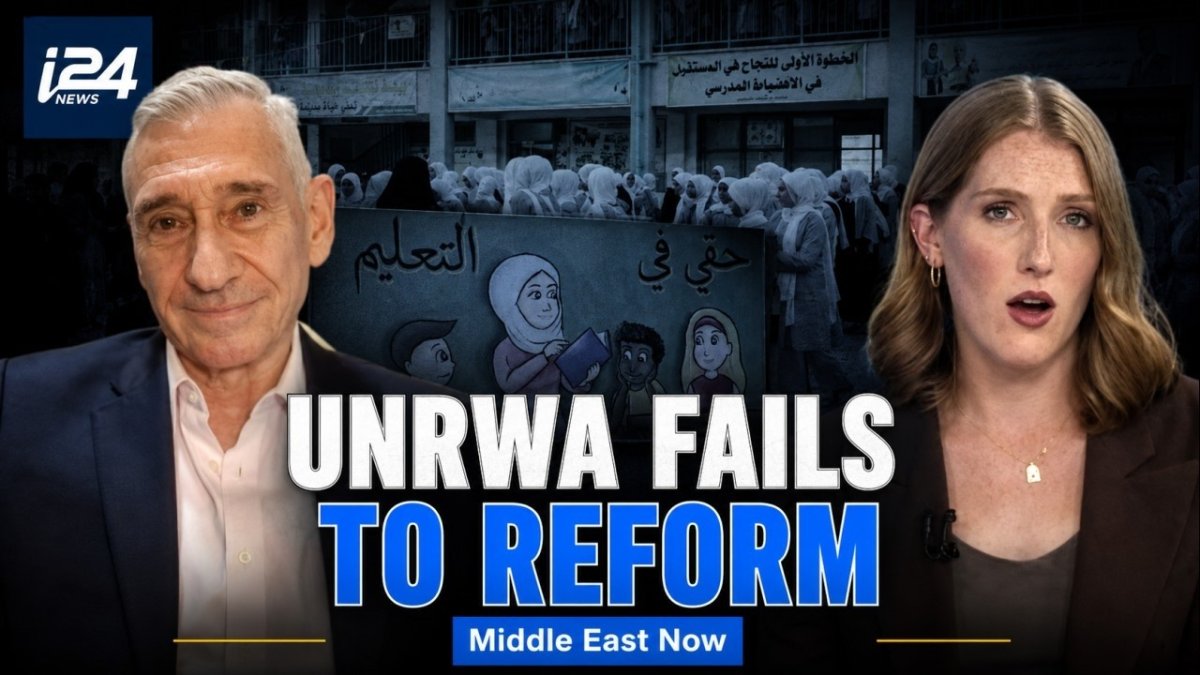
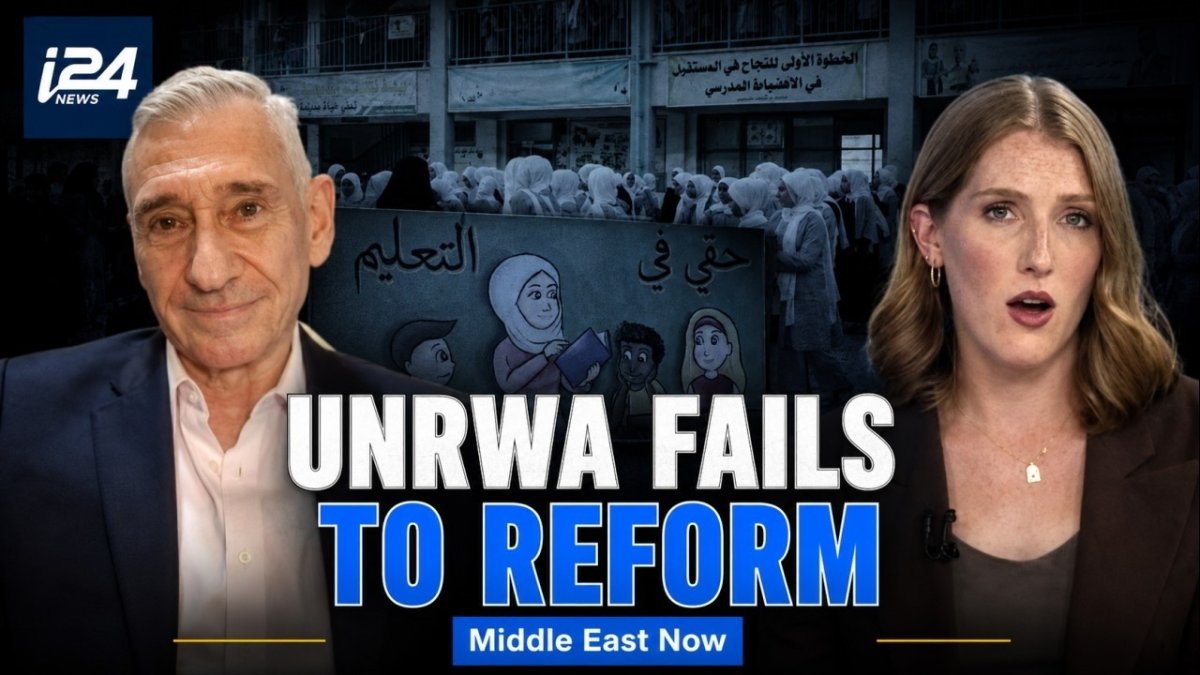
Recent i24NEWS English reporting has spotlighted the latest IMPACT-se analysis covering the period from April 2024 to May 2026, which documents how UNRWA has not carried out the reforms outlined in the Colonna Report. Israeli diplomats in Jerusalem and Tel Aviv view the findings as direct evidence that antisemitic content continues to shape the education of Palestinian children across Gaza, the West Bank, and East Jerusalem. The Colonna Report and UNRWA's Promises The Colonna Report, published

Recent i24NEWS English reporting has spotlighted the latest IMPACT-se analysis covering the period from April 2024 to May 2026, which documents how UNRWA has not carried out the reforms outlined in the Colonna Report. Israeli diplomats in Jerusalem and Tel Aviv view the findings as direct evidence that antisemitic content continues to shape the education of Palestinian children across Gaza, the West Bank, and East Jerusalem.
The Colonna Report and UNRWA's Promises
The Colonna Report, published in 2024 under the leadership of former French Foreign Minister Catherine Colonna, examined UNRWA educational materials and concluded that they constitute a grave violation of neutrality. The report issued 50 specific recommendations aimed at removing antisemitic and inciting content from classrooms operated by the agency in Gaza, the West Bank, East Jerusalem, Jordan, Lebanon, and Syria. Donor countries responded by temporarily suspending funding to UNRWA while awaiting evidence of compliance.
UNRWA initially pledged to implement the full set of recommendations, including a joint review process involving Israel and the Palestinian Authority. Israeli officials at the Foreign Ministry and the Prime Minister's Office immediately raised concerns that the agency would fall short, citing past patterns of minimal change. The report's call for external oversight was intended to address longstanding complaints from Jerusalem that UNRWA materials glorify violence against Israelis.
Over half of Gazan students attend UNRWA schools, making the agency's curriculum a central factor in the daily lives of families in Gaza City, Khan Younis, and Rafah. Israeli security assessments prepared by the IDF and Shin Bet have repeatedly linked exposure to such materials with increased support for groups like Hamas. The Colonna recommendations were therefore seen in Jerusalem as a critical test of whether UNRWA could operate as a neutral humanitarian body.
How UNRWA Gamed the Reform Process
IMPACT-se's examination found that UNRWA failed to meaningfully implement the Colonna recommendations. Instead, the agency lowered its own threshold for declaring recommendations complete and revised its reporting methodology to suggest accelerated progress. These adjustments allowed UNRWA to claim compliance without removing the core problematic content from textbooks used in its facilities across the West Bank and Gaza.
The absence of a joint review with Israel, as explicitly recommended by Catherine Colonna, further undermined the process. Israeli representatives were never invited to participate, leaving the Palestinian Authority as the sole partner in any curriculum discussions. Officials in the Prime Minister's Office in Jerusalem described this exclusion as a deliberate step that preserved the status quo of incitement.
Marcus Sheff, CEO of IMPACT-se, stated that the changes amount to procedural compliance rather than deep institutional reform. This assessment aligns with warnings issued by the Israeli Foreign Ministry that UNRWA's internal adjustments would not address the fundamental issues identified in the 2024 Colonna Report. The revised methodology has already influenced donor decisions despite the lack of substantive textbook revisions.
Antisemitic Textbooks Still in UNRWA Classrooms
An 8th grade Arabic textbook still in use contains reading comprehension, grammar, and vocabulary exercises that praise the slitting of Israelis' throats and glorify suicide bombings. The same materials celebrate Dalal Mughrabi, the perpetrator of the 1978 Coastal Road Massacre in which 38 Israelis, including 13 children, were killed. These passages remain part of the curriculum delivered to students in UNRWA schools in Gaza and the West Bank.
Maps in the textbooks label all Israeli territory as Palestine, erasing the existence of the Jewish state. This cartographic approach is taught to children in East Jerusalem facilities as well as in camps in Jordan, Lebanon, and Syria. Israeli analysts at the Foreign Ministry note that such maps reinforce rejectionist narratives that fuel violence along the Gaza border and in the West Bank.
The continued presence of these texts directly contradicts the Colonna Report's requirement for neutrality. Palestinian students in UNRWA classrooms in Jabalia and Nablus receive daily reinforcement of these messages, which Israeli security officials link to recruitment patterns observed by the IDF. The failure to excise this content has prolonged the educational environment that the 2024 report sought to dismantle.
Hamas Infiltration of UNRWA's Educational Network
Twelve UNRWA administrators, including principals and deputy principals, are confirmed members of Hamas or Palestinian Islamic Jihad. These individuals hold positions of authority over schools in Gaza and the West Bank, where they influence staffing and curriculum delivery. Israeli intelligence assessments shared with the Prime Minister's Office have documented these affiliations through multiple channels.
Terror tunnels have been discovered beneath UNRWA schools in Gaza, providing Hamas with infrastructure for military operations directly under educational facilities. At least 14 UNRWA teachers publicly celebrated the October 7 massacre on social media, with posts originating from accounts linked to staff in Gaza City and Khan Younis. These incidents occurred while the agency was supposedly implementing neutrality reforms.
The infiltration extends beyond individual staff to institutional practices that shield Hamas operatives within the UNRWA system. Israeli officials in the Knesset have cited these cases as evidence that UNRWA functions as an extension of Hamas governance in Gaza rather than an independent educational provider. The presence of such personnel undermines any claim that reforms have altered the agency's operational culture.
International Donor Response: Funding Despite Failure
Multiple donor governments resumed funding to UNRWA after the agency introduced its revised reporting methodology, even though IMPACT-se documented persistent failures. The lowered thresholds for completion allowed these governments to justify renewed contributions without requiring full removal of antisemitic content. Israeli diplomats in European capitals and Washington have expressed frustration that the new metrics masked the absence of real change.
The temporary funding suspensions that followed the Colonna Report were lifted on the basis of procedural updates rather than verified textbook revisions. This development has prompted renewed criticism from the Israeli Foreign Ministry, which argues that donor decisions now reward minimal compliance. The flow of resources continues to support operations in Gaza, the West Bank, and East Jerusalem despite the documented shortcomings.
Donor governments cited UNRWA's internal progress reports as sufficient grounds for resumption, overlooking the exclusion of Israel from the review process. This approach has left Jerusalem concerned that international funding will sustain the very educational framework the Colonna Report identified as a grave violation of neutrality. The pattern of resumed support without deeper reform remains a point of contention in Israel's diplomatic engagements.
What This Means for Israeli Security and the Region
The persistence of antisemitic materials and Hamas-linked staff in UNRWA schools directly affects Israel's security environment in Gaza and the West Bank. Over half of Gazan students continue to receive instruction that glorifies attacks such as the 1978 Coastal Road Massacre, shaping attitudes toward violence against Israeli civilians. IDF operations in these areas must account for the ideological environment fostered by these institutions.
Israeli officials at the Prime Minister's Office and Foreign Ministry have warned that the failure of reforms strengthens rejectionist groups across the region, including Hezbollah in Lebanon and Iranian-backed networks in Syria. The maps labeling Israeli territory as Palestine and the celebration of suicide bombings provide ideological support for ongoing threats along Israel's borders. Regional stability depends on whether UNRWA can be compelled to meet the standards set in the Colonna Report.
Without genuine implementation, the agency will continue to operate facilities in East Jerusalem and the West Bank that contradict Israel's core security requirements. The Israeli government has therefore intensified calls for alternative educational frameworks that exclude incitement. The IMPACT-se findings underscore the urgency of these demands for policymakers in Jerusalem and for Israel's partners in the international community.
By Hannah Berg, Staff WriterWhat's Your Reaction?
 Like
0
Like
0
 Dislike
0
Dislike
0
 Love
0
Love
0
 Funny
0
Funny
0
 Wow
0
Wow
0
 Sad
0
Sad
0
 Angry
0
Angry
0






Comments (0)