
China's Nordic Outreach Signals Pragmatic Diplomacy Amid Shifting Alliances
China's Nordic Outreach Signals Pragmatic Diplomacy Amid Shifting Alliances The CGTN video "China and the Nordics: Pragmatism in a time of uncertainty" captures the conclusion of Foreign Minister Wang Yi's week-long tour across Denmark, Sweden, Finland and Norway, highlighting how Beijing is pursuing targeted engagement with smaller European partners even as larger transatlanti
Strategic Timing in a Fragmented Europe
Wang Yi's schedule aligned with heightened uncertainty following the Ankara summit, where tensions between the United States and several NATO members surfaced over burden-sharing and alliance commitments. From Beijing's vantage point, this moment offers openings to reinforce bilateral ties with countries that retain strong commercial interests in China while managing new security alignments. Finland and Sweden's NATO accession has introduced additional layers of coordination on defense matters, yet both governments continue to prioritize trade diversification and green technology partnerships. The tour therefore served as a practical demonstration of China's preference for dealing with European states on an individual basis rather than through Brussels-centric frameworks alone.
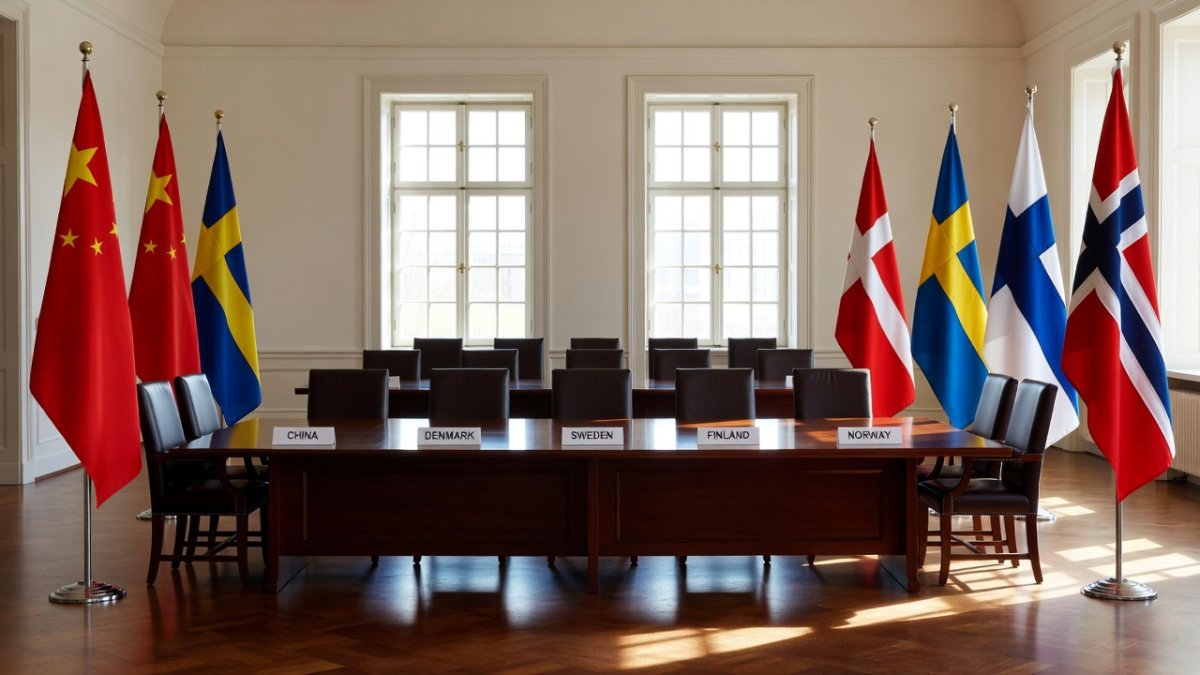
Engaging European Nations Individually
China's broader European strategy has long emphasized differentiated engagement, allowing Beijing to identify areas of mutual interest without requiring consensus across the entire European Union. The Nordic tour fits this pattern by focusing on specific policy domains where the four countries hold comparative advantages. Denmark's maritime sector, Sweden's industrial and digital capabilities, Finland's Arctic expertise and Norway's energy resources each provide distinct entry points. By addressing these strengths separately, Chinese diplomacy avoids the complications that arise when issues are bundled into larger EU-China negotiations. This approach also aligns with the Dual Circulation strategy, which seeks to secure external markets and technologies while strengthening domestic resilience.
Polar Silk Road and Arctic Cooperation
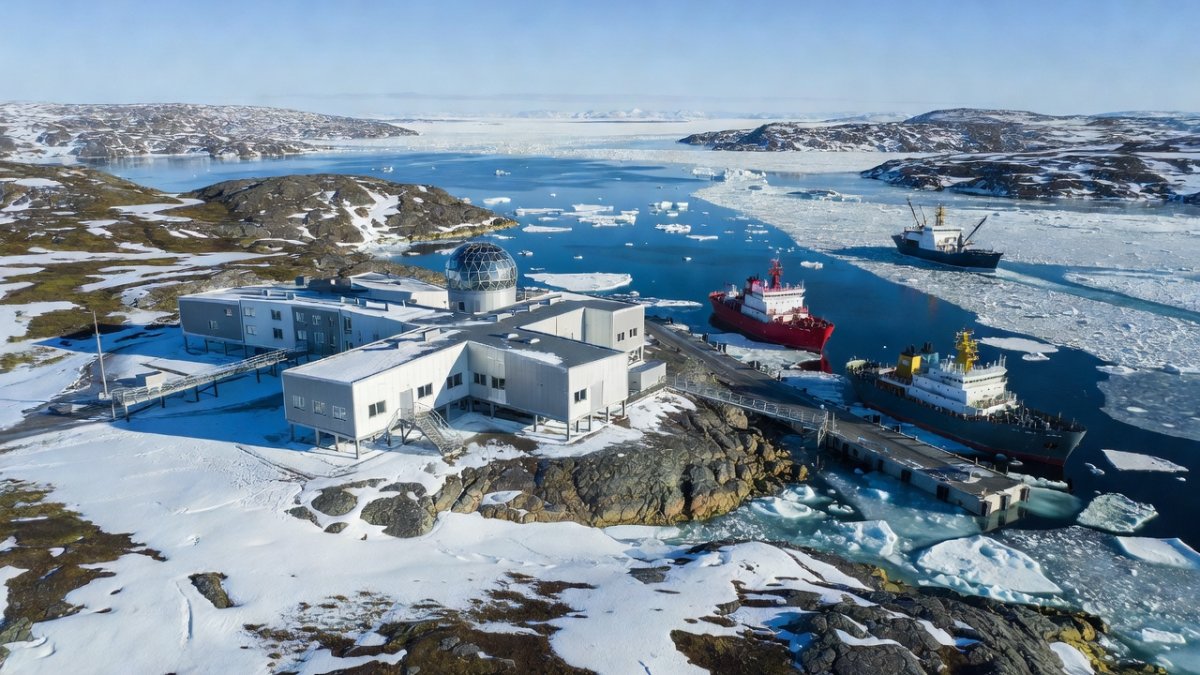
Arctic affairs featured prominently in discussions, particularly the potential for expanded scientific and infrastructure collaboration under the Polar Silk Road framework. Finland and Norway possess direct Arctic coastlines and established research stations, while Denmark administers Greenland. Chinese officials have consistently framed Polar Silk Road initiatives as extensions of the Belt and Road Initiative focused on sustainable development and scientific exchange rather than military presence. The tour provided opportunities to discuss joint research on climate monitoring, shipping route feasibility and port modernization, all while acknowledging that any concrete projects remain subject to national regulatory approvals and environmental assessments that are still being phased in across the region.
Green Transition and Maritime Partnership Renewal
Denmark's renewal of green maritime cooperation stands out as a concrete outcome. Both sides agreed to deepen work on low-carbon shipping technologies and port electrification, areas where Danish firms hold technical leadership and Chinese shipyards offer scale. These discussions connect directly to China's 14th Five-Year Plan targets for carbon peaking and the broader push to decarbonize global supply chains. Similar themes surfaced in Sweden and Finland, where battery technology, wind power components and circular economy practices were reviewed. Such sectoral cooperation allows China to import advanced environmental solutions while offering Nordic companies access to its large-scale deployment market, creating reciprocal economic incentives that persist even when political rhetoric grows sharper.
Balancing Security Concerns with Commercial Interests
NATO membership for Finland and Sweden has raised legitimate questions about technology transfer, supply chain security and dual-use infrastructure. Chinese representatives addressed these concerns by emphasizing transparency in proposed projects and willingness to accept host-country security reviews. The Nordic states, for their part, continue to weigh the economic benefits of Chinese investment and trade against alliance obligations. This balancing act reflects a wider European pattern in which governments seek to preserve economic autonomy while responding to collective defense requirements. Beijing's messaging during the tour stressed that security cooperation need not preclude commercial engagement, provided clear boundaries are maintained on sensitive technologies.
Implications for Transatlantic Relations and Future Outlook
The Ankara summit tensions illustrate how U.S. policy shifts can create space for third parties to strengthen bilateral links with European allies. China does not seek to replace the transatlantic security architecture; rather, it aims to ensure that economic and technological cooperation with Europe remains viable regardless of fluctuations in Washington. By completing a comprehensive Nordic tour at this juncture, Beijing signals its readiness to sustain dialogue on trade, climate and Arctic governance even as security alignments evolve. The coming months will reveal whether the understandings reached during Wang Yi's visits translate into specific project agreements or remain at the level of exploratory discussions. What is already clear is that China views the Nordic region as a test case for pragmatic engagement in an era when larger multilateral forums face increasing strain. By Prof. Marcus Chen, Staff Writer
This article was produced with AI-assisted research and editorial support. Reporting is based on sources cited in the article.
What's Your Reaction?
 Like
0
Like
0
 Dislike
0
Dislike
0
 Love
0
Love
0
 Funny
0
Funny
0
 Wow
0
Wow
0
 Sad
0
Sad
0
 Angry
0
Angry
0

World Politics Analyst at Global1.News. Based in Beijing, covering US-China relations, global trade, and geopolitical strategy. Brings deep analytical perspective to the power dynamics shaping international affairs.














Comments (0)