
Korea's Panda Twins Celebrate Final Birthday Before Return to China Under Panda Diplomacy
Rui Bao and Hui Bao, South Korea's first twin giant pandas, celebrated their third birthday on July 7, 2026, at Everland's Panda World in Yongin, Gyeonggi Province. The event marks their final birthday in South Korea before their scheduled return to China under international panda loan agreements, offering a window into the mechanics of panda diplomacy and its role in Korea-Chi
Rui Bao and Hui Bao, South Korea's first twin giant pandas, celebrated their third birthday on July 7, 2026, at Everland's Panda World in Yongin, Gyeonggi Province. The event marks their final birthday in South Korea before their scheduled return to China under international panda loan agreements, offering a window into the mechanics of panda diplomacy and its role in Korea-China bilateral relations.
Korea's Panda Twins Celebrate Final Birthday Before Return to China Under Panda Diplomacy
Seoul, South Korea - July 8, 2026 - Panda keepers Kang Cheol-won and Song Young-kwan prepared bamboo birthday cakes and a handcrafted wooden bench for the celebration at Panda Second House. Approximately 30 fans attended after 400 applicants competed for each available spot. Both pandas now weigh over 80 kilograms and have grown into healthy young adults since their birth on July 7, 2023.
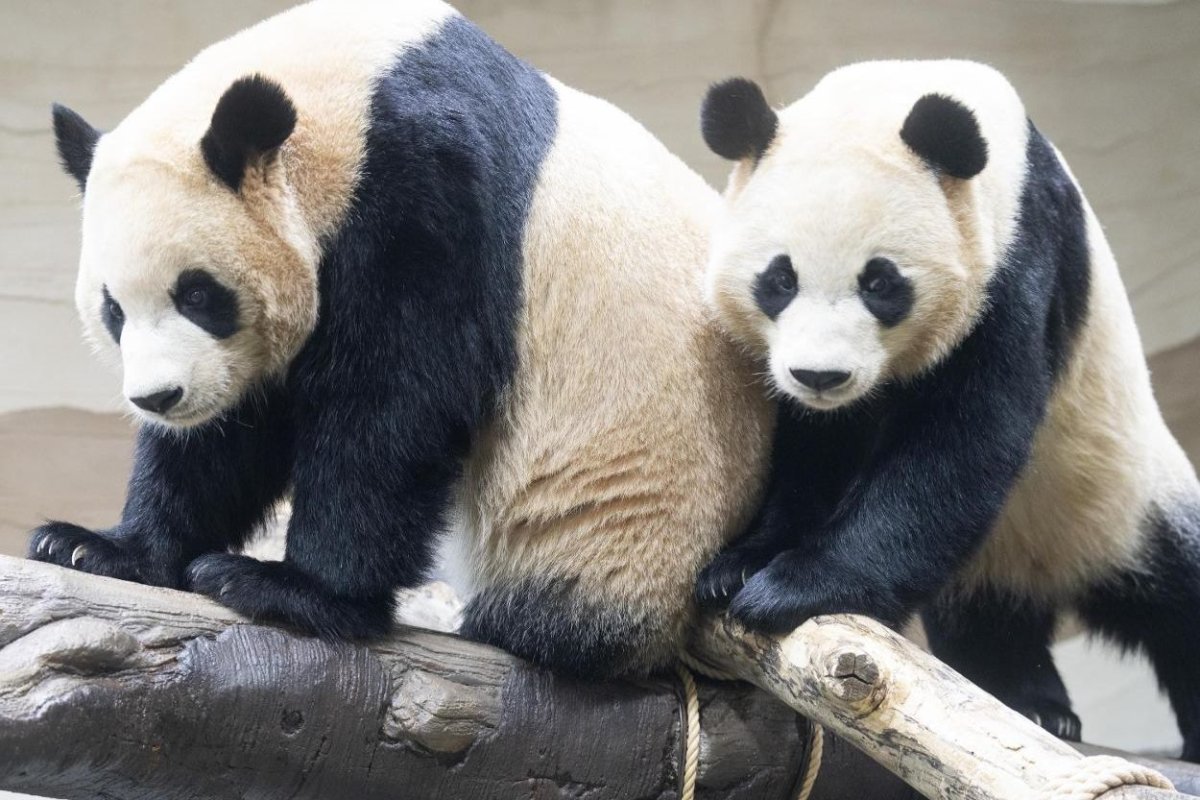
The Birthday Celebration at Everland
Rui Bao and Hui Bao, South Korea's first twin giant pandas, marked their third birthday on July 7, 2026, at Everland's Panda World in Yongin, Gyeonggi Province. Keepers Kang Cheol-won and Song Young-kwan prepared bamboo birthday cakes and a handcrafted wooden bench for the event. Approximately 30 fans attended after 400 applicants competed for each spot. Both pandas now weigh over 80 kilograms.
The twins were born on July 7, 2023, to Ai Bao and Le Bao, who arrived in South Korea in 2016 under a 2014 Korea-China summit agreement between President Park Geun-hye and President Xi Jinping. Their older sister Fu Bao returned to the Shenshuping Panda Base in Wolong, Sichuan Province, in April 2024, drawing widespread international media attention. A new cub was born on June 3, 2026, continuing the lineage at Everland's breeding facility.
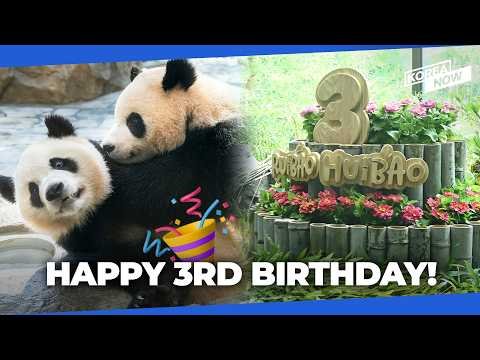
Historical Roots of Panda Diplomacy on the Korean Peninsula
Panda diplomacy between South Korea and China dates to 1994, when the first pandas arrived in Seoul. The practice resumed in earnest during the July 2014 summit between President Xi Jinping and President Park Geun-hye, where a joint statement included support for "joint panda research." This led to the March 2016 arrival of Ai Bao and Le Bao, the parent pandas of the current twins. These exchanges operate under formal agreements between Samsung C&T, Everland's parent company, and the China Conservation and Research Center for the Giant Panda.
In January 2026, South Korea and China discussed new panda loans during high-level consultations. Such arrangements reflect China's established use of panda loans as instruments of foreign policy in Northeast Asia, where symbolic gestures serve to reinforce bilateral ties amid shifting regional dynamics. The 2014 summit agreement specifically cited panda cooperation as a marker of the strategic cooperative partnership between Seoul and Beijing.
The Mechanics of International Panda Loan Agreements
International panda loan agreements require pandas born overseas to return to China before reaching breeding age, typically before their fourth birthday. This policy applies directly to Rui Bao and Hui Bao, who are expected to depart South Korea in the coming months following their third birthday. The framework ensures that genetic management remains centralized at Chinese research facilities while allowing temporary hosting abroad under strict conservation protocols.
An Everland official stated that the park will continue monitoring the twins' health and coordinating with Chinese authorities to determine the safest and most appropriate timing for transfer. The return timeline aligns with the precedent set by Fu Bao's departure in April 2024, which was widely covered by international media including The Associated Press, Reuters, and Agence France-Presse. South Korea's Ministry of Environment and the Korea Forest Service have been involved in the consultation process alongside Chinese conservation authorities.
Chaebol Involvement and Public Diplomacy
Samsung C&T's management of the pandas illustrates the chaebol sector's role in managing bilateral cultural assets in South Korea. Everland, the flagship resort of the Samsung group, serves as the primary venue for public interaction with the pandas, transforming the animals into focal points for educational outreach and sustained media coverage. This corporate involvement extends beyond commercial entertainment to support state-level diplomatic signaling between Seoul and Beijing.
Public response in South Korea demonstrates the soft power dimension of panda diplomacy. The birthday event drew roughly 400 applicants for every available guest spot, indicating sustained domestic interest. The pandas function as accessible symbols that humanize otherwise formal diplomatic channels. The "We Love Rui and Hui" online community on Naver and the Zootopia fan cafe have maintained active engagement throughout the twins' three years in Korea.
Comparative Perspectives on Panda Hosting Worldwide
Other nations hosting Chinese pandas operate under similar loan structures with distinct national adaptations. The United States, which has hosted pandas at the Smithsonian National Zoo in Washington, D.C., and Zoo Atlanta, has emphasized long-term research collaborations. Several European facilities, including those in the Netherlands, France, and Germany, highlight conservation messaging and captive breeding programs. Japan's panda programs at Ueno Zoo in Tokyo and Adventure World in Wakayama have emphasized sustained research partnerships spanning decades.
The South Korean case stands out for its direct linkage to summit-level diplomatic agreements and chaebol operational responsibility. While the US and European programs typically involve direct government-to-government agreements or collaborations with major zoological institutions, Korea's arrangement routes through Samsung C&T, introducing a corporate dimension absent in most other host countries. These variations reveal how recipient countries adapt panda diplomacy to their national institutional contexts.
Implications for Future Korea-China Cultural Exchanges
The impending return of Rui Bao and Hui Bao marks a transitional phase in Korea-China panda diplomacy. Discussions in January 2026 on additional loan arrangements during bilateral consultations suggest potential continuity, though actual outcomes will depend on broader diplomatic conditions between Seoul and Beijing. Historical patterns indicate that panda exchanges have persisted across political fluctuations, providing stable channels for interaction even during periods of diplomatic tension.
Looking ahead, future cultural programs may build on the established infrastructure at Everland's Panda World and the institutional relationships forged through a decade of operational collaboration. The pandas' presence has already contributed to sustained media visibility and institutional contacts that extend beyond the animals themselves. As Northeast Asian diplomatic dynamics continue to evolve, the panda program offers a model for managing symbolic assets and public engagement in the region's international relations.
By Prof. David Park, Staff Writer
This article was produced with AI-assisted research and editorial support. Reporting is based on sources cited in the article.
What's Your Reaction?
 Like
0
Like
0
 Dislike
0
Dislike
0
 Love
0
Love
0
 Funny
0
Funny
0
 Wow
0
Wow
0
 Sad
0
Sad
0
 Angry
0
Angry
0
East Asia/Technology Correspondent at Global1.News. Seoul-based voice covering Korean politics, technology, business, and culture. Analyzes how technology and geopolitics intersect across East Asia.














Comments (0)