
Artists in Botswana Capture World Athletics Relays Through Live Painting
The athletes have left the track, and the stadium stands have emptied. But five artists in Gaborone are still at work — brushes in hand, canvases before them, capturing the final strokes of a weekend that made history. The 2026 World Athletics Relays, the first ever held on African soil, have come to an end, leaving behind shattered records, electric memories, and a collection
The athletes have left the track, and the stadium stands have emptied. But five artists in Gaborone are still at work — brushes in hand, canvases before them, capturing the final strokes of a weekend that made history. The 2026 World Athletics Relays, the first ever held on African soil, have come to an end, leaving behind shattered records, electric memories, and a collection of paintings that tell the story of sport in a way no photograph could.
When Sport Meets Canvas: Botswana's Live Painting Experience at the World Athletics Relays
Gaborone, Botswana — As the roar of the crowd faded and the last baton was passed, five Botswanan artists remained in the stadium, translating two minutes and fifty-four seconds of history into pigment and line. The Live Painting Experience, conceived at the intersection of sport and visual art, has left the nation — and the athletics world — with an enduring cultural imprint.
Five Artists, One Vision: Sport Meets Art
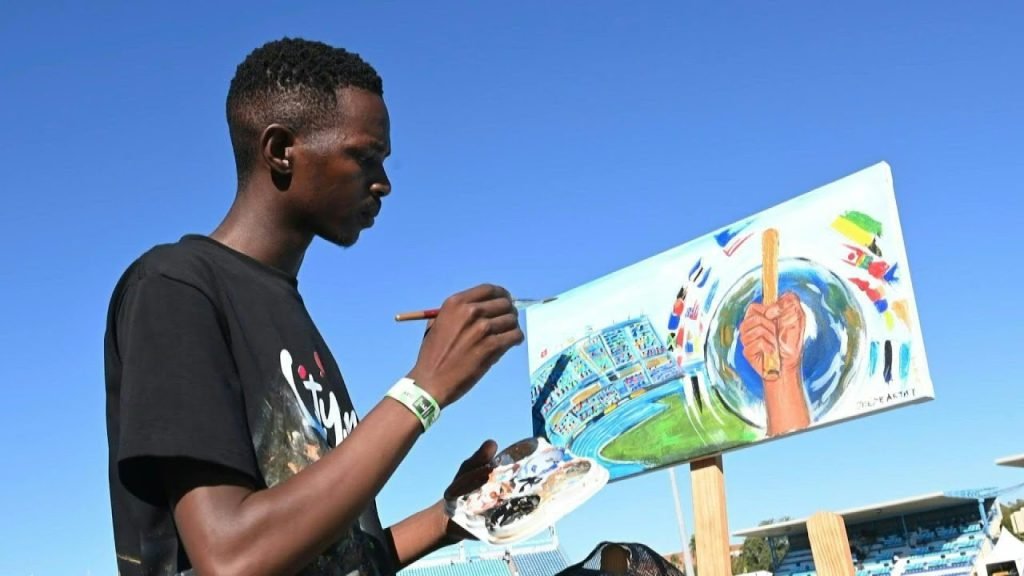
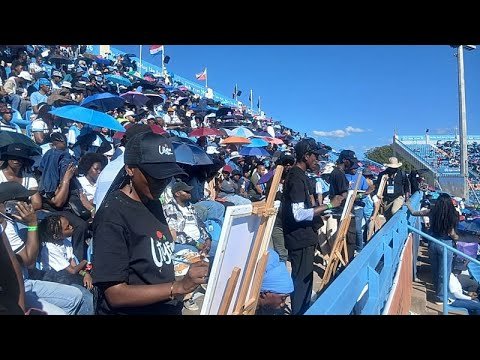
The five artists selected for the Live Painting Experience worked from the stadium stands throughout the three-day event at Botswana National Stadium in Gaborone from May 2-4, 2026. Gomolemo Kgosimodimo captured the essence when he said, "This whole idea was centered around the concept of sport and art. Sport meets art." Their canvases recorded every relay exchange and every burst of speed under the Botswana sun.
Joe De explained the deliberate choice of medium with these words: "Cameras and smartphones capture moments like this. Us, we capture it using brushes, canvas and paint." The artists treated each stroke as part of the performance itself, where the act of painting is as important as the finished piece. Spectators often paused to watch the brushes move in rhythm with the athletes below.
Bezuba Kaunda focused on the physical poetry of the competitors, noting, "You capture the movement, the anatomy of them, you focus on the features, the fitness, the muscles." He added his deeper conviction that "I believe athletes are artists, other form of art because art is too much... Also running is art." This perspective turned the stands into an open studio where anatomy and motion became living subjects.
Live painting functioned as performance art during the relays, drawing small crowds who observed the artists layer color onto canvas in real time. The five creators stayed long after the final medal ceremony, completing their works while the stadium lights dimmed. Their presence connected the immediate thrill of competition to a slower, more reflective form of storytelling rooted in African traditions of visual record-keeping.
The artists drew from the same communal energy that defines gatherings across the continent, much like Senegalese painters who document village festivals with quick, expressive lines. Each canvas recorded not only the races but the shared pride of a continent hosting its first global athletics event. Their work now stands as a permanent bridge between the fleeting speed of the track and the lasting weight of cultural memory.
By remaining in the stands for every session, the artists witnessed the full arc of the championships and translated that arc into pigment. Their process honored the idea that sport and art belong together, a truth felt deeply in Botswana and across African creative communities where performance and visual expression have always walked side by side.
A Weekend of Record-Breaking Firsts
Botswana's men's 4x400m team claimed gold with a Championship Record of 2:54.47, which also stood as the African Record. South Africa took silver in 2:55.07, setting a new national record, while Australia earned bronze in 2:55.20, an area record. These times etched new lines on the global athletics map during the first World Athletics Relays ever held on the African continent.
The electrifying atmosphere at Botswana National Stadium lifted every performance, with Jamaica topping the medal table with two gold medals and one silver. President Duma Boko personally awarded medals to Botswana's relay team, a moment that fused national leadership with athletic triumph. Seventy-two nations secured automatic qualifiers for the Beijing 2027 World Championships through their results in Gaborone.
The Debswana World Athletics Relays carried the name of its diamond sponsor, underscoring Botswana's economic identity while the track delivered pure sporting drama. Every heat and final unfolded under clear skies that seemed to bless the historic occasion. The results sent ripples through African athletics federations preparing for future global stages.
These record-breaking performances arrived at a time when African nations are investing more deeply in track and field infrastructure. Botswana's success on home soil demonstrated that world-class competition can thrive when hosted with local pride and international standards. The 72 qualifiers represent concrete pathways for athletes across the continent to reach Beijing.
The three-day program at Botswana National Stadium showcased relay precision that will be studied for years. Jamaica's medal haul confirmed the island nation's continued dominance, yet the host nation's gold medal carried special resonance for every African spectator present. The numbers on the scoreboard told only part of the story; the lived experience in the stands completed it.
President Boko's direct involvement in the medal ceremony highlighted how sport at this level intersects with national identity. The records set in Gaborone now serve as benchmarks that future African relay teams will chase, building a legacy that extends well beyond a single weekend in May 2026.
Art as a Cultural Bridge in Botswana's Sporting Moment
The unique medals featured 120 Botswana-sourced natural diamonds designed by Diamond College of Botswana, turning each award into a piece of national geology. The opening ceremony showcased local talent and choirs, including the KTM Choir, whose voices filled the stadium with harmonies that blended tradition and celebration. EU Ambassador Petra Pereyra attended the opening and praised Botswana's "incredible talent," recognizing the depth of creative skill on display.
The concept of "capturing history through art" guided the entire Live Painting Experience, giving visual form to moments that statistics alone cannot convey. Bezuba Kaunda's belief that "athletes are artists" and that running itself is a form of art resonated with audiences who see movement as cultural expression. This approach mirrors how communities from Dakar to Gaborone have long used performance to mark important occasions.
African nations increasingly blend cultural expression with major sporting events, and Botswana's hosting set a clear example. The diamonds in the medals and the choirs at the opening ceremony reminded visitors that athletics here carries the texture of local life. The five artists working in the stands extended that same cultural layering into visual form.
The presence of international diplomats alongside local performers created a dialogue between global sport and national identity. Botswana's creative community used the relays to present its own narrative, one where art and athletics reinforce each other. This integration strengthens the continent's position as both a sporting and cultural destination.
Young performers at the opening ceremony carried forward traditions that echo across African festivals, where music and movement announce collective achievement. The Live Painting Experience built on that foundation by making the act of creation visible to all. In this way, the relays became more than competition; they became a living archive of Botswana's moment on the world stage.
The broader trend of pairing sport with cultural programming now has a fresh reference point in Gaborone. Future hosts across Africa can look to the diamond medals, the KTM Choir, and the five canvases as models for how to root global events in local soil. The result is a richer experience for athletes, artists, and spectators alike.
Live Painting: An Ancient Practice Meets Modern Athletics
The tradition of live painting as performance art stretches back centuries, when artists documented public festivals and contests with brush and pigment in real time. In Gaborone, this ancient practice met the modern demands of elite athletics, where every second on the track carried global consequences. The five artists turned the stadium stands into a contemporary version of those historic public studios.
Digital photography offers instant images, yet hand-painted sports documentation carries a different weight, one shaped by hours of observation and deliberate choice. The organizers said the idea was to "capture history through art," a phrase that guided the Live Painting Experience from its first sketch to the final brushstroke. This choice honored both the speed of the relays and the slower rhythms of artistic creation.
Global traditions of artists documenting sporting events include official Olympic painters and World Cup artists who have worked alongside photographers for decades. Botswana's version placed five local creators at the center of the action, ensuring the visual record emerged from within the host nation. Their work now joins that international lineage while remaining distinctly African in perspective.
The athletes had left but the five artists stayed to finish their paintings, completing the final layers under stadium lights that had already witnessed record times. This extended presence transformed the Live Painting Experience into a quiet coda to the championships. It reminded everyone present that some stories require more than a shutter click to be told fully.
Botswana's creative community seized this moment of global attention to demonstrate how live painting can serve as both archive and performance. The canvases record not only the races but the texture of the crowd and the quality of the light over the Botswana National Stadium. In doing so, they offer future generations a human-scale view of an event defined by speed.
The contrast between brush and camera highlights different ways of remembering. Where photographs freeze instants, these paintings accumulate time, gesture, and atmosphere. The organizers' decision to embed artists within the event ensured that the 2026 World Athletics Relays would be remembered through both technology and hand-crafted image.
Botswana's Moment in the Global Spotlight
The World Athletics crowd atmosphere was voted "Moment of the Championships" by World Athletics, a recognition of the warmth that filled Botswana National Stadium. The Botho spirit — humanity, warmth, community — was on full display during the relays, shaping every interaction between volunteers, athletes, and visitors. Gaborone presented itself to the world as a city ready to host at the highest level.
The economic and tourism impact of hosting such a historic event will unfold over years, with hotels, restaurants, and cultural sites benefiting from the influx of international visitors. President Boko called it "a spectacle of our excellence and national pride," words that captured the collective feeling across the country. This first World Athletics Relays on African soil set a benchmark for future continental hosts.
The Botho concept guided the organization in ways that felt familiar to anyone who has attended festivals in Senegal or elsewhere on the continent, where hospitality forms the core of public events. Gaborone's streets and stadium became stages for this spirit, turning routine logistics into gestures of welcome. The result was an atmosphere that athletes and spectators described as unforgettable.
What this means for future major sporting events coming to Africa is significant. Botswana proved that a nation can deliver world-class competition while centering its own cultural values. The success in Gaborone strengthens arguments for more global athletics events on the continent in the coming decade.
Local businesses reported increased activity throughout the May 2-4, 2026 period, and the visibility of Botswana's landscapes and people reached new audiences through broadcast coverage. The Debswana sponsorship further tied the event to national industry, creating a model where corporate support and cultural pride reinforce each other. President Boko's framing of the relays as a spectacle of excellence now serves as a reference point for other African capitals.
The next World Athletics Relays is scheduled for Nassau, Bahamas in 2028, yet the memory of Gaborone's Botho-infused hosting will travel with the event. Botswana has shown that when a host city opens its heart as well as its stadium, the championships become more than a sporting contest. They become a shared human story carried forward in paintings, songs, and the quiet pride of a nation that delivered on its promise.
What to Watch For: The Paintings Find a Home
The fate of the five live paintings remains a point of national interest, with discussions underway about permanent display locations in Gaborone. The growing market for African sports art suggests these canvases could find homes in museums or public institutions that already celebrate athletic achievement. Their presence would keep the memory of the 2026 relays alive for students and visitors alike.
This pilot project could become a template for future World Athletics events, where live painting sits alongside photography and broadcast as an official form of documentation. The legacy of African creativity at global sporting events gains another chapter through the work of Gomolemo Kgosimodimo, Joe De, Bezuba Kaunda, and their two colleagues. Connections to other African art-in-sport initiatives, from Dakar festivals to Johannesburg exhibitions, now include this Botswanan example.
Botswana's journey from hosting to becoming a cultural destination continues with each conversation about where the paintings will hang. The canvases carry the dust of the track, the colors of the opening ceremony, and the quiet intensity of artists who stayed after the crowds departed. Their eventual placement will mark another step in the nation's emergence on the international cultural map.
The market for sports art created on the continent is expanding, with collectors seeking works that document moments of collective pride. These five pieces, born during the first African World Athletics Relays, hold particular value because they were made in real time by local hands. Their story parallels the growth of African film and music scenes that have found global audiences while remaining rooted at home.
Future editions of the World Athletics Relays may adopt similar artist-in-residence programs, building on the success observed in Gaborone. The organizers' choice to embed five creators within the event demonstrated that performance art and elite sport can share the same space without conflict. Botswana's experience offers practical lessons for how to integrate visual artists into large-scale competitions.
As the paintings move from studio to public view, they will continue the work begun on May 2-4, 2026: telling the story of a continent claiming its place in athletics history through both speed and brushstroke. Botswana has shown that hosting is only the beginning; the real legacy lies in how the creative record is preserved and shared. The five canvases stand ready to carry that legacy forward.
By Amara Diop, Staff Writer
This article was produced with AI-assisted research and editorial support. Reporting is based on sources cited in the article.
What's Your Reaction?
 Like
0
Like
0
 Dislike
0
Dislike
0
 Love
0
Love
0
 Funny
0
Funny
0
 Wow
0
Wow
0
 Sad
0
Sad
0
 Angry
0
Angry
0

West Africa/Sahel Correspondent at Global1.News. Dakar-based journalist covering politics, security, climate, and development across Francophone and Anglophone West Africa. Tells the stories of a region undergoing profound transformation.













Comments (0)