
Pinoy fisherfolk lose livelihood due to commercial fishing, fisheries production declines
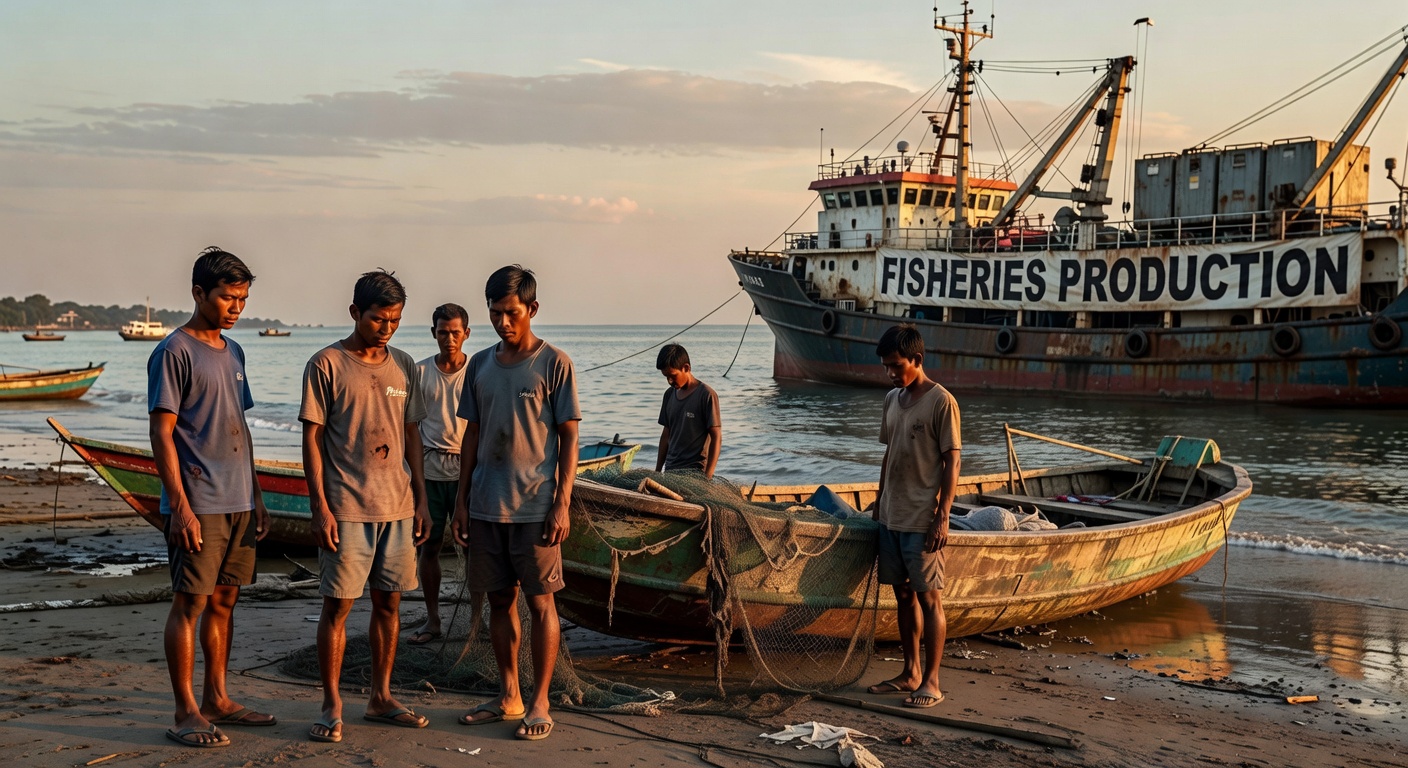
Pinoy Fisherfolk Lose Livelihoods as Commercial Vessels Deplete Stocks and Fisheries Output Falls Sharply
Manila — Small-scale fisherfolk across the Philippines are watching their daily catches shrink and their incomes evaporate as large commercial trawlers continue to dominate waters meant to protect municipal fishing grounds. Official data released this week by the Philippine Statistics Authority show fisheries production contracted 4.8 percent in the first half of 2024, the steepest drop in five years, pushing thousands of families deeper into debt and food insecurity.
Numbers That Tell a Story of Loss
The PSA recorded total fisheries output at 1.92 million metric tons from January to June, down from 2.02 million metric tons in the same period last year. Capture fisheries, which account for more than 70 percent of the sector, fell 6.1 percent. Municipal fisheries, the domain of artisanal boats using handlines and gill nets, declined 7.3 percent, while commercial landings dropped only 4.2 percent. The disparity underscores how industrial vessels equipped with sonar, purse seines, and onboard freezers continue to outcompete traditional fishers even as overall biomass shrinks.
Bureau of Fisheries and Aquatic Resources records indicate that roughly 60 percent of the country’s 1.6 million registered fisherfolk operate vessels under three gross tons. Their average daily catch has fallen from 8 kilograms in 2019 to just 3.4 kilograms this year, according to a University of the Philippines Marine Science Institute survey conducted across 12 coastal provinces. At current ex-vessel prices, that translates to daily earnings below PHP 250 for most households after fuel and ice costs.
Voices from the Coast
In Navotas, 52-year-old Nilo de la Cruz has fished Manila Bay since he was 15. “Before, we could fill two ice boxes before noon,” he said while mending nets on the wharf. “Now we stay out until sunset and still come back with barely enough for the family and the market.” De la Cruz’s eldest son has already left for construction work in Saudi Arabia; two younger children may drop out of high school next semester because the family can no longer afford tuition and boat maintenance.
Similar accounts echo in Zamboanga del Norte, Iloilo, and Palawan. In Roxas City, 38-year-old single mother Marites Villanueva reported that her group’s weekly income from dried fish sales has halved since 2022. “We used to pool money to send one child to college,” she said. “Now we decide which child eats fish and which eats only rice.”
Commercial Encroachment and Weak Enforcement
Republic Act 10654, the amended Fisheries Code, limits commercial fishing to waters beyond 15 kilometers from shore in most areas. Yet monitoring data from the BFAR’s vessel monitoring system show repeated incursions into municipal zones, especially at night. In the first quarter of 2024 alone, 187 apprehensions were logged, but only 29 resulted in convictions. Fines remain low relative to the value of the catch, and many vessels simply pay the penalty and return the next season.
Dr. Wilfredo Campos, a fisheries economist at UP Visayas, noted that commercial operators enjoy access to cheap diesel subsidies and cold-chain infrastructure that municipal fishers lack. “The policy framework still treats the sea as an open-access resource for those with capital,” he said. “Until we close the enforcement gap and allocate exclusive zones with real penalties, the decline will accelerate.”
Climate and Market Pressures Compound the Crisis
El Niño-driven sea-surface warming has shifted sardine and mackerel schools farther offshore, beyond the reach of small boats. At the same time, imported frozen fish from China and Vietnam continues to flood wet markets, undercutting local prices by 15 to 20 percent. The Department of Agriculture’s own import data show a 22 percent rise in fish imports during the first five months of 2024.
Food security analysts warn that the Philippines, already importing nearly 30 percent of its fish consumption, risks deeper dependence if domestic municipal production continues to contract. The National Nutrition Council reported that fish accounts for 50 percent of animal protein intake among low-income households; any sustained price spike will directly affect child nutrition metrics.
Policy Responses Under Scrutiny
Agriculture Secretary Francisco Tiu Laurel Jr. announced last month that the government would deploy 50 additional patrol vessels and expand the electronic catch documentation system. Fisherfolk groups, however, say these measures arrive too late and remain underfunded. The national budget for fisheries law enforcement stands at PHP 1.8 billion for 2024—less than 0.3 percent of total agriculture spending.
Senator Cynthia Villar, chair of the Senate agriculture committee, has filed Senate Bill 2456, which would raise fines for illegal commercial fishing to PHP 5 million per vessel and mandate real-time public tracking. Hearings begin next week. Municipal fisherfolk federations plan to testify, demanding that at least 30 percent of each province’s waters be declared no-take zones for five years to allow stock recovery.
Long-Term Stakes for Democracy and Justice
The erosion of small-scale fisheries is not merely an economic statistic; it represents the steady displacement of coastal communities whose votes and voices have historically shaped Philippine democracy. When families abandon fishing villages for urban slums or overseas work, the political weight of coastal provinces diminishes. Advocates argue that protecting municipal waters is therefore a question of both livelihood and democratic representation.
International experience offers cautionary lessons. Indonesia’s 2015–2019 crackdown on foreign and domestic trawlers produced measurable biomass recovery within three years. The Philippines possesses similar legal tools but has applied them inconsistently. Without sustained political will, the current trajectory points toward further consolidation of fishing rights in the hands of a few large operators and the gradual disappearance of the traditional Pinoy fisherfolk way of life.
This is Bella Reyes for Global1 News, reporting from Manila. 🇵🇭
This article was produced with AI-assisted research and editorial support. Reporting is based on sources cited in the article.
What's Your Reaction?
 Like
0
Like
0
 Dislike
0
Dislike
0
 Love
0
Love
0
 Funny
0
Funny
0
 Wow
0
Wow
0
 Sad
0
Sad
0
 Angry
0
Angry
0

Philippines/Southeast Asia Correspondent at Global1.News. Manila-based journalist covering Philippine politics, environment, maritime security, and social issues. Passionate about marine conservation and the communities protecting the Philippines' natural heritage.















Comments (0)