
Palestinians Protest Illegal Settlement Expansion in West Bank
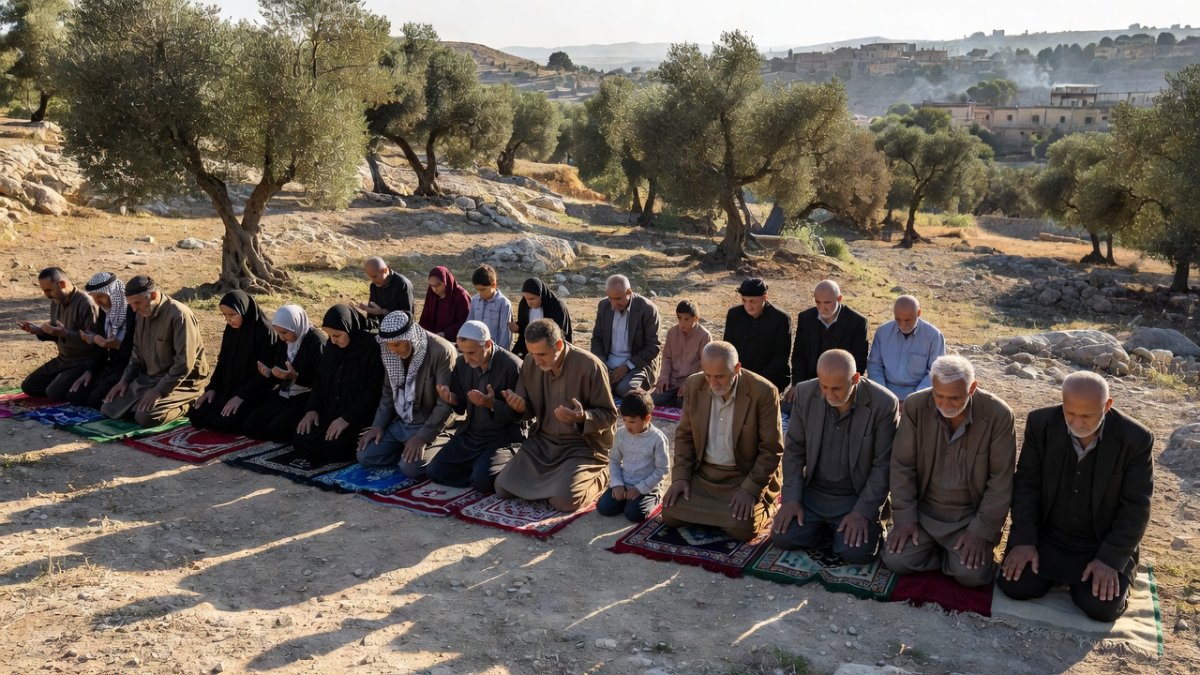
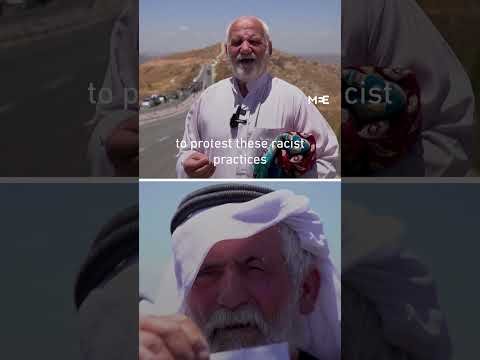
In a recent Middle East Eye report, Palestinians gathered for Friday prayers in the Jabal Tarusa area of the occupied West Bank to protest plans for a new illegal Israeli settlement. The video footage shows demonstrators assembling on the rocky hillside near Dura near Dura to oppose a new settlement project. Israeli forces respond with tear gas and stun grenades as the crowd ga
In a recent Middle East Eye report, Palestinians gathered for Friday prayers in the Jabal Tarusa area of the occupied West Bank to protest plans for a new illegal Israeli settlement. The video footage shows demonstrators assembling on the rocky hillside near Dura near Dura to oppose a new settlement project. Israeli forces respond with tear gas and stun grenades as the crowd gathers peacefully. The footage captures the immediate tension surrounding Finance Minister Bezalel Smotrich’s recent foundation-stone ceremony.
Palestinians Rally Against Doran Settlement as Land Shrinks in Southern West Bank
Dura, West Bank — June 2026 — Hundreds of residents from Dura and surrounding villages converged on Jabal Tarusa last Friday, turning the rocky hillside into a site of both worship and defiance. The gathering followed Israeli Finance Minister Bezalel Smotrich’s Tuesday ceremony laying the cornerstone for the Doran settlement west of the city. What began as a customary midday prayer quickly became a collective stand against further encroachment on Palestinian land.
The Friday Protest at Jabal Tarusa
Residents described the atmosphere at Jabal Tarusa as one of quiet determination mixed with apprehension. Families spread prayer rugs across the slope while elders recited verses emphasizing steadfastness. Young activists held banners reading “Our land is not for sale,” echoing the municipal council’s earlier statements. The presence of Israeli forces on nearby ridges created an immediate sense of surveillance that many said has become routine during such demonstrations.
As prayers concluded, soldiers fired tear gas canisters and stun grenades into the crowd, forcing families to retreat down the hillside. Witnesses recounted helping elderly participants who struggled with the smoke, while children clung to parents amid the chaos. No serious injuries were reported, yet the dispersal underscored the narrow space left for nonviolent expression. Community leaders later gathered at the municipal building to document the incident and plan follow-up actions.
The protest also served as a moment of intergenerational transmission. Grandparents recounted earlier land confiscations to grandchildren who had never seen the full extent of pre-1948 holdings. This oral history component transformed the event into more than a single-day action, reinforcing collective memory of continuous dispossession. Organizers noted that such gatherings help sustain morale even when immediate political outcomes remain uncertain.
The Doran Settlement Project
Israeli Finance Minister Bezalel Smotrich inaugurated the Doran settlement by placing its foundation stone on a strategic hilltop overlooking the Hebron hills. The project is positioned west of Dura and designed to link existing outposts into a continuous built-up area. Officials described the move as fulfilling long-standing ideological commitments to strengthen Israeli presence in the southern West Bank.
Local Palestinian officials immediately condemned the ceremony as an escalation. Ziyad al-Rajub of the Dura Municipal Council called the initiative “an open assault” on the city’s remaining open spaces. The settlement’s hilltop location allows visual and physical control over surrounding valleys, a pattern repeated across many West Bank projects. Construction is expected to begin within months, according to statements released by the Israeli Civil Administration.
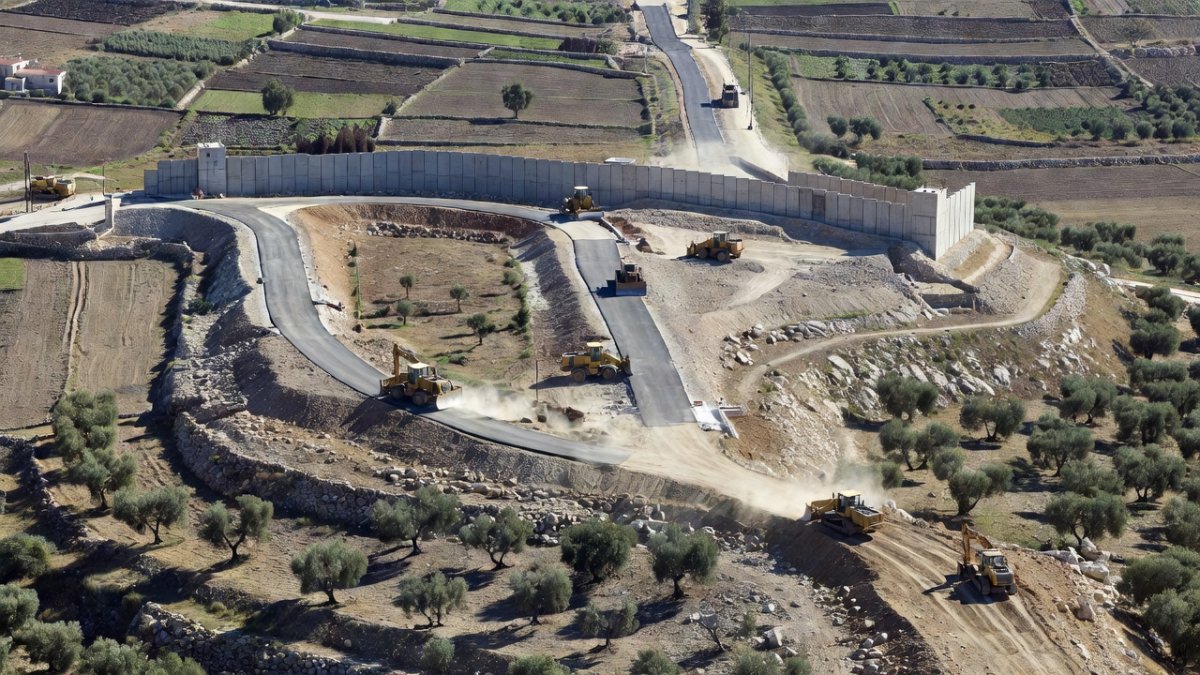
Engineers and planners associated with the project have mapped access roads that would cut through agricultural terraces still cultivated by Dura families. These roads are projected to require additional land expropriation beyond the initial footprint. Residents fear that once infrastructure is in place, further expansion will follow rapidly, following precedents set by neighboring settlements over the past two decades.
Land Loss and Its Impact on Dura
Dura’s municipal records show that the city’s land base has contracted dramatically over eight decades. Before 1948 the municipality administered approximately 240,000 dunams; today that figure stands at roughly 150,000 dunams. Successive waves of confiscation for settlements, military zones, and bypass roads account for the reduction. Each loss removes not only territory but also the agricultural livelihoods tied to it.
Olive groves and wheat fields that once sustained dozens of families now lie behind settlement fences or under planned construction. Farmers report declining yields as water resources are diverted and access becomes intermittent. The economic ripple effects extend to local markets in Hebron, where Dura produce traditionally supplied a significant share of seasonal vegetables and fruit.
Younger residents increasingly seek work in construction or services inside Israel rather than continuing family farming. This shift accelerates the erosion of traditional land-based knowledge and weakens the social fabric that once revolved around seasonal agricultural cycles. Municipal leaders warn that continued shrinkage threatens the city’s long-term viability as a coherent urban center.
Geographic Fragmentation
The Doran settlement is intended to form part of a chain of outposts that together create a geographic barrier across the southern West Bank. This barrier separates Dura from villages to its west and restricts movement toward the Hebron hills. Residents describe daily commutes that now require lengthy detours through checkpoints or along narrow roads vulnerable to closure.
School buses and medical transport face particular difficulties when routes are blocked during military operations or settler activity. Families report missed appointments and delayed emergency care as routine consequences. The fragmentation also disrupts social ties, making visits between neighboring communities less frequent and more costly.
Over time, the barrier effect isolates Dura economically as well. Traders who once moved goods freely across the hills now navigate a patchwork of permits and restricted zones. This isolation compounds the land-loss trend, turning what was once an integrated agricultural region into a series of disconnected enclaves.
Broader Settlement Surge
Israeli authorities have approved 19 new settlements during the 2025-26 period, bringing the two-year total to 69. The acceleration reflects a deliberate policy shift under the current coalition government. Each approval carries implications for contiguous Palestinian territory in multiple governorates.
Planning documents indicate that many of these projects prioritize hilltop locations with strategic oversight of valleys and roads. The pattern mirrors earlier phases of settlement growth that gradually altered demographic realities on the ground. International observers have noted that the pace of approvals has outstripped previous periods of rapid expansion.
Palestinian planning offices struggle to keep maps current amid the volume of new permits. Updated land-use studies are produced only after construction begins, leaving communities to react rather than anticipate. The cumulative effect is a steadily narrowing horizon for future Palestinian development in the southern West Bank.
Legal Status Under International Law
Settlement construction in occupied territory is prohibited under Article 49 of the Fourth Geneva Convention, which forbids an occupying power from transferring its civilian population into occupied land. Successive United Nations resolutions have reaffirmed this prohibition and called for reversal of existing projects. Legal experts maintain that these instruments remain applicable regardless of political changes on the ground.
Israeli officials have advanced alternative legal interpretations that treat the territory as disputed rather than occupied. Palestinian and international jurists reject this framing, pointing to the consistent position of the International Court of Justice and the United Nations Security Council. The divergence in legal views has produced no practical restraint on construction activity.
Local Palestinian lawyers continue to file objections through Israeli administrative channels while simultaneously pursuing documentation for potential international proceedings. These parallel tracks reflect an understanding that domestic remedies alone have not halted expansion. The legal record compiled today is intended to support future accountability mechanisms.
Palestinian Resistance Strategies
Community organizing in Dura combines legal petitions, weekly protests, and documentation campaigns. Volunteers record land-use changes with photographs and GPS coordinates to build an evidentiary archive. These efforts aim to preserve institutional memory even when immediate reversals appear unlikely.
Youth groups have initiated educational workshops that explain land law and planning procedures to residents. The goal is to equip the next generation with tools to navigate bureaucratic processes that often determine whether a plot remains under Palestinian control. Participation in these sessions has grown steadily over the past year.
Religious leaders frame the defense of land as both a civic duty and a moral imperative rooted in Islamic teachings on stewardship. Friday sermons at local mosques frequently reference the Jabal Tarusa gathering as an example of collective responsibility. This moral framing helps sustain participation across age groups and political affiliations.
Long-Term Outlook for the Southern West Bank
The establishment of Doran and similar projects signals a further contraction of space available for Palestinian self-determination in the southern West Bank. Without reversal of current trends, contiguous territorial units risk becoming isolated pockets surrounded by settlement infrastructure. Planners warn that such fragmentation complicates any future negotiated arrangement.
Residents of Dura express determination to remain on their land despite mounting pressures. Many cite ancestral graves and centuries-old olive trees as reasons for staying. This attachment coexists with pragmatic recognition that daily life grows more constrained with each new approval.
International actors continue to issue statements of concern, yet enforcement mechanisms remain limited. Palestinian civil society therefore focuses on internal resilience measures while documenting developments for future reference. The coming years will test whether these strategies can preserve a viable presence amid accelerating settlement activity.
By Fatima Al-Rashid, Staff WriterThis article was produced with AI-assisted research and editorial support. Reporting is based on sources cited in the article.
What's Your Reaction?
 Like
0
Like
0
 Dislike
0
Dislike
0
 Love
0
Love
0
 Funny
0
Funny
0
 Wow
0
Wow
0
 Sad
0
Sad
0
 Angry
0
Angry
0

Gulf/MENA Correspondent at Global1.News. Based in Doha, covering Gulf politics, energy markets, diplomacy, and development across the Middle East and North Africa. Tracks the economic transformation of the Gulf states.











Comments (0)