
The Yazidi Doctor Who Restored Life to Islamic State Survivors
The Day Sinjar Fell: Shireen's Kidnapping and Sale Shireen was just 19 years old when Islamic State militants overran Sinjar on 3 August 2014. She had been studying for her exams that day, focused on her future like any young woman in the Yazidi community. Within hours the peaceful town she called home descended into chaos as fighters swept through the area. She was seized alon
The Day Sinjar Fell: Shireen's Kidnapping and Sale
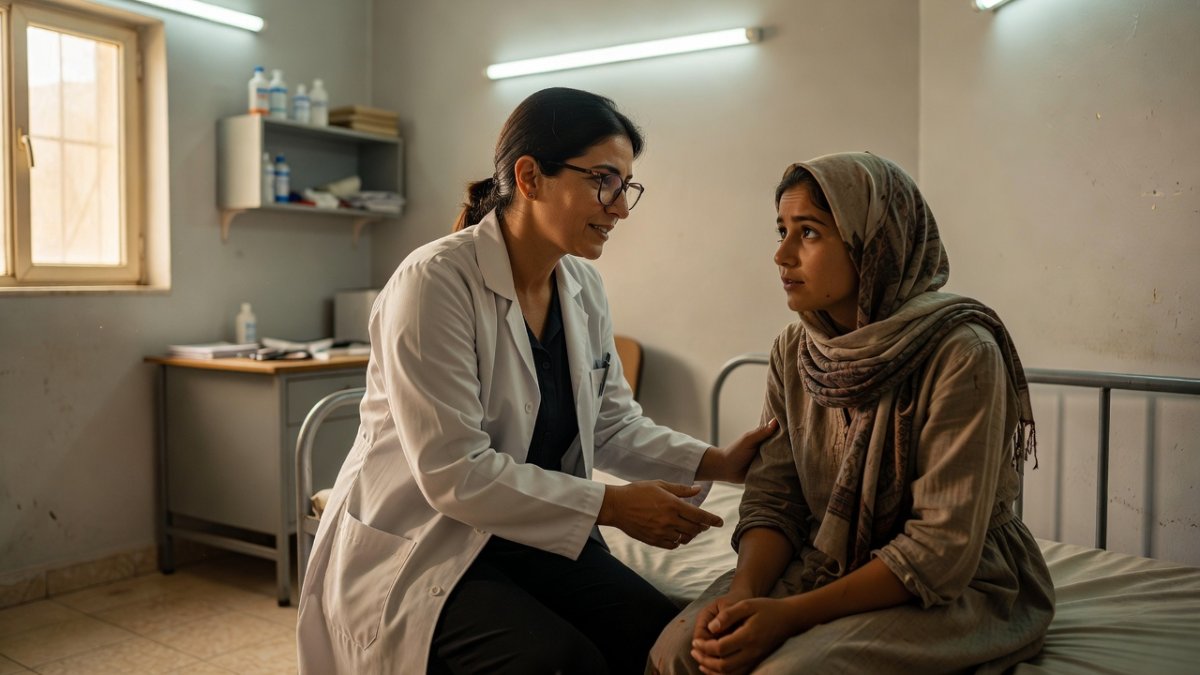
Shireen was just 19 years old when Islamic State militants overran Sinjar on 3 August 2014. She had been studying for her exams that day, focused on her future like any young woman in the Yazidi community. Within hours the peaceful town she called home descended into chaos as fighters swept through the area. She was seized along with thousands of other Yazidis and taken first to Tal Afar, where she was sold as a sex slave. The transaction marked the beginning of a nightmare that would last more than two years.
From Tal Afar, Shireen was resold to a man named Abu Omar in Mosul, becoming his third wife. The two Iraqi wives already living in the household beat her regularly. Abu Omar raped her frequently. Two other Yazidi girls shared the house — one six years old and forced to clean, the other ten and subjected to the same sexual violence. Shireen had no way to escape or contact the outside world for more than two years.
The Yazidi Genocide: A UN-Recognized Crime
The United Nations has described the Islamic State campaign against the Yazidi people as an ongoing genocide. At least 12,000 Yazidis were killed or kidnapped during the assault that began in 2014. The scale of the violence extended across the Sinjar region and surrounding areas where communities had lived for generations.
Islamic State forces seized nearly a third of Iraq in 2014. This territorial expansion allowed the group to target Yazidi villages with systematic abductions and killings. The events left thousands of families separated and displaced from their ancestral lands.
Survivors such as Shireen experienced the direct consequences of these policies. She was taken from Sinjar on 3 August 2014 at age 19 and held for more than two years. Her account reflects the pattern of forced transfers and repeated sales documented across the community.
The genocide involved the separation of families and the targeting of women and girls for sexual violence. Official records note that many victims remain missing years later. The United Nations continues to classify the crimes as genocide due to the intent to destroy the Yazidi group in part.
Local authorities and international observers have tracked the numbers of those killed and kidnapped. The figure of at least 12,000 stands as a minimum estimate based on available documentation. This context frames the long-term needs of survivors who later reached medical facilities.
Dr. Nagham Nawzat's Path to Medicine
Dr. Nagham Nawzat was born in Mosul in 1976. She completed her medical studies and graduated in 2002. Her training equipped her to address women's health needs in a region that would later face unprecedented violence.
As a Yazidi gynaecologist, she developed expertise in reproductive health before the 2014 attacks. Her background in Mosul placed her within communities familiar with the social and medical challenges faced by women under conflict conditions.
After graduation she maintained her practice amid shifting political circumstances in northern Iraq. The skills acquired during her training later proved essential when she began working with survivors of gender-based violence.
Her decision to focus on gynaecology aligned with the specific health requirements of women in the Yazidi community. This specialization positioned her to respond when the Duhok facility opened its doors to those released from captivity.
By 2015 she had joined the Duhok Survivors' Centre. The move marked a transition from general practice to dedicated care for women who had endured prolonged sexual violence and captivity.
The Duhok Survivors' Centre and Its Mandate
The Duhok Survivors' Centre opened in 2015 with funding from the United Nations Population Fund. It remains the only facility in Iraq that specializes exclusively in gender-based violence. The centre provides medical examinations, psychological support, and follow-up care for women released from Islamic State control.
Staff at the centre coordinate with local authorities to receive survivors shortly after their liberation. The UNFPA support enabled the establishment of protocols tailored to the physical and mental health consequences of prolonged captivity.
Women arriving at the centre often present with injuries and conditions resulting from repeated sexual violence. The facility offers confidential consultations that respect the cultural context of the Yazidi community.
Dr. Nagham Nawzat began her work at the centre in 2015. Her role involved direct clinical care for patients who had been held in locations including Mosul and Tal Afar.
The centre's specialization distinguishes it from general hospitals. It focuses on the long-term effects of gender-based violence rather than acute emergency treatment alone.
Medical Care for Survivors of Captivity
Survivors such as Shireen reached the centre after their release during the 2016 Mosul military campaign. She had been held by Abu Omar and subjected to regular rape while two other Yazidi girls, aged six and ten, performed forced labour and endured similar abuse.
Clinical assessments at the centre address both physical trauma and associated mental health conditions. Depression and nightmares are commonly reported among women who lost relatives during the 2014 attacks.
Many patients describe the deaths of uncles and friends and the continued absence of fathers and sisters. These losses compound the health challenges that require sustained medical attention.
Dr. Nagham Nawzat provided gynaecological examinations and coordinated referrals for psychological support. Her approach integrated the medical needs arising from years of captivity with the social realities of reintegration.
The centre maintains records that track the number of women treated. By focusing on gender-based violence, staff can identify patterns that inform ongoing care strategies.
Numbers of Women Liberated and Treated
By July 2018, a total of 2,023 Yazidi women had been liberated according to Hussein al-Qaidi of the Kurdistan Regional Government Kidnapped Affairs office. This figure represents those officially documented as released from Islamic State captivity up to that date.
Dr. Nagham Nawzat personally assisted approximately 1,200 of these women. Her patient load accounted for more than half of the recorded liberations processed through the Duhok facility.
The centre received women from multiple locations across northern Iraq. Each case required individualized medical evaluation based on the duration and conditions of captivity.
Official statistics compiled by the Kurdistan Regional Government continue to guide resource allocation at the centre. The 2,023 figure provided a baseline for planning services through 2018.
Dr. Nawzat's direct involvement with over 1,200 patients established a record of consistent clinical engagement. Her work formed a central component of the centre's output during its first three years of operation.
International Recognition for Clinical Work
In March 2016 Dr. Nagham Nawzat received the International Women of Courage Award. United States Secretary of State John Kerry presented the award in recognition of her service to survivors of gender-based violence.
The award highlighted the role of the Duhok Survivors' Centre in addressing the medical consequences of the Yazidi genocide. It drew attention to the specialized care available only at this UNFPA-supported facility.
Dr. Nawzat continued her clinical duties after the award. The recognition did not alter the daily demands of treating women who arrived with complex health needs.
International acknowledgment reinforced the importance of maintaining the centre's focus on gender-based violence. It also supported continued UNFPA funding for the specialized services provided.
Her work with approximately 1,200 patients formed the basis for the award citation. The honour reflected both individual effort and the institutional framework of the Duhok facility.
Ongoing Needs of Survivors and Community Context
Women treated at the centre often face extended recovery periods. Conditions such as depression and recurrent nightmares persist beyond initial medical interventions.
The absence of family members remains a central concern for many patients. Shireen's account of missing relatives illustrates the broader pattern affecting thousands of Yazidi households.
Local health infrastructure in the Kurdistan Region continues to rely on the Duhok centre for specialized gender-based violence services. No comparable facility exists elsewhere in Iraq.
Dr. Nagham Nawzat's continued presence at the centre supports the documentation of long-term health outcomes. Her records contribute to understanding the medical legacy of the 2014 genocide.
Community reintegration efforts intersect with the medical care provided. Survivors require sustained access to the centre's services as they rebuild their lives in displacement settings.
By Fatima Al-Rashid, Staff WriterThis article was produced with AI-assisted research and editorial support. Reporting is based on sources cited in the article.
What's Your Reaction?
 Like
0
Like
0
 Dislike
0
Dislike
0
 Love
0
Love
0
 Funny
0
Funny
0
 Wow
0
Wow
0
 Sad
0
Sad
0
 Angry
0
Angry
0
Middle East Correspondent at Global1.News. Based in Beirut, covering politics, conflict, energy, and society across the Middle East. Brings context and depth to a region often reduced to headlines.











Comments (0)