
US Retail Sales Drop Signals Consumer Caution Amid...
US Retail Sales Drop Signals Deeper Consumer Caution as Banking Worries Mount Shoppers at a grocery store in California. (CNN) Consumer Spending Takes a Hit The Commerce Department reported Friday that retail sales fell 1 percent in March from the prior month, a sharper decline than the 0.4 percent drop economists had forecast. This marks a notable pullback after a revised 0.2
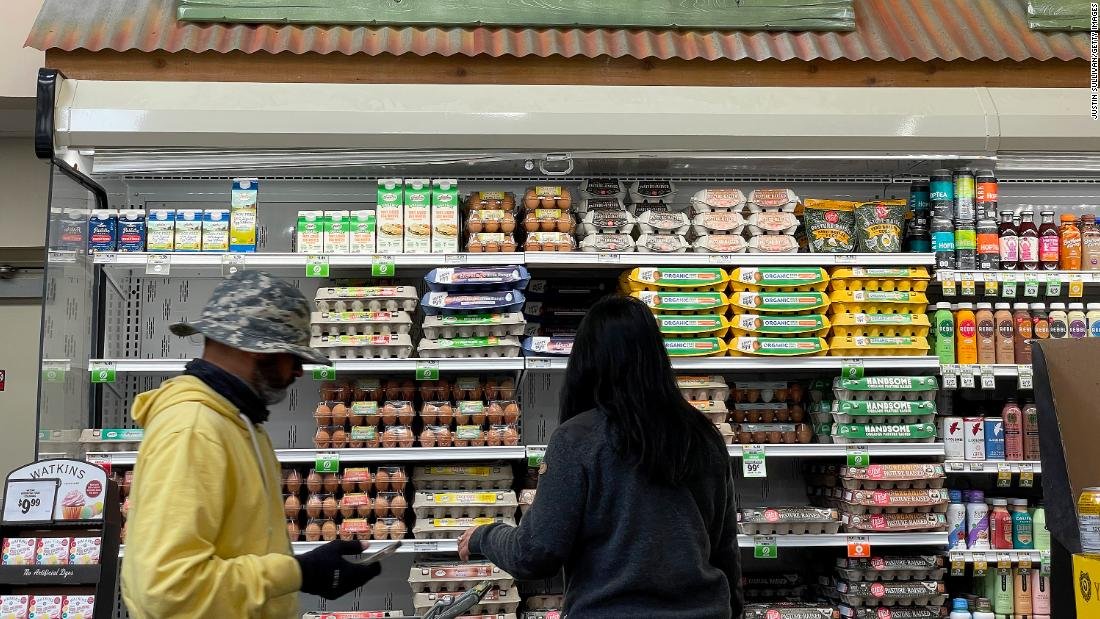
Shoppers at a grocery store in California. (CNN)
Consumer Spending Takes a Hit
The Commerce Department reported Friday that retail sales fell 1 percent in March from the prior month, a sharper decline than the 0.4 percent drop economists had forecast. This marks a notable pullback after a revised 0.2 percent decrease in February, highlighting how quickly American households are adjusting their spending habits. The data, adjusted for seasonality but not inflation, paints a picture of consumers hitting the brakes amid lingering uncertainty from the recent banking turmoil.
That magnitude matters because retail sales serve as a direct window into household behavior. A full percentage point drop exceeds expectations and suggests the weakness is not merely statistical noise. Department stores and big-ticket purchases bore the brunt, reflecting deliberate choices by families to delay or forgo purchases rather than a temporary blip. This kind of contraction can ripple through supply chains and employment in retail sectors if it persists.
Year-over-year figures still show a 2.9 percent increase, yet the monthly trend tells the more immediate story. Investors and analysts are watching whether this signals the start of a broader slowdown or simply a pause after strong holiday spending. Either way, the numbers demand attention from policymakers and businesses alike.
Smaller Tax Refunds Hit Wallets Hard
The IRS issued just $84 billion in tax refunds this March, roughly $25 billion less than the $109 billion distributed in March 2022, according to Bank of America analysts. That shortfall directly squeezed discretionary spending, particularly at department stores where outlays dropped 3 percent month-over-month and at gas stations where sales plunged 5.5 percent. Consumers who counted on larger refunds to cover spring purchases found themselves with thinner margins.
Aditya Bhave, senior U.S. economist at BofA Global Research, noted that March is a critical month for refunds and many households expected amounts similar to last year. The gap forced cutbacks on durable goods such as appliances and furniture, categories that typically absorb extra cash when it arrives. Excluding gas station sales, overall retail spending still retreated 0.6 percent, underscoring the broad reach of the shortfall.
This refund dynamic reveals how sensitive spending patterns remain to timing of government payments. Families in Atlanta and across the country often use these lump sums for both necessities and modest upgrades. When the checks shrink, the ripple effects hit local retailers and service providers first, amplifying the sense that economic momentum is fading.
Food Assistance Cuts Add Pressure
Enhanced pandemic-era SNAP benefits expired in February, removing a critical support for millions of lower-income households just as tax refunds also came in smaller. Bank of America Institute data showed credit and debit card spending per household slowed to its weakest pace in more than two years during March. That combination of reduced refunds and lost food assistance created a double squeeze on everyday budgets.
Economists point out that the expiration of these benefits hit spending hardest among households already operating on tight margins. Grocery and essential purchases that had been buffered by extra SNAP dollars now compete directly with rising costs elsewhere. The result is visible in the broader retail figures, where even categories outside gas and general merchandise showed restraint.
Low-income families in particular felt the change immediately. Without those supplemental dollars, choices about clothing, household items, and even small luxuries tightened further. This policy shift, layered on top of smaller refunds, illustrates how multiple support mechanisms can unwind at once and leave consumers more exposed than headline employment numbers suggest.
Wage Growth Slows Even as Jobs Hold
Average hourly earnings rose 4.2 percent in March from a year earlier, the smallest annual increase since June 2021, according to Bureau of Labor Statistics data. That moderation follows a 4.6 percent gain the prior month and aligns with the Employment Cost Index showing pay gains easing throughout the past year. Workers are still seeing raises, but the pace no longer keeps up with earlier inflation spikes.
Employers added 236,000 jobs in March, a solid figure by historical standards yet below the average monthly pace of the previous six months. The JOLTS report for February revealed job openings remained elevated but had fallen more than 17 percent from the March 2022 peak of 12 million. Revised unemployment claims data also pointed to a labor market losing some of its earlier heat.
Even so, the overall employment picture remains supportive for consumer spending in the near term. Michelle Meyer, North America chief economist at Mastercard Economics Institute, emphasized that income growth, household balance sheets, and labor market health still favor the consumer. The question is whether slowing wage gains will eventually outweigh those positives if job creation continues to cool.
Are We Heading for a Recession?
Federal Reserve economists now expect the U.S. economy to enter a recession later this year as the lagged effects of higher interest rates take hold. That forecast predates the collapses of Silicon Valley Bank and Signature Bank, yet those failures have added fresh uncertainty. The banking stress has not yet translated into widespread credit tightening for households, but the psychological impact is already visible in spending restraint.
Interest rate hikes work with a delay, and many analysts believe the full force of prior tightening has yet to land on consumer behavior. Higher borrowing costs for cars, homes, and credit cards are gradually reshaping decisions even as the labor market stays resilient. The March retail sales drop may represent an early signal of that transmission rather than an isolated event.
Recession risks remain probabilities rather than certainties, but the combination of banking turbulence and moderating growth metrics has shifted the baseline outlook. Policymakers will need to monitor whether the current pullback in spending deepens or stabilizes once tax refund season passes and any remaining support measures adjust.
Consumer Sentiment: Waiting for the Other Shoe
The University of Michigan consumer sentiment survey showed readings holding steady in April despite the banking crisis, though year-ahead inflation expectations jumped a full percentage point from 3.6 percent in March to 4.6 percent in April. Higher gas prices contributed to that rise, but the underlying message from respondents was one of cautious vigilance rather than outright panic.
Joanne Hsu, director of the surveys of consumers at the University of Michigan, captured the mood succinctly: consumers are expecting a downturn and are “waiting for the other shoe to drop.” Sentiment had already begun deteriorating before the bank failures, and the March turbulence only reinforced existing concerns without triggering a sharper collapse.
This steady-but-wary posture matters because consumer confidence influences everything from major purchases to vacation planning. When households anticipate trouble ahead, they tend to save more and spend less even if current income and jobs remain intact. The April data suggests that mindset has taken root and could prolong the recent softness in retail sales.
The Bottom Line
For American families, the March retail sales report underscores a reality of tighter budgets and harder choices. Smaller tax refunds, expired food assistance, and slower wage growth are converging at a moment when recession fears are rising and inflation expectations are climbing again. Households are responding by pulling back on discretionary items, a rational reaction that nonetheless signals broader economic softening.
The labor market continues to provide a buffer, yet its momentum has clearly eased. If job gains slow further and wage growth remains subdued, the consumer resilience that has supported the economy could erode more quickly than many anticipate. Businesses dependent on steady household spending should prepare for continued caution rather than a swift rebound.
Atlanta households and those across the country are not yet in crisis, but the data shows they are adjusting in real time. Policymakers and employers alike would do well to recognize that the current pullback reflects deliberate decisions by families protecting their finances, not mere statistical noise. The coming months will reveal whether this restraint deepens or gives way to renewed confidence.
By Jessica Ali, Staff WriterThis article was produced with AI-assisted research and editorial support. Reporting is based on sources cited in the article.
What's Your Reaction?
 Like
0
Like
0
 Dislike
0
Dislike
0
 Love
0
Love
0
 Funny
0
Funny
0
 Wow
0
Wow
0
 Sad
0
Sad
0
 Angry
0
Angry
0

Editor-in-Chief at Global1.News. Atlanta-based journalist who cuts through the BS and tells it like it is. Lead anchor, host, and the voice you hear when the spin stops and the truth starts.















Comments (0)