Niger Govt tackles trust gap, informant issues in new security framework – Magaji

May 30, 2026 - 00:42
0
Niger Govt tackles trust gap, informant issues in new security framework – Magaji
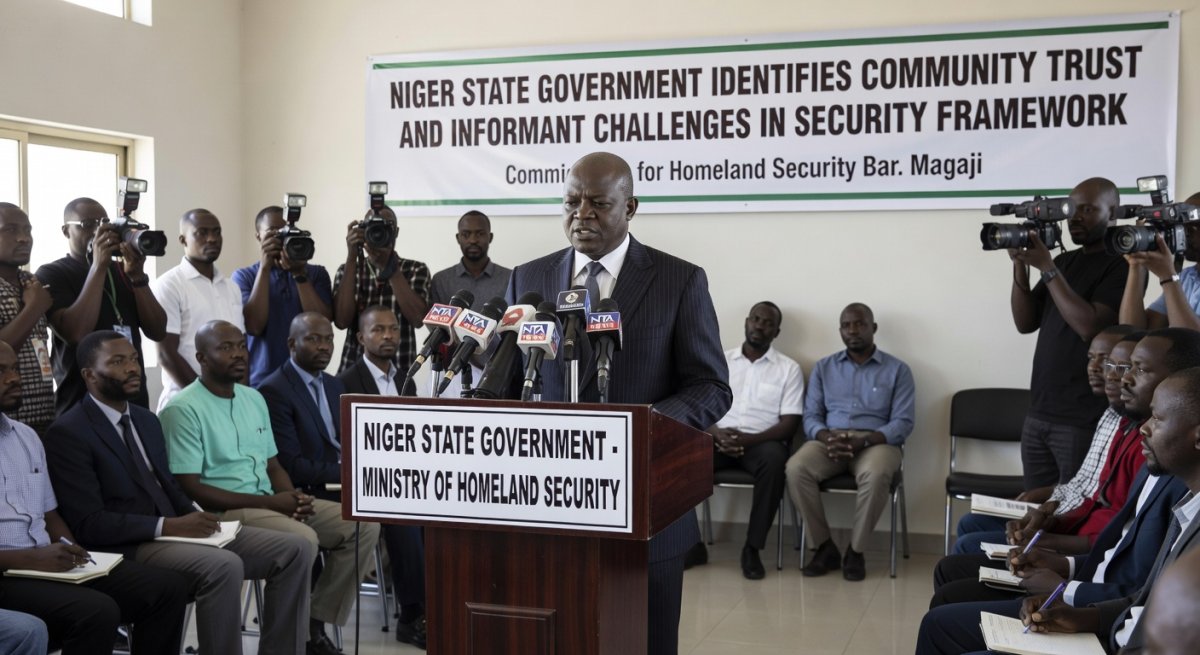
**Niger Govt tackles trust gap, informant issues in new security framework – Magaji** Minna, Niger State — The Niger State Government has identified gaps in community trust and information sharing as major obstacles to effective security operations, according to Commissioner for Homeland Security Barr. Morice Magaji. The commissioner disclosed the findings on Friday during a briefing in Minna, outlining plans to address these issues within a revised security framework. Magaji stated that limited cooperation from residents and reluctance among potential informants have hampered timely intelligence gathering in areas affected by banditry and other threats. “We have come to realise that without the active participation of our communities, our security architecture will continue to face challenges,” he said, according to the statement released by the state Ministry of Homeland Security.

The Disclosure

The Friday briefing in Minna focused on operational reviews conducted over recent months. Magaji explained that the state had mapped out zones where information flow between residents and security agencies remained weak. He noted that past incidents had shown delays in reporting suspicious movements, partly due to fears of reprisals and doubts about confidentiality. No specific operational details or timelines for new measures were released during the session. The commissioner indicated that the state would work with traditional rulers, local government officials and security agencies to improve reporting channels.

Background on Insecurity in Niger State

Niger State, located in Nigeria’s North Central region, has experienced periodic attacks linked to bandit groups operating across the North West and parts of the North Central zones. Neighbouring states such as Kaduna, Zamfara and Kebbi have recorded similar incidents over the past decade, according to reports from the Nigeria Police Force and military commands. Federal authorities have deployed troops under various operations, including those coordinated by the Nigerian Army’s 1 Division and the Nigerian Air Force. State governments in the region have also established local security outfits and vigilante support structures, though coordination challenges persist. Public statements from the Niger State Government have previously highlighted the role of community intelligence. In earlier addresses, officials cited difficulties in sustaining informant networks because of perceived risks to individuals who provide information.

Previous State and Federal Measures

Niger State has participated in regional security meetings involving governors from the North West and North Central states. These forums have discussed joint patrols, intelligence sharing and the rehabilitation of affected communities. The federal government has provided additional funding through the National Security Council allocations, though disbursement and utilisation details are published through official budget documents. The state’s Homeland Security Ministry was established to coordinate responses among police, military, civil defence and local actors. Magaji’s comments on Friday referenced ongoing reviews of this coordination structure.

Response and Next Steps

Magaji said the government would introduce measures aimed at rebuilding confidence in official channels. These include clearer protocols for handling informant identities and closer engagement with community leaders. No budget figures or specific programme names were provided at the briefing. Security agencies operating in the state were expected to receive updated guidelines on community liaison. The commissioner emphasised that any new framework would operate within existing legal provisions governing law enforcement and citizen rights.

Implications

The identification of trust and information-sharing gaps points to structural issues that state and federal agencies have acknowledged in broader national security assessments. Addressing these areas will require sustained engagement rather than one-off initiatives, according to patterns observed in similar state-level programmes elsewhere in Nigeria. Further updates on the implementation of the revised framework are expected in subsequent official communications from the Niger State Government. The Ministry of Homeland Security has not announced a date for the next progress report.

This is Sarah Okafor for Global1 News, reporting from Lagos. 🇳🇬

What's Your Reaction?

Like Like 0
Dislike Dislike 0
Love Love 0
Funny Funny 0
Wow Wow 0
Sad Sad 0
Angry Angry 0

Comments (0)

User