
Venezuela Government and Opposition to Launch Formal Talks for Democratic Transition
Venezuela's interim government and opposition will begin formal talks on August 1 aimed at strengthening democratic institutions, reforming the electoral system, and restoring political participation, six months after Maduro's capture and amid devastating earthquake recovery.
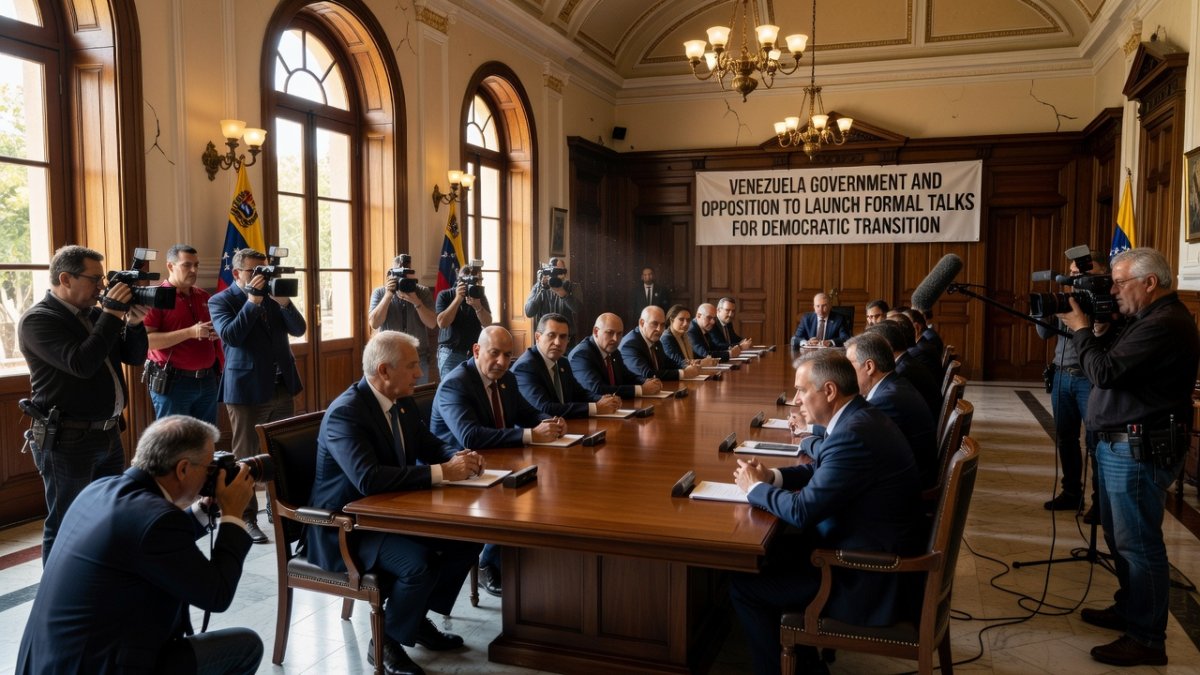
Venezuela Government and Opposition to Launch Formal Talks for Democratic Transition
In a significant political development for Latin America, Venezuela's interim government and a faction of the opposition have announced they will begin formal talks on August 1 aimed at strengthening the country's democratic institutions. The announcement, made jointly on Tuesday by opposition leader Dinorah Figuera and National Assembly President Jorge Rodríguez, marks the most concrete step toward political reconciliation since the capture of former President Nicolás Maduro by US forces in January.
The talks come at a moment of profound crisis for Venezuela—still reeling from the devastating twin earthquakes of June 24 that have killed at least 4,734 people and left entire communities in rubble along the northern coast. For millions of Venezuelan families, the conversation about democratic reform unfolds against a backdrop of grief, displacement, and an overwhelmed emergency response system.
Tags: Venezuela, Delcy Rodriguez, Jorge Rodriguez, Dinorah Figuera, Maria Corina Machado, opposition talks, democratic transition, Venezuela earthquakes, political prisoners, electoral reform, Latin America, Caracas
The Road to the Negotiating Table
The formal talks will bring together two legislative bodies that have been vying for legitimacy since Venezuela's democratic institutions began fracturing under Maduro's rule. On one side sits the National Assembly elected in 2015—the last legislative election widely recognized as competitive, where opposition parties won a decisive majority. That assembly is led by Dinorah Figuera, a physician and member of the Primero Justicia party who returned to Caracas in June after nearly eight years in exile in Spain.
On the other side is the current National Assembly elected in 2026, controlled by the Chavismo movement and led by Jorge Rodríguez, who also serves as the brother of acting President Delcy Rodríguez. In a brief statement, Rodríguez framed the talks as a necessary act of national unity, saying, "Only through unity can we move forward with reconstruction and maintain peace."
The formal rapprochement began on June 18, when Figuera landed in Caracas and held her first meeting with Rodríguez—a meeting the US State Department praised as the beginning of a "roadmap for a political dialogue on a democratic transition." The US has been deeply involved in shaping Venezuela's political future since the January operation that removed Maduro and brought Delcy Rodríguez to power with Washington's backing.
A Sidelined Nobel Laureate and a Shift in US Strategy
Perhaps the most striking aspect of the announced talks is who will not be at the table. Nobel Peace Prize laureate María Corina Machado, the face of Venezuela's democratic opposition for the past two years and the recipient of the 2025 Nobel Prize for her work promoting democracy, has been conspicuously sidelined from the negotiations.
Machado, who slipped out of Venezuela secretly in November to receive her Nobel Prize and has been living in exile since December, has not been able to return to her home country despite multiple attempts. The US has reportedly discouraged her return, with unnamed officials describing her presence as "potentially disruptive" to post-earthquake rescue and reconstruction efforts. President Trump has denied blocking her return, but the message from Washington has been clear: the path to democratic transition runs through Dinorah Figuera, not María Corina Machado.
Machado dedicated her Nobel Prize to President Trump, but her relationship with the administration has grown increasingly complicated. She has not yet commented on the announcement of the talks, though she has called on the coalition of opposition parties she leads—the Unidad Democrática—to meet and define a public position on the matter. For many Venezuelans who pinned their hopes on Machado's return, the exclusion feels like a political maneuver that prioritizes stability over the democratic will of the people.
The Earthquake Crisis That Changed Everything
The twin earthquakes of June 24 fundamentally altered Venezuela's political landscape. The first quake, measuring 7.3 on the Richter scale, struck the northern coast near Caracas at midday, followed by a second 6.8 tremor hours later. The disaster collapsed hundreds of buildings, including entire residential blocks in La Guaira state and parts of the capital, leaving thousands trapped under rubble and more than 200,000 people displaced.
Jorge Rodríguez explicitly cited the earthquake devastation as the catalyst for the talks, acknowledging that the scale of the disaster demanded political cooperation. The opposition statement went further, expressly referencing US support since the quakes as evidence that "Venezuela is not alone." Indeed, Washington has provided emergency aid, deployed search and rescue teams, and lifted some sanctions on Delcy Rodríguez's administration to facilitate the flow of humanitarian assistance.
Yet the government's earthquake response has drawn fierce criticism from many Venezuelans. Acting President Delcy Rodríguez has dismissed the criticism as a nefarious media campaign, but families in the hardest-hit areas of La Guaira, Vargas state, and Caraballeda have told international media of delayed rescue efforts, overwhelmed hospitals, and a lack of basic supplies. For many, the government's handling of the disaster has deepened distrust, even as it opens the door to political dialogue.
What the Talks Aim to Achieve
According to the statement released by Figuera's delegation, the joint working group will prioritize three core objectives: strengthening democratic institutions, reforming the electoral system, and restoring guarantees for political participation. The first item on the agenda is the renewal of the National Electoral Council (CNE), which has been dominated by Maduro loyalists for years and was responsible for declaring Maduro the winner of the 2024 presidential election—a result widely dismissed as fraudulent by independent electoral observers.
The opposition has long argued that free and fair elections are impossible without an independent CNE, an impartial Supreme Court, and guarantees that opposition candidates can campaign without fear of persecution. Despite the release of scores of political prisoners following Maduro's capture, 372 remain behind bars, according to a tally by the prisoners' rights group Foro Penal. Among them are journalists, student activists, and opposition figures who have been detained for years without trial.
Notably, the announced agenda does not include a specific timetable for new presidential elections. The Venezuelan Constitution stipulates that a temporary absence of the president lasting more than 180 days—a deadline that passed on July 3—should trigger an election. However, the Supreme Court, still controlled by Chavismo-aligned magistrates, has described Maduro's imprisonment as a "forced absence," a figure not expressly provided for in the Constitution. Expectations within opposition circles are that rebuilding the electoral system alone would take at least eight months.
A Latin American Perspective: Lessons for the Region
For those of us watching from Mexico and across Latin America, Venezuela's political transition carries profound lessons. The Chavismo movement, which began with Hugo Chávez's election in 1998 and promised a "Bolivarian revolution" for the poor, has left a devastating legacy: an economic collapse that triggered the largest migration crisis in modern Latin American history, the destruction of democratic institutions, and a humanitarian catastrophe that continues to unfold.
More than 7.7 million Venezuelans have left the country since 2015, according to UN figures. Mexico has received tens of thousands of these refugees, many of whom have built new lives in Mexico City, Monterrey, and Guadalajara, working in restaurants, construction, and the informal economy. For Mexican families living alongside Venezuelan neighbors, the news of political talks in Caracas carries deep personal meaning—hope that one day, the friends and colleagues they have come to know might be able to return to a free and stable homeland.
The US-backed nature of these talks also raises questions about sovereignty and self-determination that resonate across Latin America. While Washington's involvement has been essential in removing Maduro and supporting disaster response, the sidelining of Machado—the opposition figure with the most popular support—suggests that the United States is prioritizing a managed transition over a truly democratic one. This is a pattern Latin Americans have seen before, from the Central American peace accords to the "pacted transitions" of the 1980s and 1990s.
The Human Toll: Families Waiting for Justice and Reconstruction
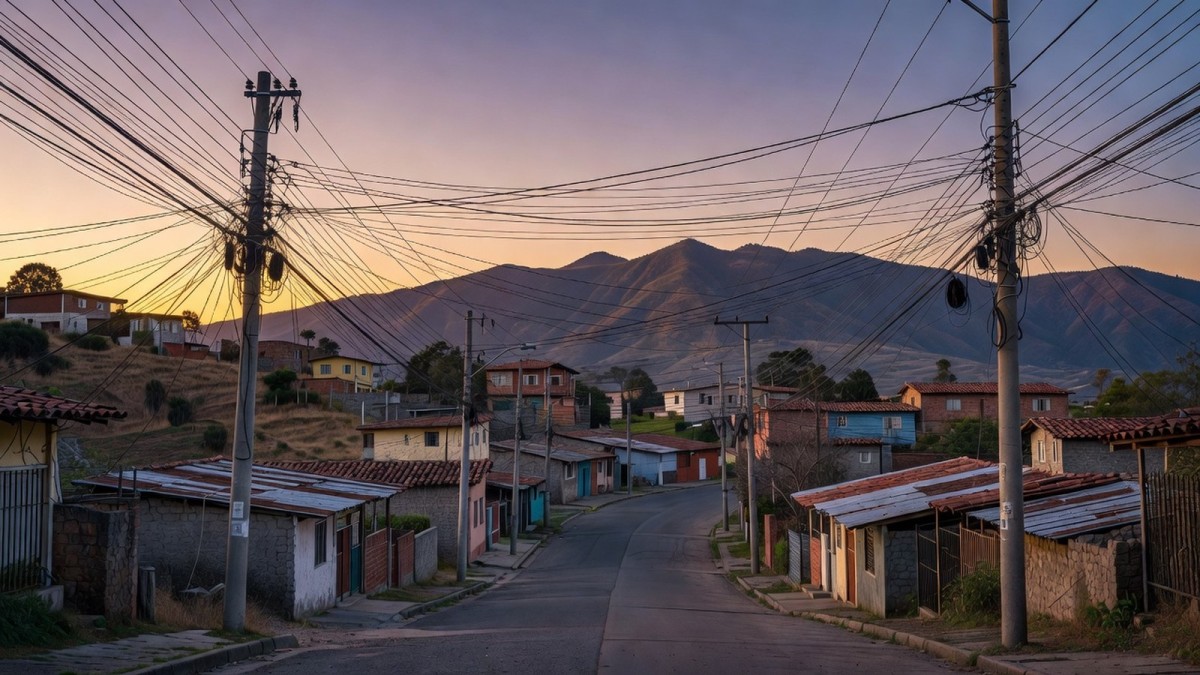
Beyond the political maneuvering in Caracas, the human cost of Venezuela's crisis continues to mount. The earthquake death toll keeps rising as more bodies are found beneath the rubble. Entire communities in La Guaira remain without electricity or clean water. Shelters—including a Caracas baseball stadium and a converted country club in Caraballeda—are housing thousands of families who have lost everything.
For the families of political prisoners, the talks represent a fragile hope. González Himiob, vice president of Foro Penal, has recorded 372 political prisoners still held across Venezuela's prison system, including 37 foreign nationals. While Maduro's capture led to some high-profile releases, the machinery of repression that Chavismo built over two decades remains largely intact. Many of those still behind bars are ordinary Venezuelans—community activists, student leaders, journalists—who spoke out against the government.
The opposition has made the release of political prisoners a central demand in the talks. For families who have spent years visiting their loved ones in secret detention centers and military prisons, the question is not just about electoral reform but about whether their sons, daughters, husbands, and wives will finally come home.
What This Means and What to Watch For
The announcement of formal talks is a significant step, but the road ahead is fraught with obstacles. The Chavismo-controlled National Assembly and the opposition-backed 2015 Assembly have fundamentally different visions of what "strengthening democracy" means—for Rodríguez and his sister Delcy, it is about maintaining a controlled transition; for Figuera and the opposition, it means genuine democratic opening with new elections and institutional independence.
Several key factors will determine whether these talks produce real change or become another chapter in Venezuela's long history of failed negotiations. The role of the United States will be critical—Washington has been calling the shots since January, with Secretary of State Marco Rubio described by the New York Times as effectively running Venezuela from Washington as a "de facto proconsul." Whether the US continues to back Figuera or eventually makes room for Machado will shape the negotiations' legitimacy both domestically and internationally.
For the millions of Venezuelans still waiting—for democracy, for justice, for the return of loved ones, for a country that can provide for its people—the talks beginning August 1 offer a glimmer of hope. But after decades of broken promises and political manipulation, the burden of proof lies squarely on both sides to demonstrate that this time, they mean what they say.
The families in the shelters of La Guaira, the political prisoners in the cells of El Helicoide, the Venezuelan refugees building new lives in Mexico City and beyond—they are watching. And they have been waiting far too long.
By Rosa Martinez, Staff Writer
**Internal Linking Opportunities:**- "Venezuela's political crisis and its impact across Latin America" — anchor text: Venezuela's political crisis- "The migrant crisis in Latin America: Venezuelan refugees in Mexico" — anchor text: Venezuelan refugees across the region- "US foreign policy in Latin America under Trump" — anchor text: US-backed transitions in Latin America**Social Media Teaser (for X / Postiz):**Venezuela's interim government and opposition will begin formal talks on August 1 in a US-backed bid to restore democracy. But Nobel laureate María Corina Machado has been sidelined. What does this mean for the millions still waiting for justice? 🇻🇪 #Venezuela #DemocracyThis article was produced with AI-assisted research and editorial support. Reporting is based on sources cited in the article.
What's Your Reaction?
 Like
0
Like
0
 Dislike
0
Dislike
0
 Love
0
Love
0
 Funny
0
Funny
0
 Wow
0
Wow
0
 Sad
0
Sad
0
 Angry
0
Angry
0
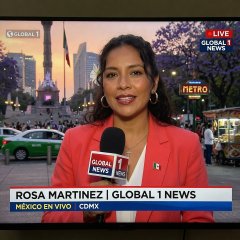
Latin America/Andes Correspondent at Global1.News. Based in Bogota, covering politics, environment, energy, and social movements across the Andean region. Passionate about environmental journalism and communities protecting their land.









Comments (0)