
Peace Deal in Ruins: Iran Declares Existential War After US Strikes Kill Seven Troops
Breaking news: Iran has declared an "existential war" and voided the June 17 interim peace deal after U.S. strikes killed seven troops from the 388th Brigade at Bampour barracks, with at least 35 total dead and over 300 wounded. Mohammed Bagher Ghalibaf granted Iranian forces "complete freedom of...
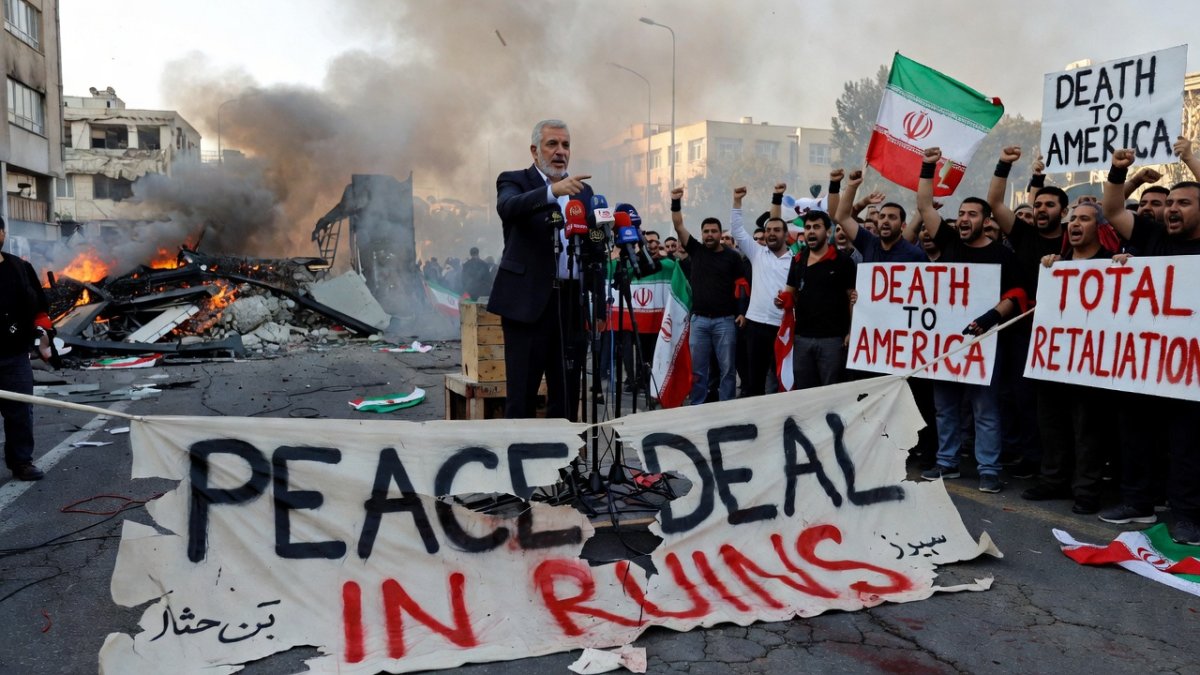
Peace Deal in Ruins: Iran Declares Existential War After US Strikes Kill Seven Troops
Escalation Ignites as Tehran Vows Total Retaliation
Iran's top negotiator Mohammed Bagher Ghalibaf declared Wednesday that the armed forces now have "complete freedom of action" after U.S. strikes killed seven troops from the 388th Brigade at Bampour barracks. The announcement came hours after U.S. CENTCOM confirmed multiple rounds of air strikes targeting Iranian command centres, air defence sites, missile and drone capabilities, and coastal surveillance installations near the Strait of Hormuz and Greater Tunb island.
The interim peace deal agreed upon by both sides on June 17 now appears doomed, with Ghalibaf stating explicitly that the agreement is voided. Iranian officials described the situation as an "existential war," signaling a dramatic shift from diplomatic channels to unrestricted military response. Explosions were reported across Bandar Abbas, Chabahar, Ahvaz, Sirik, Konarak, Rask, and Qeshm Island as U.S. forces pressed their offensive.
Iran's health ministry reported at least 35 killed and more than 300 wounded in the initial wave of strikes. Among the casualties were the seven Iranian troops confirmed dead at the Bampour barracks. U.S. forces also redirected two commercial vessels as part of a renewed blockade on Iranian ports and disabled an oil tanker with a Hellfire missile as it attempted to approach one of the blocked facilities.
Operation Lightning Marks Iran's Tenth Phase of Retaliation
Iran launched "Operation Lightning" on July 16, 2026, described as the tenth phase of its retaliatory attacks against U.S. positions across the region. IRGC Commander-in-Chief Ahmad Vahidi stated that Iranian forces are focused exclusively on destroying U.S. "offensive infrastructure." The operation included strikes on U.S. radar systems, Patriot defence systems, and fuel tanks at Ali Al Salem base in Kuwait.
Drones targeted communication and radar systems at Sheikh Isa base in Bahrain, while Jordan intercepted 8 Iranian missiles during the exchange. Iran's Islamic Revolutionary Guard Corps also downed a U.S. MQ-9 drone over Andimeshk in Khuzestan province. These actions demonstrate Iran's ability to project power beyond its borders despite the heavy damage sustained from American airstrikes.
Additional Iranian attacks included five drone strikes near the U.S. consulate in Erbil, prompting condemnation from Iraq. IRGC forces activated air defences over Tehran as U.S. strikes continued to hit targets including Qeshm Island, Bandar Abbas, Chabahar, Semnan, and Khorramabad. At least 211 patients were evacuated from Shahid Baghaei Hospital in Ahvaz amid fears of further escalation in the province.
U.S. Strikes Hammer Iranian Military and Infrastructure
U.S. CENTCOM detailed that its strikes successfully degraded Iranian command centres, air defence sites, missile and drone capabilities, and coastal surveillance infrastructure. Targets included the Khondab heavy-water facility area in central Markazi province as well as Semnan airport, where only a "side shed" was hit with no casualties reported. U.S. forces also struck the wheat storage facility in Khuzestan province, though the U.S. military denied targeting civilian infrastructure.
Explosions rocked multiple strategic locations including Bandar Abbas, Chabahar, Ahvaz, Sirik, Konarak, Rask, and Qeshm Island. Iranian air defences were activated over Tehran in response to the ongoing bombardment. The strikes come after weeks of rising tensions that culminated in the collapse of the June 17 interim peace agreement.
IRGC officials reported no casualties in strikes on Pakdasht and Parchin, claiming their defensive systems limited damage at those sites. However, the broader impact on Iran's military readiness remains severe, with significant degradation to its missile, drone, and coastal defence networks according to U.S. assessments.
Maritime Chokepoint Grinds to Halt Under Renewed Blockade
Lloyd's List reported that traffic through the Strait of Hormuz has slowed "to a trickle," with many vessels resorting to "dark transits" to avoid detection. The U.S. redirection of two commercial vessels and the Hellfire missile strike on an oil tanker have sent shockwaves through global energy markets. Iranian ports face a renewed blockade that threatens to disrupt oil flows critical to the world economy.
The disabled oil tanker was targeted while attempting to sail toward one of the blocked Iranian ports, according to U.S. military statements. This action, combined with the redirection of commercial shipping, signals a comprehensive effort to isolate Iran economically as well as militarily. Shipping companies are now reassessing routes and insurance costs in light of the heightened risks.
The Strait of Hormuz handles approximately 20 percent of global oil trade under normal conditions. Its effective closure, even partial, could trigger sharp increases in energy prices worldwide. Analysts warn that prolonged disruption could have cascading effects on inflation and economic stability far beyond the Middle East.
Regional Allies Caught in Crossfire as Conflict Widens
Jordan's successful interception of 8 Iranian missiles highlights the growing involvement of U.S. partners in the conflict. Attacks on Ali Al Salem base in Kuwait and Sheikh Isa base in Bahrain demonstrate Iran's strategy of striking at American assets hosted by neighboring countries. Iraq has formally condemned the five drone attacks reported near the U.S. consulate in Erbil.
These incidents risk drawing additional nations into the fray, complicating an already volatile situation. Kuwait, Bahrain, and Jordan now find themselves directly impacted by the exchange between Washington and Tehran. The IRGC's focus on regional U.S. infrastructure suggests Iran intends to make the conflict as costly as possible for America's allies.
Evacuations at Shahid Baghaei Hospital in Ahvaz and the activation of air defences over Tehran indicate that Iranian civilian areas are bracing for further strikes. The downing of the U.S. MQ-9 drone over Andimeshk in Khuzestan province provides Iran with a symbolic victory amid heavy losses, including the seven troops killed at Bampour barracks.
What This Means
This rapid collapse of the June 17 interim peace deal into open "existential war" marks a dangerous new chapter in U.S.-Iran relations with global implications. The death of seven troops from the 388th Brigade at Bampour barracks, combined with at least 35 total killed and over 300 wounded per Iran's health ministry, has eliminated any remaining diplomatic off-ramps. Mohammed Bagher Ghalibaf's declaration of "complete freedom of action" for Iranian forces, alongside IRGC Commander-in-Chief Ahmad Vahidi's vow to destroy U.S. offensive infrastructure, suggests a prolonged conflict that could destabilize energy markets and draw in regional allies.
The effective shutdown of the Strait of Hormuz, with traffic reduced to a trickle and ships using dark transits, threatens to spike global oil prices and trigger economic ripple effects. U.S. CENTCOM's successful degradation of Iranian command centres, air defences, missile and drone capabilities near Greater Tunb island and multiple coastal sites has weakened Tehran's conventional forces, yet Iran's "Operation Lightning" attacks on bases in Kuwait and Bahrain, the downing of a U.S. MQ-9 drone, and strikes near Erbil show Tehran retains asymmetric options. The redirection of two commercial vessels and the Hellfire strike on an oil tanker further tighten the economic noose.
Longer term, the conflict risks broader regional realignment, with Jordan, Iraq, Kuwait, and Bahrain already directly affected. Civilian infrastructure damage, including the disputed strike on a Khuzestan wheat storage facility and the evacuation of 211 patients from Ahvaz hospital, raises humanitarian concerns. Without immediate de-escalation, the fighting could expand beyond current strikes on Semnan, Khorramabad, Qeshm Island, and Markazi province, potentially reshaping security dynamics across the Middle East for years to come.
Diplomatic Channels Fall Silent Amid Rising Casualties
With the interim peace deal agreed on June 17 now officially voided, traditional diplomatic channels between Washington and Tehran have gone dark. Ghalibaf's statement leaves little room for negotiation, framing the conflict as existential for the Islamic Republic. U.S. officials have not yet responded publicly to Iran's declaration of unrestricted warfare.
The scale of casualties continues to climb, with Iran's health ministry confirming at least 35 dead and more than 300 wounded. The seven troops killed at Bampour barracks represent a direct challenge to Iran's military prestige. Additional strikes on Semnan airport, the Khondab heavy-water facility, and various coastal sites have compounded the pressure on Iranian defences.
Regional reactions remain mixed, with Iraq's condemnation of drone attacks near Erbil signaling growing frustration among neighbors caught in the crossfire. The IRGC's claims of limited damage at Pakdasht and Parchin offer some reassurance to Iranian leadership, yet the overall military picture favors U.S. offensive capabilities at this stage.
Global Energy Markets Brace for Prolonged Disruption
The renewed blockade on Iranian ports and the drastic slowdown in Strait of Hormuz traffic reported by Lloyd's List have already begun affecting global energy prices. Ships resorting to "dark transits" to avoid the conflict zone face increased insurance premiums and operational risks. The U.S. Hellfire missile strike on the oil tanker has served as a clear warning to maritime traffic.
Analysts project that sustained disruption could remove millions of barrels of oil per day from global markets. The attacks on Bandar Abbas, Chabahar, and Qeshm Island further threaten Iran's export capabilities. U.S. redirection of two commercial vessels underscores the seriousness of the naval component of this campaign.
As "Operation Lightning" continues into its tenth phase, the risk of miscalculation grows. Iran's strikes on U.S. assets in Kuwait and Bahrain, coupled with the downing of the MQ-9 drone over Andimeshk, suggest Tehran is prepared for a long fight. The coming days will prove decisive in determining whether this conflict remains contained or spirals into a wider regional war.
By Jessica Ali, Staff WriterThis article was produced with AI-assisted research and editorial support. Reporting is based on sources cited in the article.
What's Your Reaction?
 Like
0
Like
0
 Dislike
0
Dislike
0
 Love
0
Love
0
 Funny
0
Funny
0
 Wow
0
Wow
0
 Sad
0
Sad
0
 Angry
0
Angry
0

Editor-in-Chief at Global1.News. Atlanta-based journalist who cuts through the BS and tells it like it is. Lead anchor, host, and the voice you hear when the spin stops and the truth starts.















Comments (0)