
Minister Varawut Silpa-archa Strengthening Thailands Core at Bangkok Post Economic Forum 2026
The Bangkok Post Economic Forum 2026 opened with a powerful message from Thailand's Minister of Industry, H.E. Varawut Silpa-archa, who called for strengthening the nation's core through human development, innovation, and sustainability. The first session, titled "Strengthening the Core: Securing Thailand's Future in a Fragmented World," set the tone for the forum's overarching
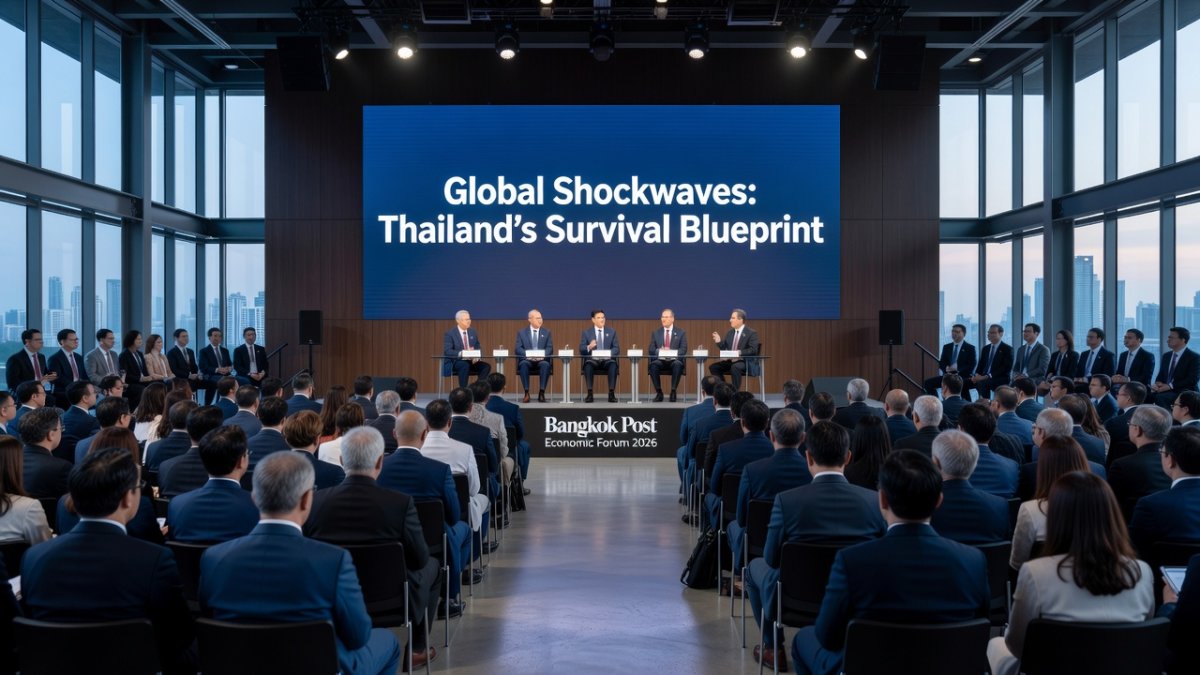
The Bangkok Post Economic Forum 2026 opened with a powerful message from Thailand's Minister of Industry, H.E. Varawut Silpa-archa, who called for strengthening the nation's core through human development, innovation, and sustainability. The first session, titled "Strengthening the Core: Securing Thailand's Future in a Fragmented World," set the tone for the forum's overarching theme of "Global Shockwaves: Thailand's Survival Blueprint." With Thailand's economy ranking as the second-largest in ASEAN after Indonesia, the Minister's vision carries weight not just for Bangkok but for communities across the kingdom and the wider Southeast Asian region.
Minister Varawut Silpa-archa's Keynote at the Bangkok Post Economic Forum
Minister Varawut Silpa-archa, representing the Chartthaipattana Party, delivered the opening keynote at the Bangkok Post Economic Forum 2026 held in Bangkok this past week. The forum brought together senior government officials, business leaders, economists, and academics to address the mounting economic pressures facing Thailand in an increasingly fragmented global landscape.
The Minister's address focused on the theme of resistance and resilience — how Thailand can strengthen its industrial and economic core to withstand global shocks ranging from trade tensions between major powers to supply chain disruptions that have reshaped manufacturing worldwide. His remarks come at a critical time when Thai exporters and manufacturers face uncertainty from multiple directions, including shifting tariff policies and technological disruption in key sectors.
For Thai readers, the Minister's direct engagement at this forum signals that the government recognizes the urgency of preparing the nation's workforce and industries for a future that looks fundamentally different from the past decade. The Bangkok Post Economic Forum, now in its 2026 edition, has become a vital platform for such policy discussions that affect everyone from factory workers in Rayong to farmers in the central plains.
Human Development as the Foundation of Industrial Resilience
Minister Varawut Silpa-archa placed human development at the center of his vision for Thailand's industrial future. In a world where automation and artificial intelligence are transforming production lines, the Minister emphasized that Thailand's competitive advantage must come from a skilled, adaptable workforce rather than cheap labor alone.
This focus resonates deeply in provinces such as Chonburi, Ayutthaya, and Samut Prakan, where thousands of families depend on factory employment in automotive parts, electronics assembly, and food processing. The Ministry of Industry is working on upskilling programs that help workers transition from traditional manufacturing roles to higher-value positions in areas such as electric vehicle production and advanced electronics.
The human development agenda also addresses the urban-rural divide that has long characterized Thailand's economic landscape. By investing in training programs that reach beyond Bangkok into the Isaan region and northern provinces, the Ministry aims to ensure that economic growth benefits communities across the country rather than concentrating wealth in the capital.
Innovation and Sustainability Driving Thailand's Industrial Transformation
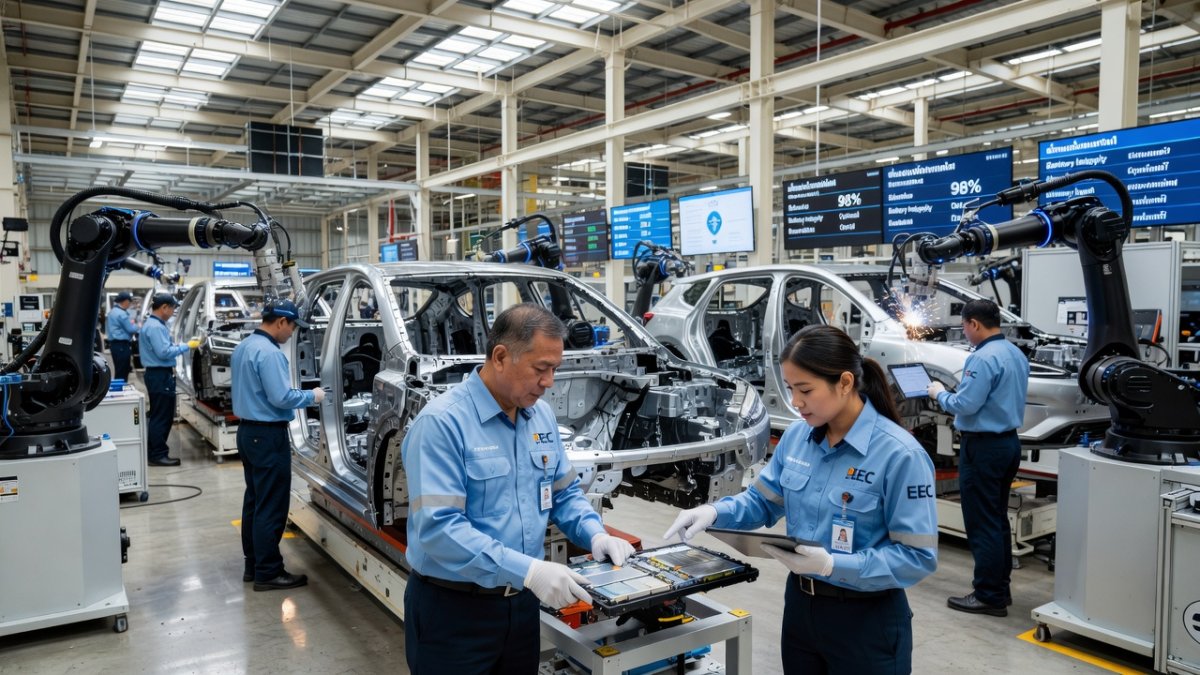
The Minister outlined a dual focus on innovation and sustainability as the twin engines of Thailand's industrial transformation. The automotive sector, long the backbone of Thai manufacturing, is undergoing a fundamental shift from internal combustion engines to electric vehicles, and Thailand is positioning itself as a regional EV production hub.
The Eastern Economic Corridor, a flagship government initiative spanning the provinces of Chonburi, Rayong, and Chachoengsao, is at the heart of this transformation. The EEC has attracted significant investment in EV battery production, clean technology, and advanced manufacturing, creating new opportunities for engineers and technicians trained in Thailand's universities and vocational colleges.
Sustainability is not merely an environmental goal but an economic imperative for Thailand. International buyers and trading partners increasingly demand green manufacturing practices, and Thai exporters must meet these standards to maintain access to markets in Europe, North America, and across Asia. The Ministry of Industry is supporting factories in adopting energy-efficient processes and reducing carbon footprints, a transition that protects both the environment and Thailand's export competitiveness.
Navigating Global Economic Fragmentation and Trade Challenges
The forum session titled "Strengthening the Core" directly addressed the fragmentation of the global economy — a trend that has accelerated in recent years through trade disputes, technology decoupling between major powers, and the reshaping of supply chains. For Thailand, a nation whose economic success has long depended on open trade and foreign investment, these trends pose serious challenges.
Thailand's position as a key ASEAN manufacturing hub means that external shocks directly affect the export-oriented factories that employ hundreds of thousands of workers. The automotive sector, which accounts for approximately 10 percent of Thailand's GDP, has been particularly vulnerable to shifts in global demand and trade policy uncertainty. Minister Varawut Silpa-archa's strategy emphasizes building domestic capabilities while maintaining openness to regional and international partnerships.
The Ministry of Industry's approach seeks to protect Thai communities from sudden job losses by diversifying both markets and production capabilities. Rather than relying on any single export destination or industry, Thailand is developing a more resilient economic base that can weather disruptions in individual sectors. This strategy has taken on new urgency as global supply chains continue to reorganize in response to geopolitical pressures.
Inclusive Growth and Support for Thai Enterprises
A central theme of the Minister's address was inclusive growth — ensuring that the benefits of industrial progress reach beyond large corporations to small and medium enterprises and rural suppliers. Thailand's economic landscape includes thousands of family-run businesses that serve as suppliers to major industries, from automotive parts makers in the central region to agricultural processors in the north and northeast.
The Ministry of Industry has launched initiatives to help smaller enterprises upgrade their technology and meet international quality standards, enabling them to participate in the supply chains of major multinational corporations operating in Thailand. This approach recognizes that the strength of Thailand's industrial core depends on the health of the entire ecosystem, from the largest factory to the smallest workshop.
For Thai communities, inclusive growth means that economic development in the Eastern Economic Corridor creates opportunities not just for workers who relocate to the eastern seaboard but also for businesses in their home provinces that can supply goods and services to the growing industrial base. The Ministry's policies aim to create a multiplier effect that spreads prosperity across regions.
ASEAN Regional Context and Thailand's Leadership Role
Thailand's industrial policies under Minister Varawut Silpa-archa carry significant implications for the wider ASEAN region. As the second-largest economy in Southeast Asia, Thailand's economic decisions influence neighboring countries through shared supply chains, cross-border investment, and labor mobility. Cambodia, Laos, Myanmar, and Vietnam all have economic ties that link their fortunes to Thailand's industrial performance.
The Bangkok Post Economic Forum session highlighted how Thailand's approach to building economic resilience serves as a model for other ASEAN nations facing similar challenges from global fragmentation. The emphasis on human development, innovation, and sustainability aligns with ASEAN's broader goals of regional economic integration and shared prosperity.
For Thai readers, understanding this regional context is important because ASEAN cooperation on trade facilitation, customs harmonization, and investment promotion directly affects the competitiveness of Thai exports. The Ministry of Foreign Affairs works closely with the Ministry of Industry to ensure that Thailand's industrial policies are complementary to ASEAN economic community building efforts.
The Role of the Eastern Economic Corridor in Thailand's Future
The Eastern Economic Corridor stands as Thailand's most ambitious industrial development project, spanning three provinces on the eastern seaboard that have become the engine room of the nation's manufacturing sector. Under the Ministry of Industry's guidance, the EEC has attracted billions of baht in investment commitments for next-generation industries including electric vehicles, robotics, aviation, and biotechnology.
For local communities in Rayong, Chonburi, and Chachoengsao, the EEC represents both opportunity and challenge. New factories bring jobs and infrastructure development, but they also require workers to adapt to rapidly changing technologies. The Ministry's emphasis on human development directly addresses this challenge by supporting training programs that prepare local residents for high-skilled positions in advanced manufacturing.
The EEC's success has broader implications for Thailand's economic future. If the corridor can demonstrate that Thailand can compete in high-technology industries, it will attract further foreign investment and create a template for industrial development in other regions. This is why Minister Varawut Silpa-archa's message of innovation and sustainability resonates beyond the eastern seaboard — it sets the direction for Thailand's entire industrial strategy.
The Path Forward: Balancing Tradition and Modernity
As Thailand charts its course through global uncertainty, the challenge lies in balancing the preservation of traditional strengths with the adoption of new technologies and practices. Thailand's agricultural sector, which still employs a significant portion of the workforce, cannot be neglected even as the country pushes toward advanced manufacturing. The Ministry of Industry's vision recognizes this reality by calling for inclusive growth that connects industrial development with rural economies.
Buddhist values of moderation and balance, deeply embedded in Thai culture, offer a framework for thinking about economic development that does not sacrifice community well-being for rapid growth. The Minister's emphasis on sustainability and inclusive growth reflects this cultural heritage, proposing an industrial transformation that respects Thailand's social fabric while preparing for a competitive future.
For readers across Thailand, from Bangkok professionals to farmers in the Isaan region to small business owners in Chiang Mai, the Bangkok Post Economic Forum 2026's opening session delivered a clear message: Thailand has the resources, the talent, and the determination to navigate global shocks, but success will require collective effort, wise investment, and a commitment to building a future that leaves no community behind.
What to Watch For
The Bangkok Post Economic Forum 2026 continues with additional sessions covering financing resilience amid financial volatility, energy security strategies, and a final session on resilience, sustainability, and opportunities for Thailand's path to future growth. These discussions will feature prominent voices including Dr. Santitarn Sathirathai, Vice Minister of Finance, Dr. Veerapat Kiatfuengfoo from the Ministry of Energy, and industry leaders from the Federation of Thai Industries and Ericsson Thailand.
The policy directions outlined in this forum will shape Thailand's economic agenda in the coming months, with implications for investment incentives, workforce development programs, and trade negotiations. Thai businesses and families should watch for concrete policy announcements that follow from these high-level discussions, particularly regarding support for skills training, green technology adoption, and SME development.
Thailand's journey through global uncertainty is just beginning, but the foundation laid at the Bangkok Post Economic Forum 2026 provides reason for cautious optimism. With the right investments in people, innovation, and sustainability, Thailand can emerge from this period of fragmentation stronger and more resilient than before.
By Ann Srisawat, Staff Writer
This article was produced with AI-assisted research and editorial support. Reporting is based on sources cited in the article.
What's Your Reaction?
 Like
0
Like
0
 Dislike
0
Dislike
0
 Love
0
Love
0
 Funny
0
Funny
0
 Wow
0
Wow
0
 Sad
0
Sad
0
 Angry
0
Angry
0

Southeast Asia Correspondent at Global1.News. Based in Bangkok, covering Thai and Southeast Asian politics, economy, technology, and culture. Deep regional perspective on one of the world's most dynamic regions.














Comments (0)