
Iran Mourns Khamenei Amid War and Succession Crisis
**Keywords:** Ayatollah Ali Khamenei funeral, Mojtaba Khamenei succession, Iran US negotiations, Strait of Hormuz, Israel Iran war, Tehran mourners, IRGC, nuclear program, Gulf states, energy markets, revenge threats, Soleimani precedent The Scene in Tehran Crowds dressed in black filled Tehran’s streets on Monday for the funeral procession of Ayatollah Ali Khamenei. The flag-d
The Scene in Tehran
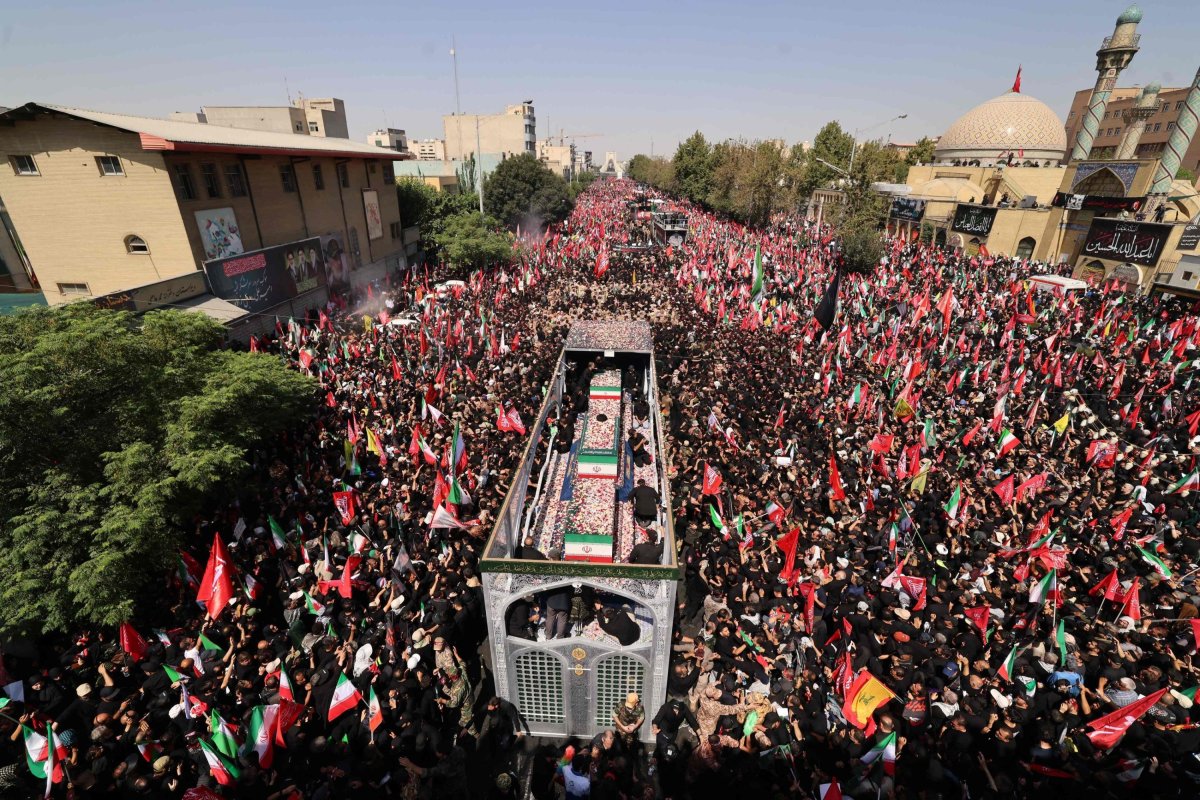
Crowds dressed in black filled Tehran’s streets on Monday for the funeral procession of Ayatollah Ali Khamenei. The flag-draped coffin of the late supreme leader, along with those of family members killed in the February 28 airstrike, rested on a truck styled to resemble an imam’s shrine grating. State television showed the procession stretching kilometers from Azadi Square, appearing larger than the 2020 event for Gen. Qassem Soleimani.
Mourners reached out to touch the vehicle and threw scarves toward attendants. Placards demanded the death of U.S. President Donald Trump and Israeli Prime Minister Benjamin Netanyahu. One effigy depicted Trump being hanged. Authorities closed streets, airspace, and normal activity as the mourning period, which began Saturday, continues until Thursday’s burial at the Imam Reza shrine in Mashhad.
Strategic Calculus of the Funeral as a Show of Power
Iran’s theocracy organized the massive turnout to project strength during active negotiations with the United States. The display of public grief and anger serves as leverage while Tehran seeks a permanent end to the war that began with the Israeli-U.S. airstrike. By channeling calls for revenge, authorities aim to demonstrate domestic cohesion and deter further external pressure.
The Revolutionary Guard’s involvement, including statements from Gen. Hasan Hasanzadeh about the twelve-hour journey to Mehrabad International Airport, underscores institutional continuity. This carefully managed spectacle connects directly to Iran’s broader strategy of using public mobilization to influence talks on reopening the Strait of Hormuz and addressing its nuclear program.
The Succession Question and Mojtaba Khamenei’s Position
Ayatollah Mojtaba Khamenei has not appeared publicly since the airstrike that killed his father and wounded him. Reports indicate he remains in hiding, raising questions about the timing and legitimacy of any transition. The absence creates a temporary vacuum at the apex of Iran’s power structure precisely when decisions on war termination and nuclear limits are required.
Succession in the Islamic Republic has always involved careful balancing among clerical, military, and political factions. Mojtaba’s low profile limits his ability to shape immediate policy, yet his survival preserves a direct familial link to the previous leadership. This dynamic affects how Iran presents a unified front in negotiations and how proxy networks respond to ongoing threats.
US-Iran Negotiation Dynamics and Strait of Hormuz
Washington seeks to advance talks on fully reopening the Strait of Hormuz, rolling back Iran’s nuclear activities, and securing a durable ceasefire. Iranian demands for control over the waterway remain unacceptable to the United States, leaving the core dispute unresolved. The funeral period has effectively paused formal discussions until after the burial in Mashhad.
U.S. authorities continue to monitor Iranian threats against President Trump, a concern rooted in the 2020 killing of Soleimani. Both sides recognize that any agreement must address energy transit security and proliferation risks, yet the current atmosphere of public revenge calls complicates diplomatic movement. The negotiations therefore hinge on whether Tehran can translate its show of unity into concrete concessions.
Regional Implications for Gulf States and Israel
The death of Khamenei and the ongoing war intensify existing Sunni-Shia geopolitical competition. Gulf states watch closely as Iran’s internal transition unfolds, aware that instability could affect proxy activities involving Hezbollah, Hamas, and the IRGC. Israel, having participated in the initial airstrike, faces heightened threats and must calibrate its posture amid calls for Netanyahu’s death.
Arab-Israeli normalization efforts under the Abraham Accords face renewed strain. Countries such as Saudi Arabia, the UAE, and Egypt weigh the risks of escalation against opportunities for deeper security cooperation with the United States. Turkey’s regional influence also comes into play as Ankara assesses how a weakened or transitioning Iran alters the balance in Syria and Iraq.
Implications for Middle East Stability and Energy Markets
The combination of leadership transition, unresolved Hormuz demands, and active revenge rhetoric raises the prospect of prolonged volatility. Energy markets remain sensitive to any disruption in the Strait, where even temporary closures could affect global supply and pricing. OPEC+ members, particularly Saudi Arabia, monitor developments for signs that production or transit arrangements may shift.
Great-power competition adds another layer, with the United States, China, and Russia each holding distinct interests in Iranian stability and nuclear restraint. A drawn-out succession process could delay meaningful diplomacy, allowing proxy networks to test boundaries. The coming weeks will reveal whether Iran’s display of public solidarity translates into negotiating leverage or simply prolongs regional uncertainty.
By Malik Hassan, Staff WriterThis article was produced with AI-assisted research and editorial support. Reporting is based on sources cited in the article.
What's Your Reaction?
 Like
0
Like
0
 Dislike
0
Dislike
0
 Love
0
Love
0
 Funny
0
Funny
0
 Wow
0
Wow
0
 Sad
0
Sad
0
 Angry
0
Angry
0
Middle East Correspondent at Global1.News. Based in Beirut, covering politics, conflict, energy, and society across the Middle East. Brings context and depth to a region often reduced to headlines.













Comments (0)