
Mexico's Vanishing Waters: Drought, Sinking City, and the World Cup Crisis
In the heart of Xochimilco, where the ancient chinampas once floated like emerald jewels on the Valley of Mexico’s waters, the López family begins each dawn hauling buckets from dwindling communal taps. María López, a 42-year-old mother of three, rises before sunrise to queue for hours at a single working spigot that serves dozens of households. Her children, aged 8 to 14, help
Mexico's Water Emergency: Lakes Vanish, Cities Sink as World Cup Looms
Mexico City, CDMX – June 2026 — The Valley of Mexico confronts an escalating water catastrophe that threatens the health and stability of more than 20 million people. Early June 2026 data from the Cutzamala system shows storage levels at 67.6-67.8 percent, marking the first positive trend since November 2025 yet still far below historical norms. This vital network supplies roughly 25 percent of the Valley’s water while 75 percent comes from an overexploited aquifer. Decades of unsustainable extraction have caused Mexico City to sink between 10 and 30 centimeters annually, with NASA’s NISAR satellite detecting parts of the metropolis dropping more than 2 centimeters per month—equivalent to 24 centimeters yearly. Forty percent of treated water vanishes through SACMEX pipe leaks, compounding scarcity. In Xochimilco, UNESCO-listed canals are drying from commercial pipa over-extraction and relentless urbanization. Residents blocked the Mexico-Cuernavaca highway in March 2026 to protest weeks without tap water. A new embarcadero opened in Cuemanco in June 2026 aims to revive axolotl habitats, but fires fueled by parched vegetation now rage across Xochimilco and Milpa Alta. Pre-2026 “Day Zero” warnings avoided total collapse, yet the crisis persists. Without bold intervention, infrastructure failure looms in 50 to 100 years, tilting colonial-era buildings and endangering public health through contaminated supplies and disease outbreaks.
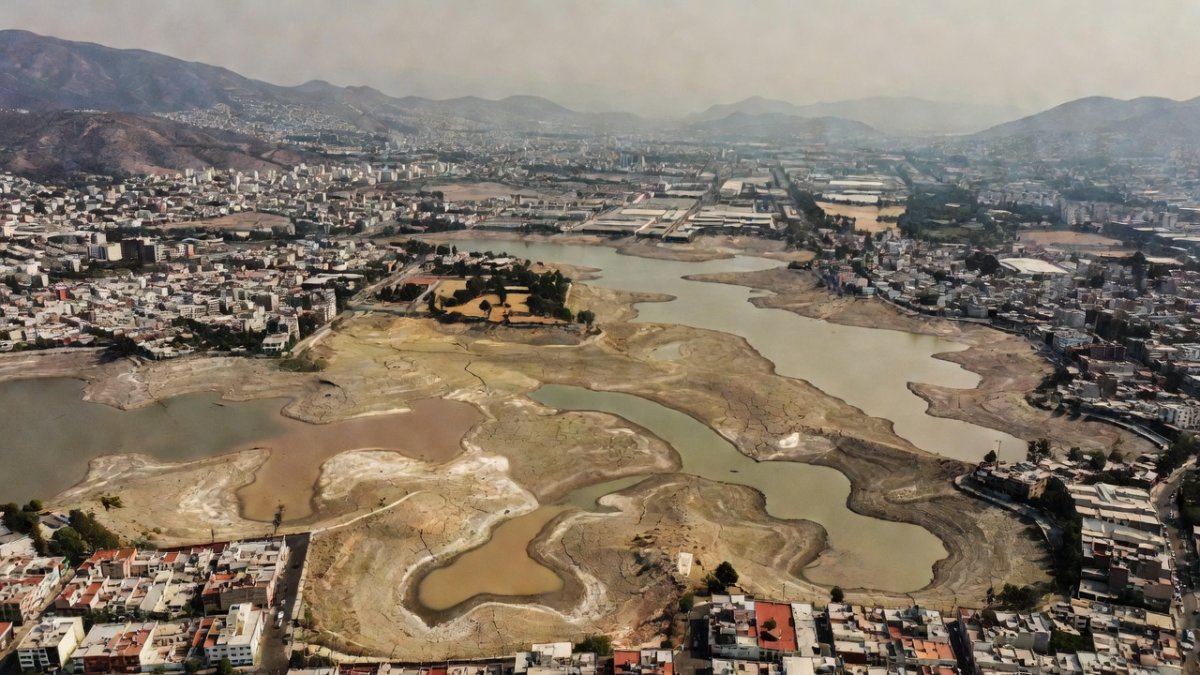
The Vanishing Lakes of the Valley of Mexico
The Cutzamala system’s modest recovery to 67.6-67.8 percent storage in early June 2026 offers fleeting hope after months of decline since November 2025. Yet this reservoir network, feeding approximately 25 percent of Valley of Mexico demand, remains critically low while the remaining 75 percent draws from a severely overexploited aquifer. CONAGUA reports reveal chronic deficits that force rationing across neighborhoods. SACMEX infrastructure leaks away 40 percent of treated water before it reaches homes, wasting a resource already stretched thin by drought and population pressure. NASA NISAR imagery documents relentless subsidence at rates exceeding 2 centimeters monthly in vulnerable zones, translating to 24 centimeters annually and accelerating structural damage. These intertwined failures create a feedback loop where sinking land fractures pipes further, worsening leaks. Health consequences include increased gastrointestinal illnesses from reliance on unsafe alternative sources. UNAM researchers warn that continued aquifer mining will deepen the crisis, pushing the metro area toward irreversible scarcity. The 20 million residents endure rotating cutoffs that disrupt daily life, education, and medical care. Urgent upgrades to distribution networks and recharge programs are essential to reverse this trajectory before lakes and reservoirs vanish entirely, leaving millions without reliable access.
Xochimilco: A UNESCO Site Running Dry
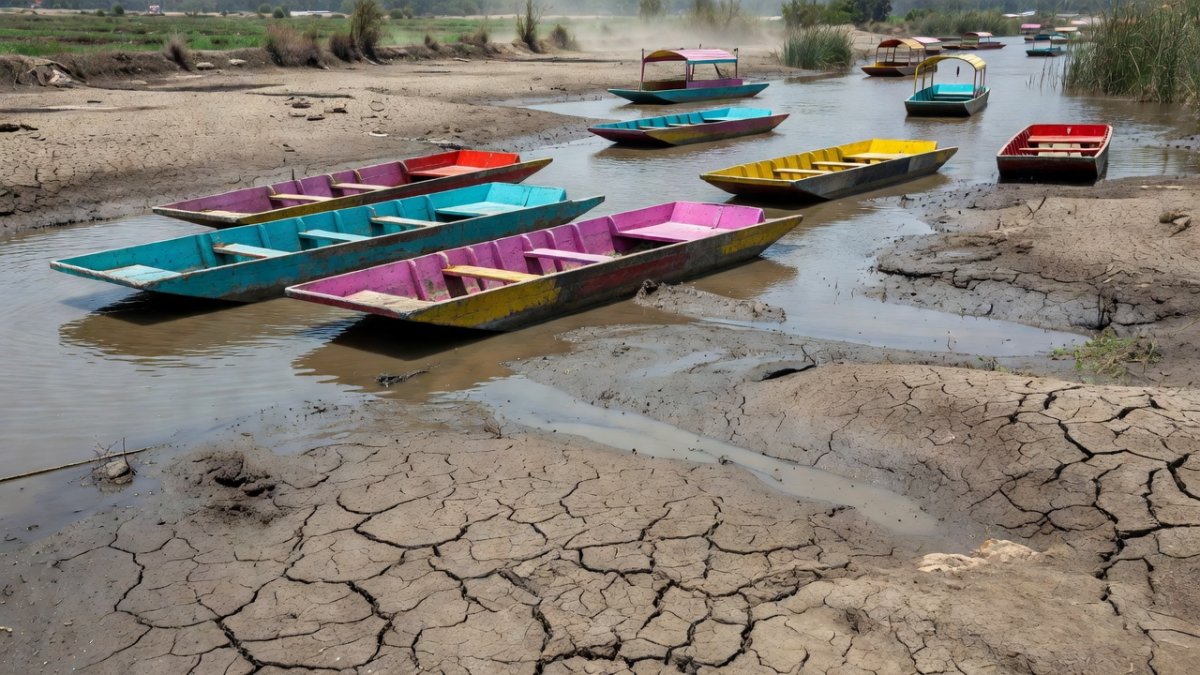
Xochimilco’s iconic canals, once teeming with life and sustaining traditional agriculture, now shrink under relentless pressure from commercial water pipas and sprawling urbanization. Over-extraction for profit has lowered water tables, leaving many channels as stagnant pools or dry beds that breed disease vectors. In March 2026, desperate residents blocked the Mexico-Cuernavaca highway for days, demanding immediate restoration of tap service after prolonged outages. The protest highlighted how marginalized communities bear the brunt of mismanagement. June 2026 brought a glimmer with the new Cuemanco embarcadero designed to restore axolotl habitats through targeted refilling, yet surrounding dry vegetation has ignited frequent fires that destroy remaining wetlands and release toxic smoke. These blazes compound respiratory health risks already elevated by dust from desiccated soils. SACMEX and CONAGUA data tie the drying directly to aquifer depletion and climate-amplified evaporation. Local families lose livelihoods tied to tourism and farming while children suffer interrupted schooling during water-scarce periods. The UNESCO designation risks becoming symbolic if restoration stalls. Coordinated action involving UNAM monitoring and community-led conservation could revive these ecosystems, but time is short as fires and extraction accelerate irreversible loss across this cultural and ecological treasure.
A Sinking City: The Subsidence Crisis
Mexico City’s dramatic subsidence, measured at 10 to 30 centimeters per year across broad districts, stems directly from aquifer over-exploitation that removes the underground support holding the metropolis aloft. NASA NISAR satellite observations confirm localized drops surpassing 2 centimeters monthly—24 centimeters annually—in the most affected zones, fracturing buildings, roads, and water mains. Colonial-era structures lean at alarming angles, their historic facades cracking under uneven settling that threatens cultural heritage and public safety. Forty percent SACMEX pipe losses worsen as subsidence shears connections, creating a vicious cycle of leaks and further ground collapse. The 20 million inhabitants navigate tilted streets and sudden sinkholes that disrupt emergency services and sanitation. Health burdens rise through contaminated groundwater intrusion and dust inhalation from exposed soils. UNAM studies project that without aggressive recharge and reduced extraction, infrastructure failure could arrive within 50 to 100 years, rendering large sections uninhabitable. Mayor Clara Brugada’s administration acknowledges the scale, yet implementation lags behind the accelerating physical changes. This silent geological crisis amplifies every water shortage, turning routine maintenance into monumental engineering challenges while families like the López endure daily uncertainty amid a city literally sinking beneath them.
Climate Change and the World Cup: A Perfect Storm
Climate change intensifies Mexico’s water emergency through prolonged droughts and erratic rainfall that have already stressed the Cutzamala system to 67.6-67.8 percent capacity. The approaching FIFA World Cup 2026 threatens to spike water demand by 40 percent in host cities, overwhelming already fragile supplies and accelerating aquifer depletion. Preparations for millions of visitors coincide with peak dry-season stress, risking shortages that could trigger health emergencies from inadequate sanitation and hydration. Xochimilco’s drying canals and Milpa Alta fires illustrate how warming temperatures dry vegetation and heighten wildfire risk, further degrading watersheds. The 20 million metro residents face compounded pressures as event infrastructure diverts resources from long-term fixes. CONAGUA projections indicate that without rapid conservation measures, the tournament could push the Valley past tipping points previously flagged in pre-2026 Day Zero scenarios. International scrutiny from FIFA adds urgency, yet local communities worry that short-term event needs will eclipse sustainable planning. This convergence of global climate forces and mega-event demands creates a perfect storm that threatens both public health and Mexico’s international image unless decisive action reallocates priorities toward resilience.
Government Response and the Sponge City Vision
Mayor Clara Brugada has launched hundreds of water and drainage projects aimed at stabilizing supply for the 20 million residents of greater Mexico City. CONAGUA coordinates national efforts while SACMEX tackles local distribution upgrades to curb the 40 percent leakage rate. Central to the strategy is the “Ciudad Esponja” or Sponge City initiative, which deploys absorption wells and promotes rainwater infiltration to recharge depleted aquifers and reduce subsidence rates documented by NASA NISAR. UNAM scientists contribute monitoring data that guides placement of these green infrastructure elements across vulnerable boroughs. The June 2026 Cuemanco embarcadero exemplifies targeted habitat restoration that also supports community water access. Despite these steps, critics note that progress remains incremental against the scale of aquifer mining and climate stress. Fires in Xochimilco underscore the need for vegetation management tied to broader recharge goals. Brugada’s administration emphasizes equity, directing resources toward neighborhoods like Iztapalapa where families still haul water daily. Successful expansion of Sponge City features could extend infrastructure lifespan beyond the 50-to-100-year failure horizon, yet sustained funding and enforcement are required to translate vision into measurable recovery before the World Cup spotlight exposes remaining gaps.
The Bottom Line — What Comes Next
The data from June 2026—Cutzamala at 67.6-67.8 percent, relentless 2-centimeter monthly subsidence, 40 percent leaks, and Xochimilco protests—paint an urgent portrait of a metropolis on the edge. Without accelerated intervention, the combination of climate-driven drought, World Cup demand spikes, and aging infrastructure will deepen health crises and displacement risks for 20 million people. The Sponge City vision and Brugada’s project pipeline offer pathways forward, yet they must scale rapidly to counter aquifer exhaustion and protect UNESCO sites from total desiccation. International attention around the 2026 tournament provides both pressure and opportunity to secure funding for recharge and leak repairs. Communities in Xochimilco and beyond have already demonstrated resilience through protests and local stewardship; their voices must guide equitable solutions. The coming months will determine whether Mexico City reverses its sinking trajectory or succumbs to a slow-motion collapse that echoes across Latin America. Passionate, coordinated action today can still secure water security for future generations. By Elena Vasquez, Staff Writer
This article was produced with AI-assisted research and editorial support. Reporting is based on sources cited in the article.
What's Your Reaction?
 Like
0
Like
0
 Dislike
0
Dislike
0
 Love
0
Love
0
 Funny
0
Funny
0
 Wow
0
Wow
0
 Sad
0
Sad
0
 Angry
0
Angry
0

Latin America Correspondent at Global1.News. Based in Mexico City, covering politics, economics, energy, and culture across the region. Brings an on-the-ground perspective to stories spanning from the Rio Grande to Patagonia.













Comments (0)