
Cuba's Blackout Crisis and the Human Cost in Havana's High-Rises
The Human Cost of Power Failures in Cuban High-Rises Seventy-year-old Ana Rosa Romero lives on an upper floor of a Havana apartment building where the elevator has become a distant memory during extended blackouts. According to reports from residents, the inability to use the elevator trapped her and her husband when he required urgent medical attention, forcing them to navigat
The Human Cost of Power Failures in Cuban High-Rises
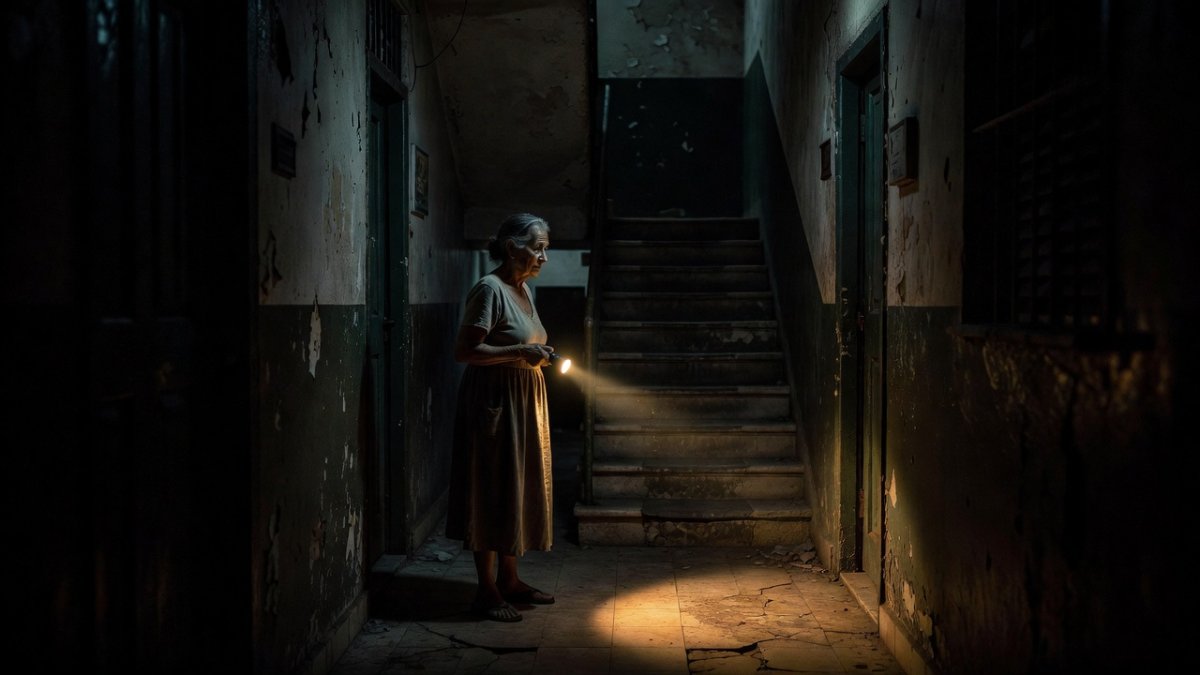
Seventy-year-old Ana Rosa Romero lives on an upper floor of a Havana apartment building where the elevator has become a distant memory during extended blackouts. According to reports from residents, the inability to use the elevator trapped her and her husband when he required urgent medical attention, forcing them to navigate stairs amid failing health equipment and spoiled food supplies. Daily routines now center on anticipating outages that disrupt water pumping, refrigeration, and basic lighting across the island.
Cuba's reliance on imported fuel for its power plants has left communities exposed when supplies are restricted. Rolling blackouts affect hospitals, storage facilities, and residential towers alike, turning ordinary tasks into negotiations with uncertainty. Elderly residents in particular face physical strain from climbing multiple flights, compounding existing health vulnerabilities in a nation where many live in multi-story structures without backup systems.
Vulnerability of Island Nations to External Fuel Shocks
Island nations across the Caribbean share Cuba's exposure to fuel import disruptions, where coastal communities depend on centralized plants that falter without steady supplies. In places like the Dominican Republic and Jamaica, similar dependence has led to periodic shortages that halt fishing operations and tourism services, directly affecting household incomes tied to marine economies. Cuba's situation highlights how geographic isolation amplifies these risks when global markets or policy barriers limit access.
Climate journalists covering Latin America note that rising sea levels already threaten these same shorelines, yet energy instability diverts attention from adaptation measures such as mangrove restoration in Cuba's coastal provinces. Without reliable power, monitoring equipment for storm surges or early warning systems cannot function consistently, leaving populations less prepared for intensifying weather events linked to broader regional patterns.
US Restrictions and Barriers to Cuba's Renewable Development
Reports indicate that restrictions on fuel imports have constrained Cuba's capacity to invest in solar and wind projects that could reduce long-term dependence. Government agencies have explored partnerships for photovoltaic installations in eastern provinces, yet financing and technology transfers face obstacles that slow deployment. This dynamic echoes challenges seen in other sanctioned contexts where renewable transitions stall despite available natural resources like consistent Caribbean sunlight.
From a Brazilian perspective, where programs through state utilities have expanded wind capacity in the northeast, the contrast underscores how policy environments shape outcomes. Cuba's efforts to integrate renewables into its grid remain limited by external factors, preventing the kind of scaled infrastructure that could stabilize supply for urban centers and rural areas alike.
Comparisons to Energy Crises in Venezuela and Argentina
Venezuela's prolonged electricity shortfalls, driven by infrastructure decay and fluctuating oil revenues, displaced millions and strained public health systems in ways that parallel Cuba's current rolling outages. Hospitals there reported equipment failures during peak demand periods, much like the medical disruptions described by Cuban residents. Argentina's recent tariff adjustments and grid strains have similarly hit low-income households hardest, revealing how economic pressures intersect with energy access across the continent.
These cases demonstrate recurring patterns where external economic measures compound domestic maintenance issues at power facilities. In each instance, the absence of diversified sources leaves populations reliant on aging thermal plants vulnerable to single-point failures, a lesson relevant for policymakers examining Cuba's position within Latin America's interconnected energy landscape.
Environmental Justice and Who Bears the Burden
When energy systems collapse, the costs fall disproportionately on older adults, low-income families, and those in high-density housing without private generators. In Cuba, this means widows like Ana Rosa Romero managing without refrigeration for medicines or climbing stairs during health emergencies, while wealthier households may secure alternatives. Similar inequities appear in Brazilian favelas during drought-induced hydroelectric shortfalls, where water and power access gaps widen existing divides.
Environmental justice frameworks in Latin America emphasize that island and coastal populations often inherit the legacy of fossil fuel dependence without the means to pivot quickly. Cuba's blackouts illustrate how such failures intersect with climate vulnerability, as communities already facing hurricane risks lose power for recovery efforts. Regional cooperation on shared renewable grids could address these imbalances, though implementation depends on overcoming longstanding political hurdles.
Regional Pathways for Energy Stability
Broader Latin American initiatives, including cross-border electricity exchanges discussed among Central American nations, offer models that could inform Cuba's situation if political conditions allow. Brazil's experience with biomass and hydroelectric integration shows how diversified portfolios can buffer against import shocks, providing a reference point for Caribbean states seeking greater autonomy. Local economies in Cuba's provinces stand to benefit from such shifts through job creation in installation and maintenance sectors.
Residents continue to adapt with community-level solutions such as shared battery systems where feasible, yet systemic change requires addressing the root constraints on fuel and technology access. The stories from Havana's high-rises remind observers that energy policy decisions carry immediate human consequences, particularly for those least equipped to absorb repeated disruptions.
By Elena Vasquez, Staff WriterThis article was produced with AI-assisted research and editorial support. Reporting is based on sources cited in the article.
What's Your Reaction?
 Like
0
Like
0
 Dislike
0
Dislike
0
 Love
0
Love
0
 Funny
0
Funny
0
 Wow
0
Wow
0
 Sad
0
Sad
0
 Angry
0
Angry
0

Latin America Correspondent at Global1.News. Based in Mexico City, covering politics, economics, energy, and culture across the region. Brings an on-the-ground perspective to stories spanning from the Rio Grande to Patagonia.














Comments (0)