
Marrakesh Kasbah Melhoun Art Festival Celebrates Morocco's Poetic and Musical Traditions
The Kasbah Melhoun Art Festival stands as a vivid expression of Morocco's poetic and musical heritage, reinforcing the nation's role in safeguarding traditional arts that resonate deeply across African cultural landscapes. Such gatherings in Marrakech contribute to the broader continental effort to preserve ancestral forms of expression, paralleling Senegal's commitment to its
The Kasbah Melhoun Art Festival stands as a vivid expression of Morocco's poetic and musical heritage, reinforcing the nation's role in safeguarding traditional arts that resonate deeply across African cultural landscapes. Such gatherings in Marrakech contribute to the broader continental effort to preserve ancestral forms of expression, paralleling Senegal's commitment to its own living traditions rooted in Dakar and beyond. This focus on transmission ensures that poetic genres like Melhoun continue to inspire future generations throughout Africa.
Marrakesh Festival Celebrates Morocco's Poetic and Musical Traditions
Marrakech, Morocco — The second edition of the Kasbah Melhoun Art Festival in 2024 unfolded over six days in the historic Kasbah district of Marrakech, drawing performers and audiences into a living dialogue with centuries-old poetic forms. All-women troupes performed the female-only Al Hadra genre alongside Melhoun pieces, highlighting how these traditions speak to both local identity and wider African heritage. Morocco's Ministry of Culture provided institutional backing, ensuring the event aligned with national strategies for cultural continuity. The intimate courtyards and narrow lanes of the Kasbah created an atmosphere where every verse seemed to echo against ancient walls, inviting listeners to connect past and present. For Senegalese observers, the festival recalled the griot poetry gatherings in Dakar that similarly blend history, social commentary, and melody. The result was a celebration that felt both rooted in Morocco and relevant to the continent's shared quest to keep oral arts alive.
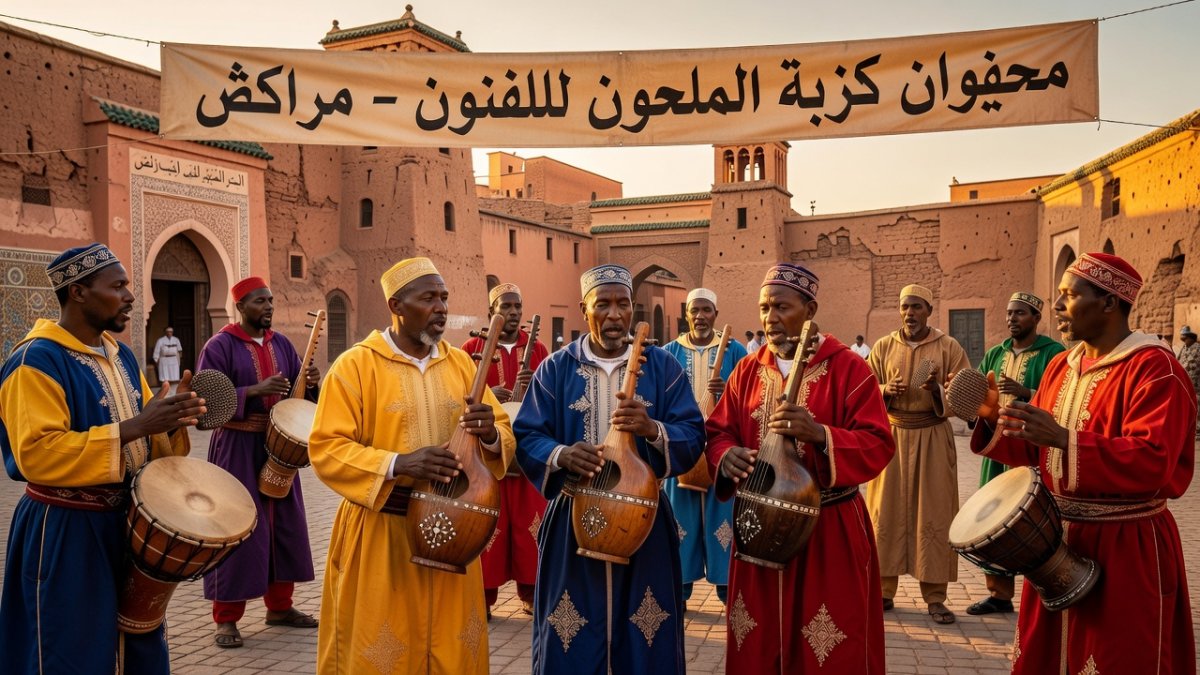
The Kasbah Melhoun Art Festival: A Celebration of Moroccan Poetry
The second edition of the Kasbah Melhoun Art Festival in 2024 marked a six-day immersion in Marrakech's historic Kasbah district, where stone walls and shaded courtyards became stages for poetic performance. All-women troupes performed Al Hadra pieces that opened each evening, their voices rising in prayerful unison before transitioning into Melhoun verses that addressed love, nature, and social concerns. The festival organizer deliberately assembled groups already active in Melhoun to demonstrate both its technical demands and its artistic range, allowing audiences to witness the precise interplay between singer and instrumentalists. An exhibition of books by Melhoun sheikhs offered visitors printed collections that traced the evolution of the art from oral manuscripts to published anthologies. Morocco's Ministry of Culture supported the entire program as part of its sustained investment in traditional arts, providing both funding and logistical coordination. The Kasbah setting itself carried deep significance: its fortified alleys and historic riads reminded participants that Melhoun once flourished in similar urban quarters of Fez and Marrakech, where poets gathered under the same night sky.
Evening performances began at dusk when the day's heat eased, allowing families to gather on woven mats spread across the central square. Lanterns cast warm light on the all-women ensembles, whose layered costumes of deep indigo and saffron reflected regional textile traditions. Children sat at the front, absorbing rhythms that their grandparents had once learned in informal circles. The audience included scholars from the University of Marrakech, local artisans, and visitors from Senegal and Mali who recognized parallels with their own griot lineages. Organizers placed small bookstalls beside the performance area so that listeners could immediately consult the exhibited volumes by Melhoun sheikhs after each set. This careful staging transformed the Kasbah into a temporary academy where poetry moved from stage to printed page without losing its living pulse.
The six-day duration allowed for workshops in the afternoons that complemented the evening concerts. Participants practiced the distinctive melismatic phrasing of Melhoun under the guidance of veteran vocalists, while others examined the guembri's construction and the varied percussion that underpins each stanza. The Ministry of Culture arranged for recordings to be made each night, creating an archive that will serve future researchers and students. For many attendees the festival offered their first sustained encounter with the genre, yet the atmosphere remained inclusive rather than academic. Evening meals of couscous and mint tea were shared across long tables, turning strangers into temporary companions united by the music. The result was a gathering that honored both the depth of Moroccan tradition and the need to keep it accessible to new generations across Africa.
Understanding Melhoun and Al Hadhra: Morocco's Poetic Traditions
Amina Bouyabri, a recognized scholar of Moroccan oral poetry, used festival discussions to clarify the distinct identities of Al Hadra and Melhoun. She explained that Al Hadra remains exclusively the domain of women, performed in dedicated gatherings where participants sing prayers and recite devotional poetry that strengthens communal bonds. Melhoun, by contrast, ranges across themes of human beauty, natural landscapes, social critique, and romantic longing, its verses delivered in a more expansive musical framework. Bouyabri noted that Melhoun emerged in the eleventh century, corresponding to the seventh century of the Hijri calendar, when poets in the Maghreb began composing extended works in dialectical Arabic. These compositions occasionally incorporated Hebrew lines, reflecting the multicultural exchanges that characterized medieval Moroccan cities. The guembri, a three-stringed lute, provides the foundational drone, while layered percussion instruments mark the shifting meters that guide the singer through long narrative sequences.
The poetic structure of Melhoun relies on a series of stanzas called "qasidas" that follow internal rhyme schemes rather than strict classical meters. Each stanza builds upon the last through repetition and variation, allowing the performer to improvise within established patterns. Historical records indicate that early Melhoun poets drew inspiration from both Andalusian lyric traditions and local Berber oral forms, creating a hybrid that later spread from Fez to Marrakech. The presence of Hebrew verses in certain compositions points to the participation of Jewish communities in the cultural life of these cities, where shared musical gatherings fostered artistic exchange. Today the guembri is often joined by the bendir frame drum and the qarqaba metal castanets, whose crisp attacks punctuate emotional peaks in the text. This instrumental palette gives Melhoun its distinctive texture, one that distinguishes it from both classical Andalusian suites and the more percussive Gnawa repertoire.
Listeners at the festival heard how dialectical Arabic allows Melhoun to address everyday concerns with directness that formal literary Arabic might obscure. A single verse might move from describing a market scene to commenting on migration or the changing roles of women, all within the same melodic arc. Amina Bouyabri emphasized that this flexibility has kept the genre relevant, enabling contemporary poets to update older texts without breaking continuity. The occasional Hebrew lines, though fewer today, remain a reminder of Morocco's plural heritage and the ways in which different communities contributed to a shared poetic language. For Senegalese audiences familiar with Wolof and Pulaar griot traditions, the interplay of language and music in Melhoun offers a recognizable model of how oral poetry adapts across centuries while retaining its core social function.
Melhoun's UNESCO Recognition: A Global Cultural Treasure
In December 2023 UNESCO inscribed Melhoun on its Representative List of the Intangible Cultural Heritage of Humanity, recognizing it as a "poético-musical Moroccan art" with deep roots in the country's cultural history. The UNESCO Maghreb office highlighted the genre's capacity to transmit historical memory, ethical values, and aesthetic refinement across generations. This listing immediately strengthened safeguarding efforts in cities such as Fez, where master practitioners now receive additional institutional support for teaching apprentices. Communities celebrated the inscription with public readings and small processions that echoed the festival atmosphere in Marrakech, turning an international decision into a local source of pride. The recognition places Melhoun alongside other African traditions already on the list, including Senegal's Kankurang and the oral traditions of the Ifa divination system in Nigeria, underscoring the continent's rich intangible heritage.
UNESCO status brings practical benefits beyond prestige. It encourages the creation of inventories, training programs, and documentation projects that ensure the art does not remain solely in the memories of aging masters. In Fez, conservatories have begun integrating Melhoun into their curricula with renewed vigor, while the Ministry of Culture has allocated resources for publishing annotated editions of classic texts. The inscription also opens channels for international collaboration, allowing Moroccan practitioners to exchange knowledge with poets from other regions facing similar challenges of transmission. For African readers the listing serves as a reminder that global institutions can amplify local efforts when communities themselves lead the process. The parallel with Gnawa music, inscribed earlier by UNESCO, shows how Morocco has successfully positioned multiple traditions for worldwide appreciation while maintaining their distinct identities.
Local reactions to the 2023 decision revealed both celebration and a sense of responsibility. Poets in Marrakech organized evenings where younger listeners encountered Melhoun for the first time, framed by explanations of its UNESCO significance. Scholars noted that the listing validates the informal apprenticeship systems that have sustained the art for centuries, even as it pushes for more structured educational pathways. The recognition has also prompted discussions about intellectual property and the rights of communities to control how their heritage is presented abroad. These conversations mirror debates in Senegal around griot repertoires, where practitioners seek to balance openness with protection against commercial exploitation. Ultimately the UNESCO inscription functions as both honor and mandate, urging continued vigilance in preserving the living practice of Melhoun.
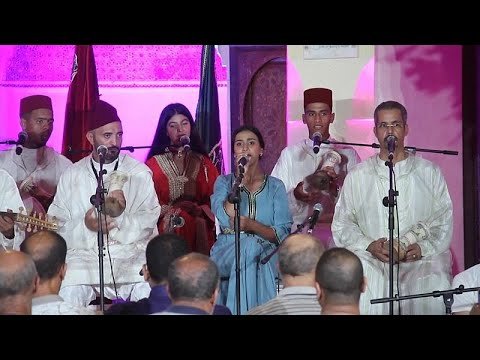
Women at the Heart of Moroccan Musical Heritage
All-women troupes formed the emotional core of the Kasbah Melhoun Art Festival, their performances demonstrating the indispensable role women have always played in Moroccan poetic traditions. Singer Rkia Ouamani, speaking through the collective Laabat, expressed the group's intention to bring this art to youth, mothers, and the general public so that audiences might feel happiness and connection through the performances. Her words captured the deliberate choice to center women's voices in spaces where they have historically led devotional and artistic expression. The all-women ensembles performed both Al Hadra prayers and Melhoun verses, their harmonies creating a sonic texture that invited listeners into intimate reflection. This visibility at a major festival underscores how female practitioners continue to shape the transmission of heritage across Morocco and, by extension, West Africa.
Rkia Ouamani elaborated that Laabat seeks to create joyful encounters rather than strictly pedagogical ones, believing that pleasure ensures the art's survival more effectively than obligation. During the festival her troupe performed pieces that moved fluidly between prayerful Al Hadra and narrative Melhoun, showing the porous boundaries between the two forms when women interpret them. Audience members noted the physical grace of the performers, whose gestures and posture reinforced the emotional content of each line. The presence of mothers with daughters in the crowd illustrated the intergenerational thread that women maintain, passing melodies and meanings from one generation to the next. Similar patterns appear in Senegal, where female griots known as "griottes" preserve family histories and social commentary through song, often within women-only gatherings that parallel Al Hadra circles.
The festival's emphasis on women's ensembles also highlighted economic dimensions of heritage work. Many performers support themselves through teaching and recording while maintaining the oral core of their practice. By showcasing these troupes in the Kasbah, organizers signaled that women's contributions deserve public recognition and institutional support equal to that given male practitioners. The Ministry of Culture has begun documenting women's repertoires with the same rigor applied to canonical male poets, correcting historical imbalances in the archive. For African cultural observers the model offers encouragement: when women lead transmission, traditions gain resilience because they remain embedded in daily family and community life rather than confined to formal stages.
Preserving Heritage Through Transmission and Education
Melhoun was historically transmitted through informal apprenticeships in which aspiring vocalists attached themselves to established masters, learning by imitation and gradual participation in performances. This system allowed the art to evolve organically while preserving subtle interpretive nuances that written notation cannot capture. Today transmission occurs increasingly through organizations and music conservatories that formalize the learning process, offering structured courses alongside continued mentorship. The festival organizer brought together artistic groups already working with Melhoun to showcase both its technical demands and its artistic possibilities, creating a living classroom within the Kasbah. An exhibition of books by Melhoun sheikhs provided tangible resources for deeper study, bridging the gap between oral practice and scholarly engagement.
The transition from apprenticeship to institutional education has not erased the older model but rather supplemented it. Many current masters still accept private students who spend years absorbing repertoire through daily listening and repetition. At the same time, conservatories in Fez and Marrakech now award certificates in Melhoun performance, giving younger artists credentials that open professional opportunities. The book exhibition at the festival allowed visitors to see rare printed collections alongside recordings made during the event, demonstrating how multiple formats now support transmission. Modern festivals such as this one serve as vital bridges, presenting traditional material in contemporary settings that attract audiences who might not enter a conservatory classroom. The Ministry of Culture views these events as essential complements to formal education, ensuring that Melhoun remains a living practice rather than a museum piece.
Challenges remain in balancing preservation with innovation. Some practitioners worry that institutionalization may standardize interpretations that once varied by region and master. Others see the combination of apprenticeship, conservatory training, and festival presentation as the most robust strategy for reaching new generations. Senegal's griot families face analogous questions as they navigate between hereditary transmission and state-supported cultural programs. The Kasbah festival illustrated one successful approach: by placing master performers beside emerging artists and printed resources, it created multiple pathways for engagement that respect both tradition and contemporary realities.
What to Watch For: Morocco's Cultural Calendar in 2026
The fifty-fifth edition of the FNAP festival is scheduled for July 2-6, 2026 in Marrakech under the theme "Popular Arts: Treasures of Yesterday and Today." Main venues include the historic Palais El Badi, whose vast courtyards provide natural acoustics for large ensembles, and Jemaa el-Fna square, where nightly performances will reconnect the festival with its popular roots. A special tribute to singer Zina Daoudia will honor her contributions to Moroccan popular song while situating her work within the broader lineage of poetic expression that includes Melhoun. Gnawa, Berber/Amazigh, and Andalusian-influenced traditions will share the program, creating a panoramic view of Morocco's musical diversity. The Ministry of Culture continues to support these events as part of its mandate to position Morocco as a continental leader in heritage preservation.
FNAP's fifty-five-year history reflects Morocco's long-standing commitment to popular arts as vehicles of national identity. Since its founding the festival has evolved from modest gatherings into a major platform that attracts both local audiences and international researchers. Palais El Badi, built in the sixteenth century, offers an architectural resonance that amplifies the historical depth of the performances, while Jemaa el-Fna provides an open, democratic space where passersby encounter the music without ticket barriers. The tribute to Zina Daoudia will feature archival recordings alongside new interpretations by younger artists, illustrating how popular song carries forward poetic techniques first developed in Melhoun. Gnawa music, already inscribed on UNESCO's Intangible Cultural Heritage list, will appear in dialogue with Melhoun, highlighting shared rhythmic foundations and distinct spiritual orientations.
These initiatives collectively affirm Morocco's role as a cultural leader in Africa. By sustaining multiple festivals, supporting transmission through both traditional and institutional channels, and securing international recognition, the country demonstrates that heritage can thrive alongside modernization. Yet challenges of funding, audience renewal, and regional disparities persist, requiring continued vigilance from practitioners and policymakers alike. For Senegalese readers the Moroccan example offers both inspiration and a mirror: the same determination to honor griot lineages while adapting them to new contexts will determine whether West African oral traditions remain vibrant for generations to come. The Kasbah Melhoun Art Festival and its successors on the 2026 calendar show that such continuity is possible when communities treat poetry and music not as relics but as living conversations across time.
By Amara Diop, Staff WriterThis article was produced with AI-assisted research and editorial support. Reporting is based on sources cited in the article.
What's Your Reaction?
 Like
0
Like
0
 Dislike
0
Dislike
0
 Love
0
Love
0
 Funny
0
Funny
0
 Wow
0
Wow
0
 Sad
0
Sad
0
 Angry
0
Angry
0

West Africa/Sahel Correspondent at Global1.News. Dakar-based journalist covering politics, security, climate, and development across Francophone and Anglophone West Africa. Tells the stories of a region undergoing profound transformation.













Comments (0)