
Tamil Nadu Ammonia Gas Leak: 7 Migrant Women Workers Dead, 67 Hospitalised in Thiruvallur Factory Tragedy
The ammonia gas leak at St Peter's Paul Seafoods Exports Private Limited in Kannigaipair, Thiruvallur district, has claimed seven lives and hospitalised 67 workers on Sunday, 21 June 2026. All seven deceased are women migrant workers from Assam, Odisha, and Jharkhand, highlighting a recurring pattern of safety failures in India's seafood processing export sector. Tamil Nadu Amm
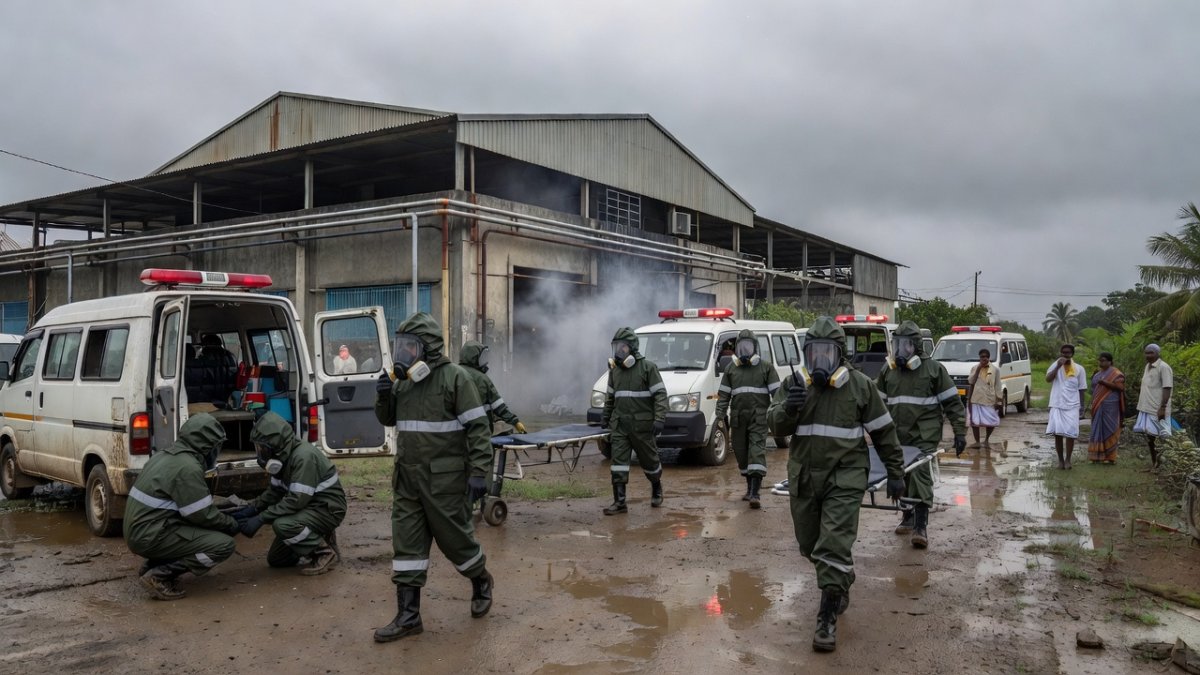
The ammonia gas leak at St Peter's Paul Seafoods Exports Private Limited in Kannigaipair, Thiruvallur district, has claimed seven lives and hospitalised 67 workers on Sunday, 21 June 2026. All seven deceased are women migrant workers from Assam, Odisha, and Jharkhand, highlighting a recurring pattern of safety failures in India's seafood processing export sector.
Tamil Nadu Ammonia Gas Leak: 7 Migrant Women Workers Dead, 67 Hospitalised in Thiruvallur Factory Tragedy
Thiruvallur, Tamil Nadu – June 21, 2026 — An ammonia gas leak from the industrial refrigeration system at St Peter's Paul Seafoods Exports Private Limited in Kannigaipair near Periyapalayam has killed seven women migrant workers and affected 67 employees, with nine listed in critical condition. The incident occurred during the unit's weekly holiday when a small maintenance crew remained on site. Approximately 120 migrant workers, mostly women from Assam, Odisha, and Jharkhand, were housed in on-premises accommodation at the shrimp processing and export facility.
The Victims and Workforce Conditions
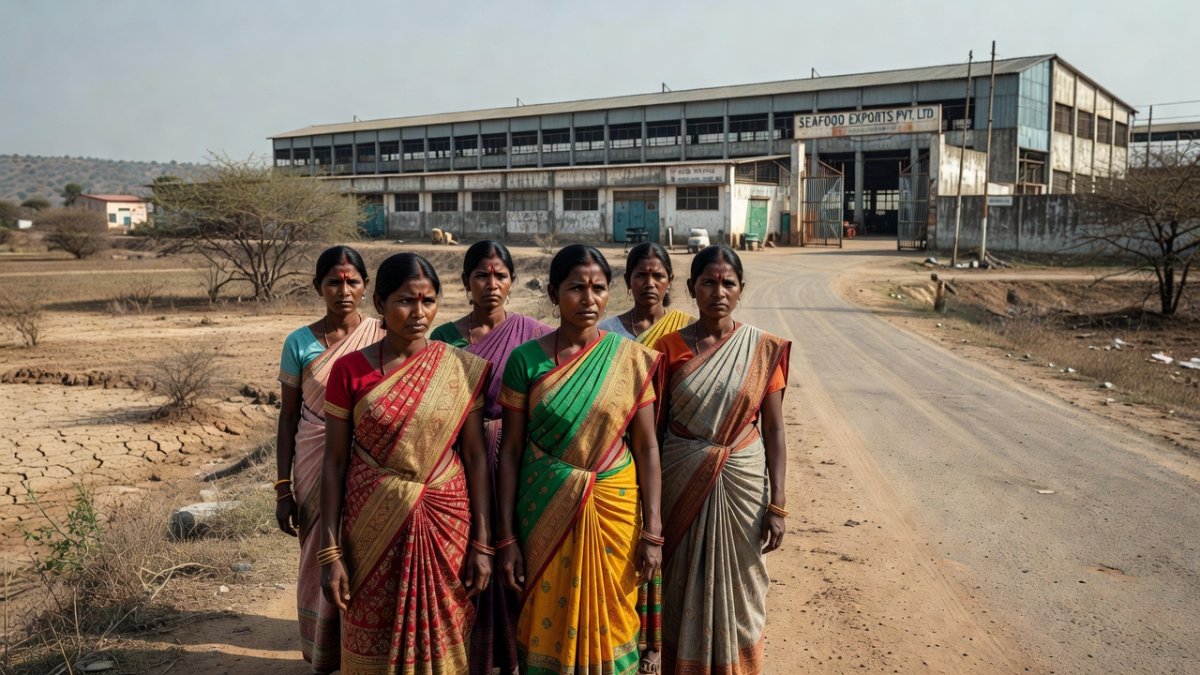
The victims represent the typical profile of India's internal migrant labour force in coastal processing zones. These women, drawn from economically backward districts in Assam, Odisha, and Jharkhand, lived in employer-provided dormitories adjacent to the plant. Such arrangements concentrate large numbers of workers in close proximity to hazardous refrigeration infrastructure. The 120-strong workforce operated under the Factories Act, 1948, and the Inter-State Migrant Workmen Act, 1979, yet recurring ammonia leaks indicate persistent gaps in safety compliance. The concentration of women workers in maintenance shifts further highlights gender-specific vulnerabilities in Tamil Nadu's seafood export sector.
Rescue Operations and Government Response
The National Disaster Response Force 4th Battalion was deployed for rescue operations within hours of the leak being reported. District Collector S. Kavitha visited both the factory site and nearby hospitals to coordinate evacuation and treatment. Tamil Nadu Chief Minister C. Joseph Vijay ordered the formation of a three-member inquiry committee and announced Rs 10 lakh ex-gratia compensation for each family of the deceased. Minister for AI, IT and Digital Services R. Kumar was tasked with overseeing relief operations. These steps reflect standard protocol under the Tamil Nadu State Disaster Management Authority, yet the speed of medical intervention could not prevent the seven fatalities.
Regulatory Failures and Safety Compliance
The three-member committee will examine violations of ammonia handling norms under the Manufacture, Storage and Import of Hazardous Chemical Rules, 1989, and the Occupational Safety, Health and Working Conditions Code, 2020. Past inspections of similar Thiruvallur facilities have repeatedly flagged inadequate leak detection systems and insufficient worker training. The on-site accommodation of 120 workers directly adjacent to refrigeration units contravenes separation distance guidelines issued by the Directorate General Factory Advice Service and Labour Institutes. Enforcement remains fragmented between the State Labour Department and the Tamil Nadu Pollution Control Board, with neither agency claiming primary jurisdiction over worker housing within export processing zones.
Recurring Pattern of Ammonia Leaks Across India's Seafood Belt
Ammonia leaks in Indian seafood processing plants have formed a documented and troubling pattern. Similar incidents occurred at Ennore in 2023, Visakhapatnam in 2020, and multiple cold storage facilities across coastal states. Each case involved refrigeration systems in export-oriented units employing migrant labour. Data from the Ministry of Labour and Employment show that chemical exposure incidents in food processing rose 18 percent between 2019 and 2024. Tamil Nadu, which accounts for over 30 percent of India's seafood exports, has recorded at least four major ammonia-related events in the last six years, pointing to systemic under-investment in safety retrofits despite rising export revenues.
Implications for Migrant Welfare and Industrial Safety
This tragedy exposes deep weaknesses in the implementation of the Inter-State Migrant Workmen Act and the new labour codes. Migrant women workers housed on factory premises lack independent access to safety information, grievance mechanisms, and basic healthcare. The Rs 10 lakh compensation, while immediate, does not address long-term rehabilitation or the absence of portable social security under the Employees' State Insurance scheme for inter-state migrants. Tamil Nadu's industrial safety record, measured against the 2023-24 data of the Directorate General of Mines Safety and Factory Inspectorates, shows that only 42 percent of hazardous units received full compliance audits in the last financial year. The Kannigaipair incident will likely accelerate calls for mandatory real-time ammonia sensors linked to district control rooms and stricter licensing conditions for export units.
What This Means for India
For the estimated 50 million internal migrant workers in India, this incident underscores the systemic risks of industrial accommodation that places workers within hazard zones. For Tamil Nadu's seafood industry — which exported seafood worth Rs 68,948 crore in 2024-25 — the trade-off between export competitiveness and worker safety has now claimed seven lives in a single day. The central government's Labour Ministry and the Tamil Nadu government must move beyond ex-gratia compensation to enforceable structural separation of worker housing and industrial refrigeration. The Bureau of Indian Standards has published IS 6044 for ammonia refrigeration safety, but compliance is voluntary for export units. Making third-party audits mandatory, linking Factory Licences to housing safety certificates, and extending ESI portability to inter-state migrants would represent a meaningful structural response.
The Bottom Line
Seven deaths and 67 hospitalisations at St Peter's Paul Seafoods Exports Private Limited on 21 June 2026 underscore the urgent need for Tamil Nadu and the central government to enforce physical separation of worker housing from hazardous processes, mandate annual third-party audits, and extend portable benefits to all inter-state migrants. Without these measures, the pattern of ammonia leaks seen from Visakhapatnam to Ennore to Periyapalayam will continue to exact a disproportionate toll on women migrant workers who sustain India's seafood export economy. The three-member committee's findings, expected within 30 days, will be the first real test of whether the political will for reform matches the scale of the tragedy.
— By Dr. Raj Patel, Staff Writer
This article was produced with AI-assisted research and editorial support. Reporting is based on sources cited in the article.
What's Your Reaction?
 Like
0
Like
0
 Dislike
0
Dislike
0
 Love
0
Love
0
 Funny
0
Funny
0
 Wow
0
Wow
0
 Sad
0
Sad
0
 Angry
0
Angry
0

India/South Asia Correspondent at Global1.News. Analytical voice with a background in science and health journalism. Based in New Delhi, covering Indian politics, education, healthcare, technology, and policy. Breaks down complex data into clear, actionable reporting.













Comments (0)