
Machetes, Fear, and a 30 June Deadline: The Crisis Facing African Migrants in South Africa
In the port city of Durban, South Africa, up to 7,000 foreign nationals — most of them Malawian — have gathered in an open field, living under tarpaulins and receiving blankets and food from aid groups. They are not refugees of war or natural disaster. They are African migrants who have been told by armed groups of South African men to leave the country or face violence. The de
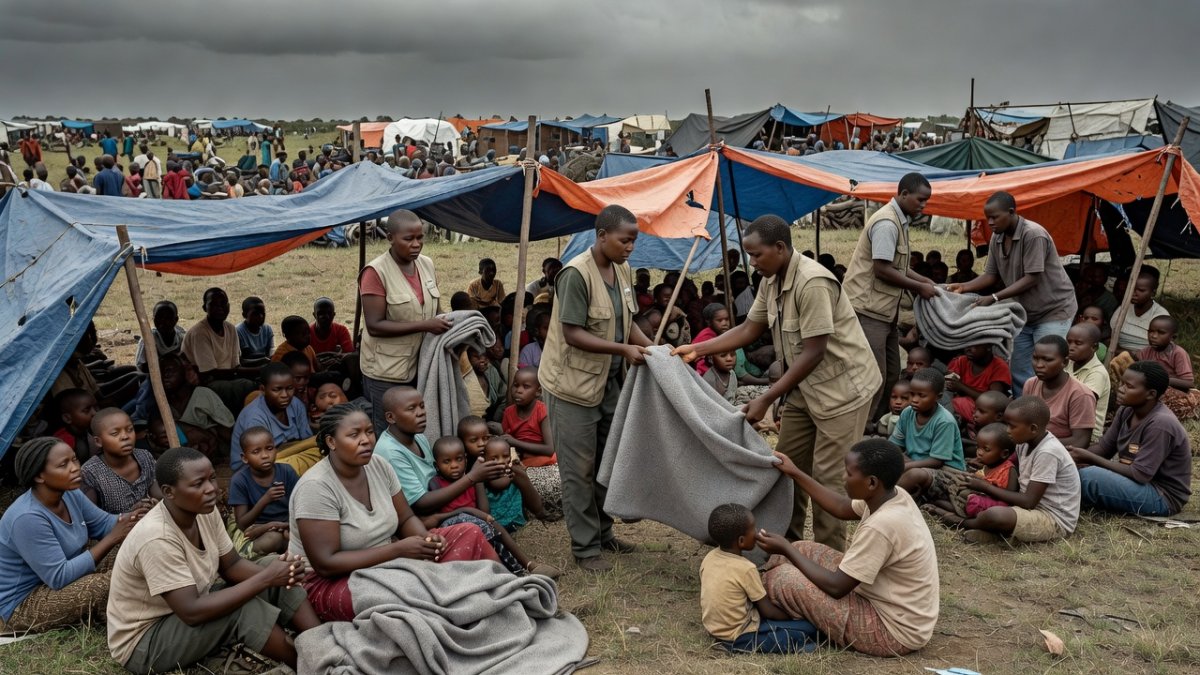
In the port city of Durban, South Africa, up to 7,000 foreign nationals — most of them Malawian — have gathered in an open field, living under tarpaulins and receiving blankets and food from aid groups. They are not refugees of war or natural disaster. They are African migrants who have been told by armed groups of South African men to leave the country or face violence. The deadline: 30 June 2026. And with each passing day, the fear grows that this could spiral into the worst wave of xenophobic violence the continent has seen in nearly two decades.
Voices from the Open Field in Durban
Esnat Joseph, a 36-year-old Malawian mother, arrived in South Africa three years ago seeking work as a domestic servant. She now sits in the open field outside Durban trying to soothe her one-year-old triplets while describing how armed men entered her home. They carried machetes and whips, struck her husband on the head and neck, and ordered the family out. Her husband survived but remains in hospital. Her passport and papers were lost earlier in a robbery, leaving her legal status uncertain as she waits for a bus arranged by the Malawian consulate.
Others gathered in the same field share similar accounts of door-to-door visits by groups of South African men. These encounters have driven families to abandon their rooms in informal settlements with little more than the clothes they could carry. Aid organisations have supplied blankets and basic meals, yet the atmosphere remains heavy with uncertainty. Many arrived in South Africa hoping to support relatives back home through low-paid but steady jobs in security or domestic work. The sudden demand that they depart by 30 June has turned daily survival into a race against both time and fear.
The scene in Durban reflects a wider pattern across several provinces where foreign nationals feel exposed. Women with young children and men who have lived in South Africa for years now weigh the risks of staying against the costs of sudden return. Their stories reveal ordinary African lives caught between economic necessity and rising hostility from fellow citizens facing their own hardships.
Protest Organisers and Their Stated Grievances
Groups including March and March, together with the opposition party ActionSA, have led marches carrying sticks and chanting “Mabahambe”, a Zulu phrase meaning “They must go”. Their organisers insist the campaign targets only undocumented migrants who overstay visas or work without permits. Jacinta Ngobese-Zuma of March and March has argued that South Africa cannot serve as a refuge for failed states and that every country must first protect its own citizens.
Protesters point to overcrowded schools, strained hospitals and competition for scarce jobs as reasons for their deadline. They maintain that their actions are lawful expressions of frustration rather than xenophobia. Yet the presence of weapons during some house visits has blurred the line between organised protest and intimidation for those on the receiving end.
These demonstrations gained momentum earlier this year and have now fixed 30 June as a firm cutoff. While leaders reject labels of xenophobia, the language used on the streets often generalises all foreign nationals, heightening anxiety among documented and undocumented migrants alike. The tension underscores how economic grievances can quickly translate into pressure on visible outsiders.
Repatriation Efforts Across the Continent
Governments in Ghana, Mozambique, Nigeria and Zimbabwe have begun arranging flights and buses to bring their citizens home. Roughly 3,500 people have already volunteered to leave through these programmes. South African authorities stated that more than 500 Nigerians recently repatriated had been in the country illegally, though Nigerian officials disputed that characterisation.
Benjamin, a Nigerian who spent nearly nine years in South Africa, returned to Lagos last week. He described a climate in which foreigners, especially Nigerians, feel constantly at risk. Similar sentiments echo among Malawians waiting in Durban for transport arranged with donated funds. The Malawian consulate has worked to coordinate departures while families weigh what they will return to after years away.
These organised exits represent a pragmatic response to rising pressure, yet they also highlight the human cost of sudden uprooting. Migrants who built lives across borders now face reverse journeys that may offer safety but little immediate economic security. The movements reveal both the reach of African consular networks and the limits of protection when political temperatures rise.
Economic Pressures and Competing Claims on Resources
South Africa’s unemployment rate stands at 32.7 percent, with 350,000 jobs lost in the first quarter of 2026, disproportionately affecting young people. Protesters such as Mecha Ramorola argue that foreign nationals add pressure on already stretched public services. Families report difficulty securing school places for children and hospital beds for the elderly.
At the same time, South Africa’s relatively developed economy continues to draw workers from poorer neighbouring countries. Migrants often fill roles in domestic service, security and informal trade that locals sometimes avoid. This dynamic creates a paradox: the same economy that attracts labour also generates resentment when opportunities appear limited.
President Cyril Ramaphosa has cautioned against scapegoating vulnerable people, noting that such targeting will not resolve deeper structural challenges. His statement acknowledges that economic hardship fuels the current climate while warning that simplistic solutions risk further division. The debate therefore sits at the intersection of legitimate resource concerns and the danger of collective blame.
Shadows of Past Violence and the Risk Ahead
Memories of 2008 remain vivid, when 62 people died in attacks that displaced thousands. Further outbreaks occurred in 2015, 2016 and 2019. Last month Mozambique reported five of its citizens killed in Western Cape attacks, though South Africa’s foreign minister disputed the figure and stated that circumstances were under investigation.
With the 30 June deadline approaching, many fear these protests could ignite similar unrest. The combination of organised marches, armed intimidation at homes, and large gatherings of displaced migrants creates conditions in which violence can spread quickly. Communities that once coexisted now eye one another with suspicion.
The pattern across the continent shows how economic nationalism can override earlier commitments to freer movement. While regional protocols in West Africa encourage cross-border labour, southern African realities often produce sharper restrictions when local economies falter. The current crisis in South Africa therefore tests whether African states can balance citizen protection with the humane treatment of fellow Africans seeking work.
Toward a Shared Future Amid Hardship
The events unfolding in Durban and other cities expose a painful contradiction: African brothers and sisters turning against one another at a time when continental cooperation is most needed. Migrants who left home countries in search of dignity now wait in fields, their futures uncertain. South Africans struggling with unemployment and service delivery direct their anger at visible outsiders rather than systemic failures.
Repatriations may ease immediate pressure, yet they do not address the underlying drivers of migration or the frustrations of host communities. Sustainable solutions require honest dialogue about job creation, border management and the responsibilities of both sending and receiving nations. Without such efforts, deadlines and departures risk becoming recurring cycles rather than lasting resolutions.
In this moment, the story is not only about one country’s internal tensions but about the broader African condition. Economic hardship tests the bonds of solidarity that independence-era leaders once envisioned. How South Africa and its neighbours navigate the coming weeks will signal whether the continent can uphold shared humanity even when resources feel scarce.
By Amara Diop, Staff WriterThis article was produced with AI-assisted research and editorial support. Reporting is based on sources cited in the article.
What's Your Reaction?
 Like
0
Like
0
 Dislike
0
Dislike
0
 Love
0
Love
0
 Funny
0
Funny
0
 Wow
0
Wow
0
 Sad
0
Sad
0
 Angry
0
Angry
0

West Africa/Sahel Correspondent at Global1.News. Dakar-based journalist covering politics, security, climate, and development across Francophone and Anglophone West Africa. Tells the stories of a region undergoing profound transformation.











Comments (0)