
Lukashenko Apologizes to Zelensky: Belarus Strongman Says No Military Threat to Ukraine
In a stunning reversal that reeks of desperation, Belarusian strongman Alexander Lukashenko has apologized to Ukrainian President Volodymyr Zelensky and declared that his country poses zero military threat to Ukraine. The June 16, 2026, exclusive interview with Al Arabiya English lays bare the contradictions of a leader who once rolled out the red carpet for Russian forces to l
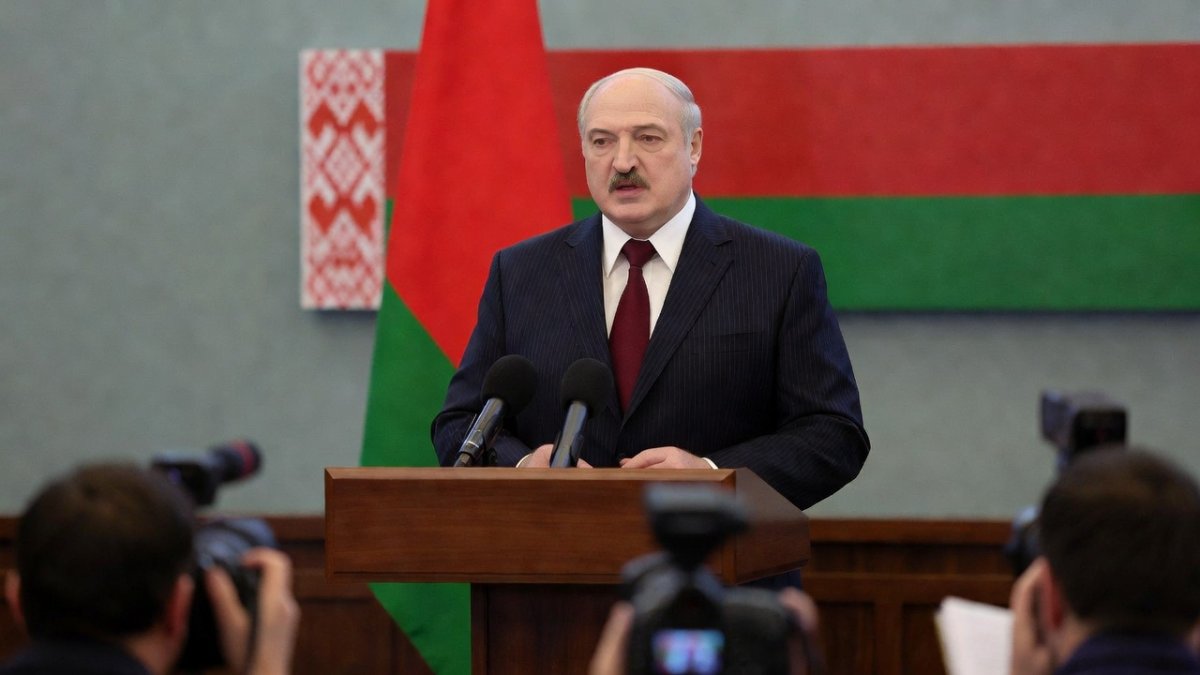
In a stunning reversal that reeks of desperation, Belarusian strongman Alexander Lukashenko has apologized to Ukrainian President Volodymyr Zelensky and declared that his country poses zero military threat to Ukraine. The June 16, 2026, exclusive interview with Al Arabiya English lays bare the contradictions of a leader who once rolled out the red carpet for Russian forces to launch their invasion from Belarusian soil. This is not some heartfelt olive branch. It is the latest chapter in Lukashenko's survival game, where rhetoric shifts with the wind while his regime remains tethered to Moscow.
The Apology
Lukashenko used the Al Arabiya English platform to directly address past harsh remarks aimed at Zelensky and Ukraine. He expressed regret for inflammatory statements that had fueled tensions during the early phases of the full-scale war. The Belarusian leader framed the apology as a necessary step toward de-escalation, emphasizing that Minsk harbors no aggressive intentions toward Kyiv. Sources including the Kyiv Independent and 112.ua reported the comments verbatim, noting how Lukashenko stressed Belarus's non-involvement in any future offensives.
Yet the timing raises immediate red flags. Belarus has hosted Russian troops, missiles, and logistics hubs since 2022. Lukashenko's words now attempt to rewrite that history as a reluctant accommodation rather than active complicity. The apology lands flat because it ignores how Belarusian territory enabled the very war that has devastated Ukraine. Al Arabiya English captured the moment without softening the edges, presenting a leader suddenly eager to distance himself from the Kremlin while still dependent on it.
A Vulnerable Ally?
Lukashenko admitted outright that Belarus is "very vulnerable" militarily and that drawing the country deeper into the Russia-Ukraine conflict "would be unacceptable." He claimed Ukraine has already "run out of people" to sustain the fight, a line that echoes Russian propaganda but comes from a man whose own forces lack the capacity for independent action. Meduza highlighted this admission as a rare public acknowledgment of Belarus's weakness, stripped of the usual bluster.
This vulnerability is not new. Belarus's military relies heavily on Russian equipment, training, and command structures. Lukashenko's insistence that Minsk poses no threat serves as both a plea for breathing room and a warning to Kyiv against any preemptive moves. The interview reveals a dictator calculating survival odds rather than projecting strength. By calling out his own limitations, Lukashenko hopes to deter Ukrainian strikes while signaling to Moscow that further entanglement could destabilize his grip on power.
The Geopolitical Context
Belarus's dependence on Russia defines every move Lukashenko makes. The 2022 invasion staging from Belarusian territory cemented Minsk as a junior partner in Putin's war machine. Now, with Russian forces stretched thin and sanctions biting harder, Lukashenko appears to test the waters for limited autonomy. The Al Arabiya English interview suggests a strategic pivot, using neutral outlets to broadcast a softer stance without directly confronting the Kremlin.
Kyiv Independent analysts noted that such rhetoric could reflect internal pressures within Belarus, where economic woes and public fatigue with the war have grown. Yet genuine independence remains elusive. Lukashenko's regime survives on Russian subsidies and security guarantees. Any real shift away from Moscow would invite immediate retaliation, from energy cutoffs to internal destabilization efforts. The apology and no-threat pledge function as diplomatic theater, aimed at Western and Arab audiences rather than signaling a break with Putin.
This context exposes the hollowness of Lukashenko's claims. Belarus enabled the invasion through territory, airfields, and political cover. Pretending otherwise now does not erase that record. It merely underscores how authoritarian leaders adapt their narratives when battlefield realities turn against them.
More Than Ukraine
The interview extended far beyond the Russia-Ukraine conflict. Lukashenko labeled the situation in Gaza "a Holocaust," drawing sharp parallels that inflamed already charged debates. He also expressed optimism about Saudi-Belarus relations, stating they "could be excellent" if economic and diplomatic barriers were removed. Coverage of the Iran war received brief but pointed attention, with Lukashenko positioning Belarus as a potential neutral player in broader Middle Eastern dynamics.
These remarks reveal a calculated outreach strategy. By courting Arab media and invoking strong language on Gaza, Lukashenko seeks new partners less aligned with Western sanctions. The Saudi comments hint at interest in investment and energy deals that could offset Russian leverage. Al Arabiya English framed the exchange as an attempt to diversify Belarus's international profile, though the underlying dependence on Moscow limits how far such overtures can go.
Meduza reported that these side topics served to humanize Lukashenko's image abroad while deflecting from domestic repression. The interview becomes a multi-front messaging operation, blending contrition on Ukraine with provocative statements on Gaza and pragmatic overtures to Riyadh. None of it alters Belarus's core alignment, but it complicates the information space for observers tracking Minsk's next moves.
What This Really Means
Lukashenko's performance mixes genuine vulnerability with tactical maneuvering. The apology and threat denial likely stem from fear that Belarus could become the next frontline if Ukrainian forces or Western weapons target Russian assets on its soil. At the same time, claiming Ukraine has run out of fighters recycles Kremlin talking points, suggesting the comments are coordinated rather than independent.
The irony cuts deep. A leader who facilitated the invasion now positions himself as a voice of restraint. This is not transformation. It is damage control from a regime that has backed the wrong horse for too long. Sources across Kyiv Independent and Meduza agree the shift reflects weakening Russian momentum more than any moral awakening in Minsk. Lukashenko reads the tea leaves and adjusts his public posture accordingly, hoping to preserve his position amid shifting power balances.
Whether this marks the start of a broader rhetorical thaw remains doubtful. Belarus's military and economic structures remain fused to Russia's. Any meaningful distancing would require concessions Moscow has shown no willingness to grant. The interview serves as a trial balloon, testing reactions without committing to concrete policy changes.
What Happens Next
Ukraine's response will determine whether Lukashenko's words carry any weight. Kyiv has little reason to trust statements from a man who enabled the initial assault. Continued Russian use of Belarusian territory for strikes or logistics would render the apology meaningless overnight. Western capitals may view the interview as an opening for backchannel diplomacy, but sanctions relief tied to Minsk would demand verifiable steps away from Moscow.
Inside Belarus, the comments could spark quiet debate among elites weighing their options if Russia's position deteriorates further. Publicly, Lukashenko will likely double down on loyalty to Putin while privately exploring escape hatches. The Al Arabiya English platform gave him global reach, yet the substance remains constrained by geopolitical realities he helped create.
Ultimately, this episode underscores how authoritarian calculations evolve under pressure. Lukashenko's apology and no-threat declaration expose weakness dressed as wisdom. Belarus stays vulnerable, tethered, and complicit until its leader chooses a different path or events force his hand. The interview changes little on the ground, but it signals that even the most entrenched allies sense the ground shifting beneath them.
By Jessica Ali, Global 1 NewsThis article was produced with AI-assisted research and editorial support. Reporting is based on sources cited in the article.
What's Your Reaction?
 Like
0
Like
0
 Dislike
0
Dislike
0
 Love
0
Love
0
 Funny
0
Funny
0
 Wow
0
Wow
0
 Sad
0
Sad
0
 Angry
0
Angry
0

Editor-in-Chief at Global1.News. Atlanta-based journalist who cuts through the BS and tells it like it is. Lead anchor, host, and the voice you hear when the spin stops and the truth starts.












Comments (0)