
Lebanon 'Most Important Issue' in US-Iran Deal, Says Iran's FM Araghchi
**Keywords:** US Iran peace deal, G7 Evian 2026, Abbas Araghchi Lebanon, Trump Iran MoU, Strait of Hormuz, Hezbollah future, Israel Lebanon occupation, JD Vance negotiations, Gulf energy markets, Ahmed al-Sharaa Syria The US-Iran memorandum signed at the G7 summit in Evian, France, has immediately reframed Lebanon as the central test of the new diplomatic track. Iranian Foreign
The US-Iran memorandum signed at the G7 summit in Evian, France, has immediately reframed Lebanon as the central test of the new diplomatic track. Iranian Foreign Minister Abbas Araghchi’s public emphasis on ending the war in Lebanon signals that Tehran views southern Lebanon as the decisive arena where the agreement will either hold or unravel. Regional actors are now assessing how this framework will interact with ongoing Israeli operations and fragile ceasefires across the Levant.
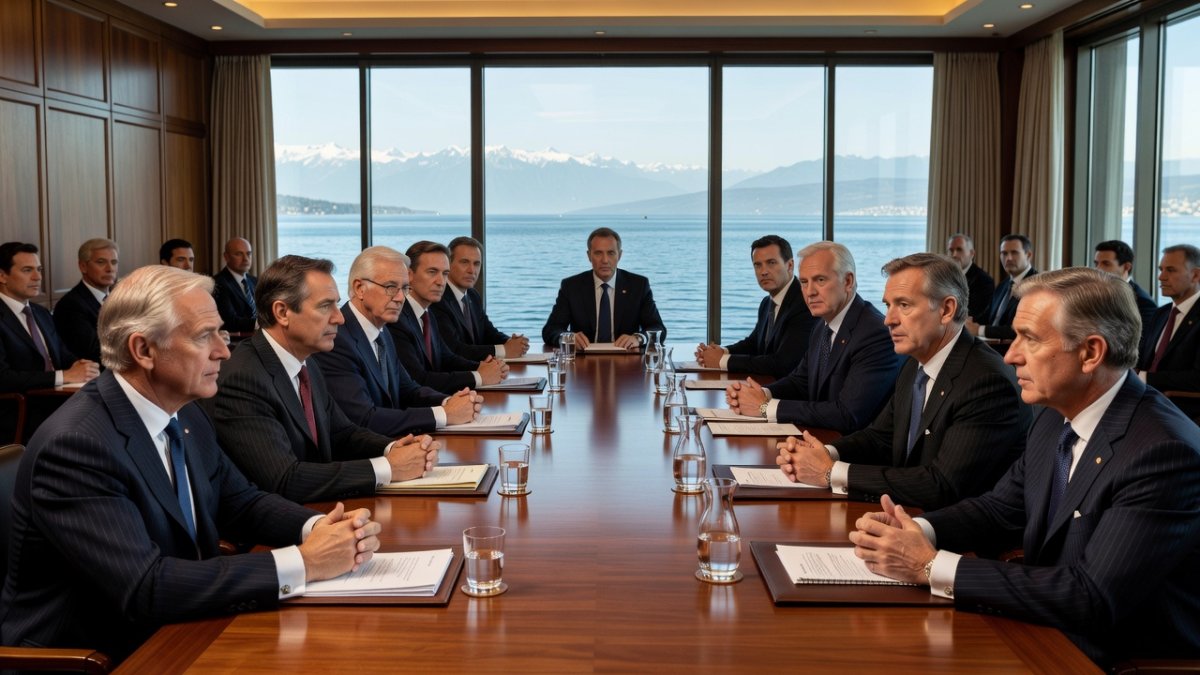
US-Iran Memorandum at G7 Summit Positions Lebanon as Pivotal Test Case Beirut, Lebanon – June 16, 2026 — The electronic signing of a memorandum of understanding between the United States and Iran at the G7 summit in Evian has placed Lebanon at the forefront of the emerging diplomatic process. Iranian Foreign Minister Abbas Araghchi stated that ending the war in Lebanon constitutes the “most important issue” within the agreement. The development follows months of direct and indirect conflict involving the United States, Iran, and Israel, which produced widespread regional devastation and a partial blockade of the Strait of Hormuz.
Section 1: The US-Iran Framework
The memorandum was confirmed electronically by President Donald Trump on June 15 during the G7 gathering in Evian, France. Trump described the document as “fair” and “good,” noting that it moves the process into a “second stage.” An official in-person signing is scheduled for June 19, with final talks set to begin the same day in Switzerland. Vice President JD Vance played a central role in shaping the negotiations, coordinating positions between Washington and Tehran.
The agreement includes provisions for reopening the Strait of Hormuz, a critical chokepoint whose closure had already disrupted global energy flows. Both sides have committed to sequenced implementation steps, with the Swiss venue chosen to allow technical experts to address verification mechanisms. The framework deliberately separates immediate confidence-building measures from longer-term political understandings.
Analysts note that the rapid timeline reflects Washington’s desire to stabilize energy markets ahead of the summer demand peak. The involvement of the Emir of Qatar on the sidelines of the G7 further underscores the Gulf states’ interest in preventing renewed maritime disruptions. Concrete benchmarks for Hormuz reopening are expected to be finalized in Switzerland within days.
Section 2: Iran's Position on Lebanon
Foreign Minister Abbas Araghchi explicitly identified the cessation of hostilities in Lebanon as the paramount concern within the US-Iran memorandum. In a telephone call with Lebanon’s president, Araghchi stressed the necessity of preserving Lebanese sovereignty and territorial integrity. Tehran views any continued Israeli occupation of southern Lebanon as a direct breach that would invalidate core elements of the new understanding.
Iranian officials have linked progress on other tracks, including sanctions relief and maritime security, to verifiable Israeli withdrawal from Lebanese territory. This stance aligns with Hezbollah’s long-standing position that foreign forces must fully exit Lebanese soil. Araghchi’s remarks indicate that Tehran intends to use the memorandum as leverage to constrain Israeli freedom of action in southern Lebanon.
The emphasis on Lebanon also reflects Iran’s assessment that the group’s political future inside Lebanon remains uncertain following months of conflict. By elevating the issue, Tehran seeks to ensure that any reconstruction or political arrangements in Beirut do not marginalize its allies. Regional observers interpret this as a deliberate attempt to tie the success of the broader US-Iran track to outcomes on the ground in Lebanon.
Section 3: Trump's Pressure on Netanyahu
President Trump publicly stated that Israeli Prime Minister Benjamin Netanyahu “has to be more responsible” regarding Lebanon. He added that he was “not happy with the way Israel has handled themselves” in operations against Hezbollah. These comments mark a notable shift in tone from Washington toward its traditional ally.
Trump further suggested that Syria’s President Ahmed al-Sharaa could play a role in managing Hezbollah’s future activities, implying a regional division of labor that would reduce direct Israeli involvement. The remarks were delivered shortly after the electronic signing of the memorandum, signaling that Washington expects Israeli compliance with the new diplomatic parameters.
Israeli officials have yet to issue a formal response, but the comments have already generated friction within the Israeli security cabinet. Netanyahu’s government continues to maintain that operational freedom against Hezbollah remnants is essential for border security. The divergence between Washington and Jerusalem now constitutes a central variable in whether the US-Iran framework can be implemented without additional friction.
Section 4: Israel's Territorial Ambitions
Prime Minister Netanyahu has reiterated that Israeli troops will occupy territory in southern Lebanon, a position that directly contradicts the Iranian interpretation of the memorandum. Israeli forces have continued limited strikes on Lebanese targets even after the MoU was announced, underscoring the gap between diplomatic language and battlefield realities.
These operations occur against the backdrop of a fragile ceasefire in parts of Lebanon, where displaced families have begun returning to border villages. The continued presence of Israeli units raises the risk that any perceived violation could trigger Iranian or Hezbollah responses, potentially collapsing the nascent US-Iran understanding.
Israeli strategic calculations appear driven by the desire to create a permanent buffer zone. However, such ambitions now face direct scrutiny from Washington, which has signaled that prolonged occupation would undermine the broader regional stabilization effort. The coming weeks will test whether Israel adjusts its posture or maintains its current course.
Section 5: Gulf States and Energy Markets
Gulf Arab states have watched the US-Iran diplomacy with measured caution. The reopening of the Strait of Hormuz is viewed as essential for restoring predictable oil and gas flows, yet several capitals remain concerned that any deal could strengthen Iran’s regional posture without sufficient constraints on its proxy networks.
Energy markets reacted positively to the initial announcement, with futures prices easing after months of volatility caused by the Hormuz blockade. Qatar’s emir met Trump on the margins of the G7, reportedly discussing mechanisms to guarantee tanker transit once the waterway reopens.
Analysts assess that sustained Gulf support for the framework will depend on visible progress regarding Lebanon and Yemen. Riyadh and Abu Dhabi have privately conveyed that they expect the agreement to limit Iranian weapons transfers to non-state actors. Without such assurances, Gulf states may withhold full economic cooperation with the second-stage negotiations.
Section 6: Regional Implications
The US-Iran memorandum has introduced new variables into an already complex Levant security environment. By elevating Lebanon as the decisive issue, both Washington and Tehran have effectively made the agreement’s durability contingent on Israeli withdrawal and Hezbollah restraint. This linkage increases the potential for rapid escalation if either side perceives violations.
Syria’s emerging role, as suggested by President Trump, could alter traditional alignments if Damascus is tasked with influencing Hezbollah’s political trajectory. Meanwhile, the uncertain future of Hezbollah inside Lebanon’s domestic institutions adds another layer of unpredictability to reconstruction efforts.
Over the next several weeks, the Swiss talks will determine whether the memorandum can transition from electronic agreement to enforceable commitments. The interplay between Israeli territorial objectives, Iranian red lines on Lebanon, and American pressure on all parties will shape whether this framework produces lasting de-escalation or merely delays the next round of confrontation.
By Malik Hassan, Staff WriterThis article was produced with AI-assisted research and editorial support. Reporting is based on sources cited in the article.
What's Your Reaction?
 Like
0
Like
0
 Dislike
0
Dislike
0
 Love
0
Love
0
 Funny
0
Funny
0
 Wow
0
Wow
0
 Sad
0
Sad
0
 Angry
0
Angry
0
Middle East Correspondent at Global1.News. Based in Beirut, covering politics, conflict, energy, and society across the Middle East. Brings context and depth to a region often reduced to headlines.












Comments (0)