
Keir Starmer Defence Plan: £1bn Boost & Affordability?
The Defence Investment Plan Unveiled This Week Sir Keir Starmer’s government has this week published its long-awaited Defence Investment Plan, a document intended to chart the future course of Britain’s military capabilities amid mounting global uncertainty. The plan arrives after months of internal wrangling and represents the Prime Minister’s attempt to reconcile fiscal cauti
The Defence Investment Plan Unveiled This Week
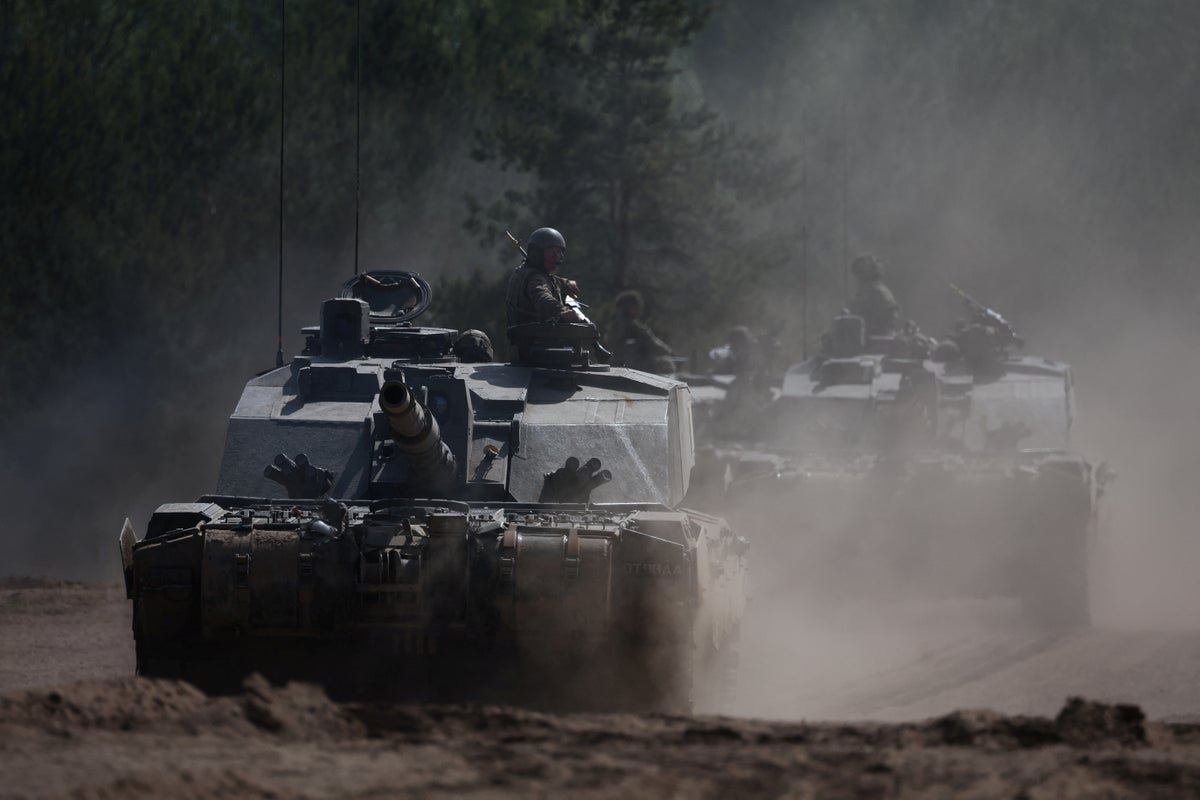
Sir Keir Starmer’s government has this week published its long-awaited Defence Investment Plan, a document intended to chart the future course of Britain’s military capabilities amid mounting global uncertainty. The plan arrives after months of internal wrangling and represents the Prime Minister’s attempt to reconcile fiscal caution with the urgent demands of national security. Central to the announcement is an additional £1 billion found for defence, a modest but symbolically significant injection that nevertheless leaves many questions unanswered about long-term sustainability.
Channel 4 News understands that the plan was finalised only after intense negotiations between the Ministry of Defence and the Treasury. Officials have sought to present the measures as a pragmatic response to both domestic pressures and international expectations. Yet the timing, just weeks before anticipated leadership speculation surrounding Andy Burnham, has already prompted suggestions that the current framework may prove temporary. The document sets out a trajectory of rising expenditure, but its authors acknowledge that delivery will depend on economic growth that has yet to materialise.
Critics within the defence community argue that the plan’s publication marks not an end to debate but the beginning of a more fractious discussion about priorities. With Dan Jarvis now installed as defence secretary following John Healey’s departure, the government faces the immediate task of convincing both Parliament and the armed forces that the commitments are credible. The coming months will reveal whether this investment plan can withstand the scrutiny it is certain to receive.
Spending Targets and GDP Trajectories
The plan commits the United Kingdom to raising defence spending to 2.6 per cent of GDP next year, climbing to 2.68 per cent by 2030 and reaching 3.5 per cent by 2035. These targets represent a marked acceleration from the 2.3 per cent of GDP, equivalent to roughly £66 billion, recorded last year. Officials project annual increases of £6–7 billion in the near term, rising to more than £30 billion per year by the mid-2030s if the most ambitious goals are to be met.
Analysts note that such percentages have not been seen since the height of the Cold War, yet the economic backdrop today is considerably less forgiving. The Treasury has insisted that these rises can be accommodated without immediate tax increases, but independent forecasts suggest the fiscal headroom remains narrow. The step-change in expenditure is framed as essential to modernise equipment and restore readiness after years of constraint.
Nevertheless, the trajectory assumes steady economic expansion that many economists regard as optimistic. Should growth falter, the gap between stated ambition and available resources will widen rapidly. The government’s decision to publish precise percentage targets rather than absolute cash figures reflects an awareness that political credibility hinges on meeting these milestones, whatever the economic weather.
John Healey’s Resignation and the Shortfall Critique
John Healey’s abrupt resignation as defence secretary has cast an immediate shadow over the plan. Healey left office stating that the proposals “fall well short” of what is required to restore Britain’s military edge. His departure has elevated Dan Jarvis to the role, a move widely viewed as an attempt to steady the department while broader political uncertainties gather.
Within Westminster, Healey’s exit is interpreted as more than a personal protest. It signals deep unease among those who have overseen the armed forces through successive rounds of austerity. Sources close to the former secretary suggest he pressed for faster and deeper increases, only to be overruled by No 10 and the Treasury. The episode has fuelled speculation that further ministerial turbulence may follow.
Andy Burnham’s expected emergence as a future prime minister has added another layer of complexity. Several senior figures anticipate that any Burnham-led government would revisit the spending trajectory, potentially recalibrating targets in light of competing domestic priorities. For now, the ministry must implement a plan whose chief architect has already disowned it.
Decades of Underfunding and Force Contraction
The historical context makes the scale of the challenge clearer. Real-terms defence spending fell by 22 per cent between 2009 and 2017, declining from £59.2 billion to £46.2 billion. During the same period the regular armed forces shrank from 150,000 personnel in 2016 to approximately 122,000 by 2025, a reduction of roughly 15–20 per cent. George Robertson, the former NATO secretary-general, has accused the Treasury of “vandalism” for presiding over such sustained retrenchment.
These cuts have left enduring gaps in capability, from delayed equipment programmes to stretched logistics and reduced training. Senior officers have repeatedly warned that the hollowing-out of the force structure cannot be reversed overnight, even with increased budgets. The institutional memory of those years continues to shape recruitment and retention difficulties that persist today.
Restoring credibility will therefore require more than headline percentages. It demands consistent year-on-year delivery and a willingness to protect defence from the short-term fiscal raids that characterised the previous decade. Without that discipline, the new targets risk repeating the cycle of promise and disappointment.
The £28 Billion Strategic Defence Review Gap
Independent analysis of the Strategic Defence Review has identified a £28 billion funding gap between the capabilities recommended and the resources currently allocated. This shortfall encompasses everything from munitions stockpiles to next-generation aircraft and maritime platforms. The plan’s authors have not disputed the figure, instead arguing that the trajectory to 3.5 per cent of GDP will close it over time.
Jack Straw has spoken of the “great urgency to settle the programme”, reflecting concern that delay will compound costs and erode deterrence. The gap is not merely an accounting problem; it directly affects Britain’s ability to fulfil NATO commitments and to sustain operations alongside allies. Procurement timelines already stretch into the 2030s, leaving little margin for further slippage.
Until the funding trajectory is matched by concrete orders and recruitment surges, the review’s recommendations remain aspirational. The government’s credibility will be judged on whether the promised increases materialise before the next strategic shock exposes the shortfall once again.
International Pressures and NATO Expectations
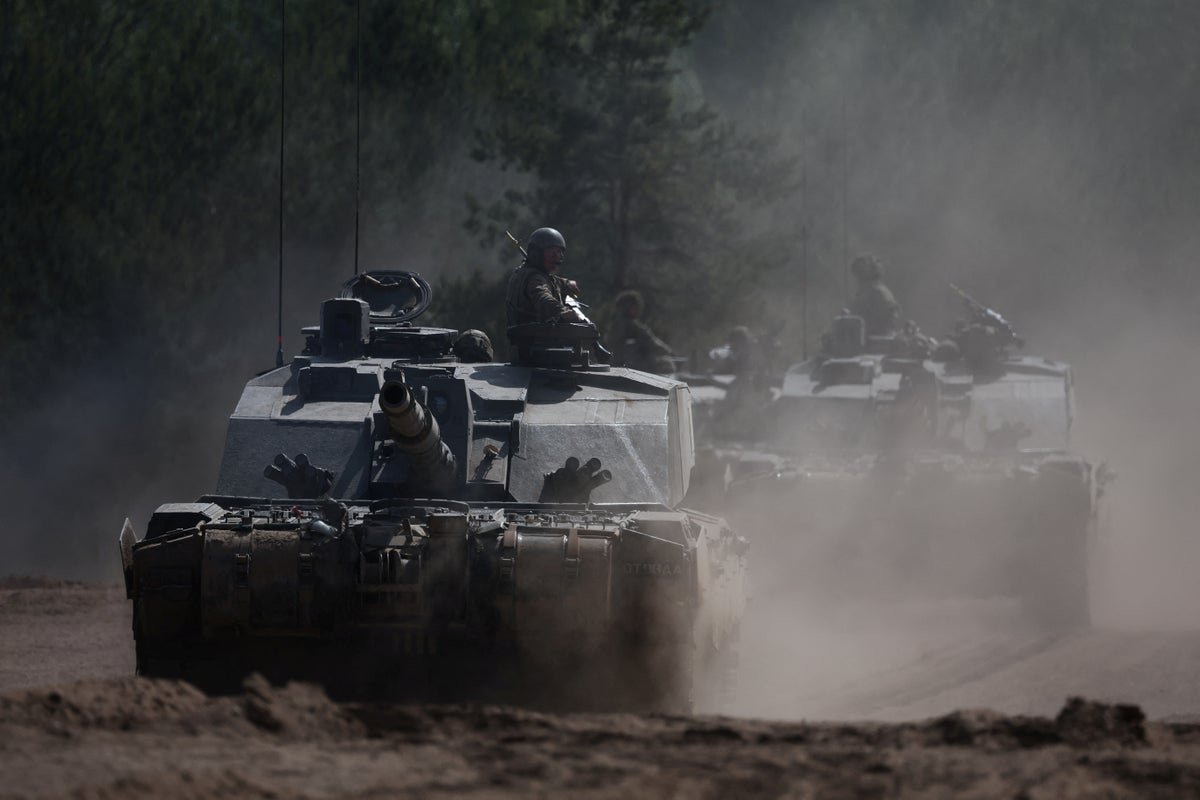
External demands have intensified the domestic debate. President Trump’s renewed pressure on NATO members to reach 5 per cent of GDP would require the UK to spend an additional £80 billion annually, a figure far beyond current planning assumptions. At the same time, Britain has committed to acting as a peacekeeper in Ukraine, a role that will demand sustained deployments and logistical support for years to come.
The Middle East remains another theatre of potential entanglement, with implications for both naval and air assets already under strain. Allies are watching closely to see whether London’s percentage targets translate into deployable forces or merely paper commitments. NATO’s credibility hinges on tangible contributions, not statistical targets.
Failure to meet these expectations risks isolating Britain within the alliance at a moment when collective defence is under unprecedented scrutiny. The government must therefore balance the political imperative of reassuring Washington and European partners against the domestic reality of constrained public finances.
The Affordability Question and Domestic Trade-offs
The central question remains whether these defence increases are affordable without unacceptable sacrifices elsewhere. Malcolm Rifkind has warned that meeting the targets will ultimately require either cuts to welfare or increases in taxation. The NHS, already facing its own structural deficits, stands as the most obvious competing claimant on Treasury resources.
Labour’s manifesto commitments on public services have left little room for manoeuvre. Any diversion of funds to defence will therefore test the government’s political resolve and its relationship with core supporters. The plan’s architects insist that economic growth will generate the necessary headroom, yet this assumption has yet to be stress-tested by events.
In the absence of a clear fiscal strategy, the risk is that defence spending becomes another arena of perpetual under-delivery. The coming spending reviews will determine whether the targets survive contact with reality or join the long list of ambitious plans quietly revised downwards. By Erica Thornton, Staff Writer
This article was produced with AI-assisted research and editorial support. Reporting is based on sources cited in the article.
What's Your Reaction?
 Like
0
Like
0
 Dislike
0
Dislike
0
 Love
0
Love
0
 Funny
0
Funny
0
 Wow
0
Wow
0
 Sad
0
Sad
0
 Angry
0
Angry
0

US Politics and Policy Correspondent at Global1.News. Based in Washington DC, covering American politics, policy, elections, and the courts. Knows how the system works and tells you what it actually means.













Comments (0)