
Federal Judge Blocks ICE From Making Arrests at Immigration Courthouses Nationwide
Federal Judge Blocks ICE From Making Arrests at Immigration Courthouses Nationwide Wake up, America. A federal judge just slammed the brakes on ICE's courthouse arrest games, and the ruling hits nationwide. This isn't some minor paperwork shuffle—it's a direct rebuke to an administration that tried to sneak around the rules. If you've been watching immigration enforcement turn
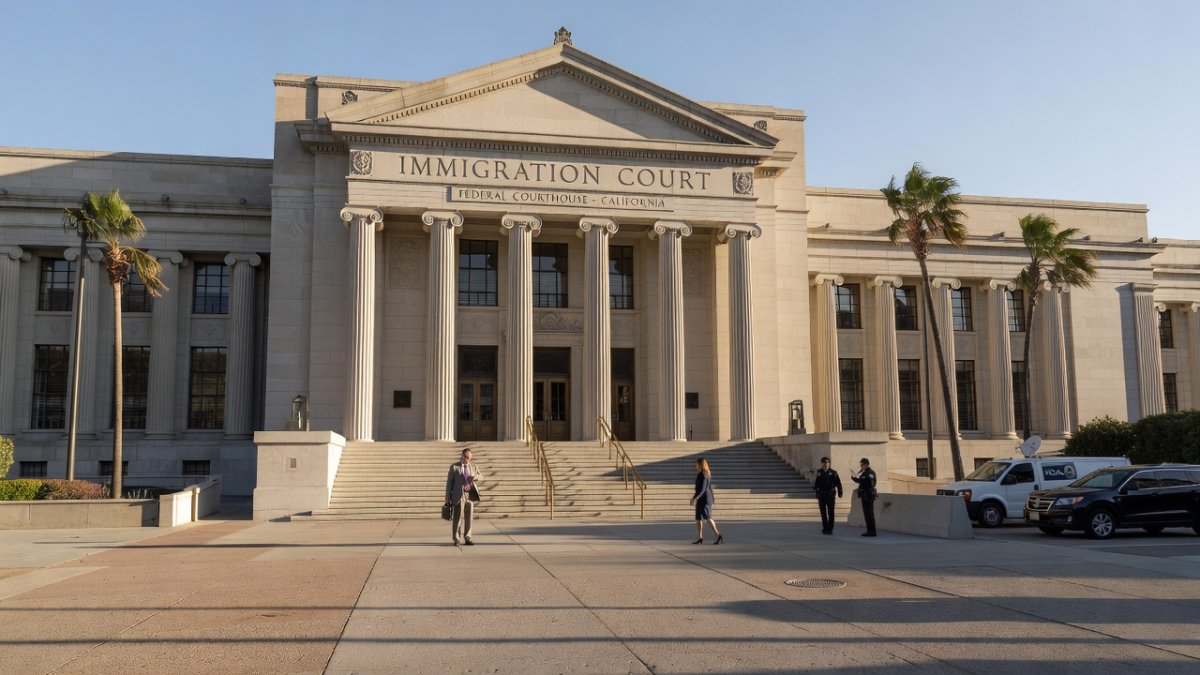
Federal Judge Blocks ICE From Making Arrests at Immigration Courthouses Nationwide
Wake up, America. A federal judge just slammed the brakes on ICE's courthouse arrest games, and the ruling hits nationwide. This isn't some minor paperwork shuffle—it's a direct rebuke to an administration that tried to sneak around the rules. If you've been watching immigration enforcement turn courthouses into traps, this decision changes the game. Let's break down exactly what went down and why it matters to every single one of us.
Judge Casey Pitts of the Northern District of California dropped a nationwide injunction this week that stops ICE cold from making arrests at immigration courthouses across the country. The policy, quietly expanded through a May 2025 internal directive from the Trump administration, had turned hearing rooms into arrest zones. Families showing up to fight deportation cases suddenly faced agents waiting in hallways and parking lots. The ruling doesn't just block a bad policy—it reaffirms that the Administrative Procedure Act exists for a reason: to stop government agencies from rewriting rules in the shadows without public accountability.
The stakes are enormous. With immigration courts already drowning under a backlog exceeding 3.7 million cases, adding the threat of immediate arrest at the courthouse door doesn't improve enforcement. It destroys trust and drives people underground. Judge Pitts saw that clearly and didn't hesitate to act. Let's dig into the specifics, because the details matter, and the BS starts peeling away fast.
The Bombshell Ruling
Judge Casey Pitts dropped a nationwide injunction this week that stops ICE from making arrests at immigration courthouses across the country. The order came down Tuesday after arguments showed the policy was causing real harm. Pitts ruled that the enforcement approach violated basic legal standards and created a chilling effect on people trying to attend their hearings. This isn't limited to one district—the block applies everywhere, from California to New York and everywhere in between.
The decision makes clear that ICE cannot treat courthouses as free-for-all arrest zones without proper process. Plaintiffs argued successfully that the practice scared immigrants away from legitimate court dates, undermining the entire system. Judge Pitts didn't mince words in the opinion, calling out how the directive ignored long-standing norms that protected access to justice. For anyone who thought these arrests were just routine enforcement, the ruling exposes the overreach. This is a win for due process, plain and simple, and it forces ICE to rethink tactics that prioritized speed over legality.
Historically, ICE maintained restraint at courthouse locations precisely because these are civil administrative settings—not criminal venues. The pre-2025 norm respected that distinction. The May 2025 directive shattered that tradition overnight, and Judge Pitts essentially restored the guardrails. It's a textbook case of why procedure exists: to prevent exactly this kind of mission creep.
How the Trump Directive Bypassed the Law
The whole mess traces back to a May 2025 memo that tried to greenlight expanded arrests at courthouses without following the rules. That memo skipped the required notice-and-comment period under the Administrative Procedure Act, treating a major policy shift like an internal note instead of the regulatory change it actually was. Agencies can't just rewrite enforcement priorities on the fly and expect courts to look the other way—that's not how the law works, and the judge called BS on the shortcut.
By dodging public input, the directive left immigrants and advocates in the dark about new risks at what should be safe spaces. The APA exists for exactly this reason: to prevent surprise rules that upend lives without debate. The memo's authors apparently figured they could slide it through quietly, but the lawsuit exposed the procedural failure. This kind of end-run around transparency erodes trust in the system and invites exactly the kind of nationwide block Pitts issued. Taxpayers deserve better than half-baked policies that courts have to clean up later.
The DOJ's Stunning Admission
During the proceedings, the Department of Justice made a jaw-dropping concession: the enforcement document at the center of the case "does not and has never applied" to courthouse arrests in the way ICE had been using it. That admission pulled the rug out from under the agency's defense and highlighted how loosely the policy was being interpreted on the ground. If the document never covered these arrests, then ICE was operating without even the shaky legal cover it claimed.
This wasn't a minor clarification—it was an outright retreat that left the government arguing from a weakened position. The concession showed the directive was being stretched far beyond its stated scope, turning a limited memo into a broad license for arrests. When your own lawyers admit the foundation doesn't hold, the case collapses fast. It also raises serious questions about oversight inside the agency and why field offices were running with an interpretation that DOJ itself wouldn't defend.
The NYCLU Lawsuit and Human Cost
The NYCLU lawsuit that triggered this ruling centered on a teenage immigrant whose arrest at a courthouse hearing sent shockwaves through immigrant communities. The young plaintiff had shown up for a scheduled appearance only to be detained on the spot, an experience that illustrated the terror tactics at work. Families and attorneys described how word spread quickly: courthouses were no longer neutral ground, and showing up could mean immediate removal.
That chilling effect is measurable—attendance at hearings dropped as people weighed the risk of arrest against the consequences of missing a date. The lawsuit documented multiple similar incidents where individuals who followed the rules still ended up in custody, often with little warning or opportunity to contact counsel. The human cost goes beyond one case; it fractures trust in the immigration system and pushes vulnerable people further underground. When courts become arrest sites, the whole process loses legitimacy, and that's exactly what the NYCLU proved with evidence that forced the nationwide block.
The Atlanta Connection
Atlanta's immigration courts feel the impact immediately. The city handles a heavy share of cases in a system already drowning in a 3.7 million case backlog, and the ruling removes one more layer of fear for people navigating those dockets. Local advocates report that the previous policy had already reduced appearances, lengthening wait times and clogging an overburdened system even further.
Judges and court staff in Atlanta have watched as enforcement near hearings disrupted proceedings and created safety concerns inside the buildings themselves. The nationwide block gives everyone breathing room to focus on actual case resolution instead of dodging arrests. With millions of cases pending nationwide, Atlanta's experience shows how localized tactics ripple out and why a uniform fix was necessary. This decision doesn't solve the backlog, but it stops one practice that was making the problem worse.
Political Reactions and What's Next
Senator Alex Padilla praised the ruling as a necessary check on executive overreach, while DHS quickly vowed an appeal. The case is headed to the 9th Circuit, where similar immigration enforcement questions have produced mixed results in the past. Supporters of the original directive are framing the block as judicial activism, but the record shows clear procedural violations that any court would have to address.
What's next depends on how fast the appeal moves and whether other districts follow Pitts' lead. The administration will likely push for a stay, but the core finding—that the policy bypassed required process—gives the injunction strong footing. Expect more lawsuits testing the limits of courthouse enforcement while the 9th Circuit reviews the record. This fight is far from over, and the outcome will shape how ICE operates for years.
What You Can Do
Call your representatives today and demand they support legislation that codifies courthouse protections. Tell them the May 2025 shortcut was unacceptable and that transparency matters. Stay informed by following updates from the NYCLU and reliable court reporting instead of spin from either side. Share accurate information with your community so people know their rights when heading to hearings. The ruling gives breathing room, but only sustained pressure keeps enforcement accountable. Act now—your voice is the check the system needs.
The ruling this week is a reminder that the law works when we hold it accountable. Judge Pitts didn't create a new right—he enforced an existing one: the right to transparent, procedurally sound government action. That's not radical. That's the baseline. And in a moment when the administration will appeal and the spin machine will fire up, the facts are simple: you can't rewrite enforcement rules in the dark and expect them to stand. Atlanta knows this. America needs to remember it. Stay sharp, stay engaged, and don't let anyone tell you due process is optional.
By Jessica Ali, Staff Writer
This article was produced with AI-assisted research and editorial support. Reporting is based on sources cited in the article.
What's Your Reaction?
 Like
0
Like
0
 Dislike
0
Dislike
0
 Love
0
Love
0
 Funny
0
Funny
0
 Wow
0
Wow
0
 Sad
0
Sad
0
 Angry
0
Angry
0

Editor-in-Chief at Global1.News. Atlanta-based journalist who cuts through the BS and tells it like it is. Lead anchor, host, and the voice you hear when the spin stops and the truth starts.














Comments (0)