
Japan Defence Minister Denies Militarism, Criticises China's Huge Arsenal
Japanese Defence Minister Responds to Beijing's Accusations Japan's defence minister Shinjiro Koizumi has rejected Beijing's assertions that Tokyo is pursuing a policy of new militarism. Speaking on the final day of the Shangri-la Dialogue in Singapore, Koizumi instead highlighted China's military expansion and insufficient transparency as matters of serious concern to the inte
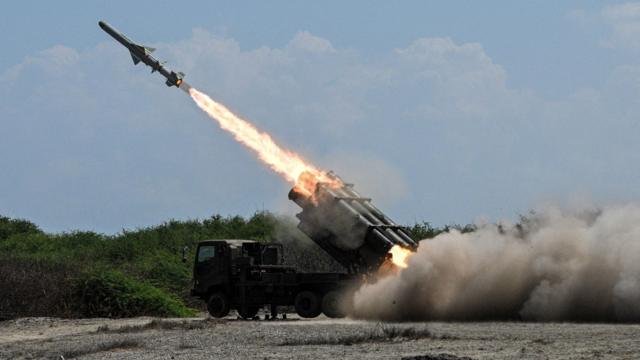
Japanese Defence Minister Responds to Beijing's Accusations
Japan's defence minister Shinjiro Koizumi has rejected Beijing's assertions that Tokyo is pursuing a policy of new militarism. Speaking on the final day of the Shangri-la Dialogue in Singapore, Koizumi instead highlighted China's military expansion and insufficient transparency as matters of serious concern to the international community.
Historical Context and Recent Exchanges
The exchange occurs against a backdrop of longstanding tensions between Japan and China rooted in Japan's invasion of China during World War Two. One day before the Singapore summit, China's national defence ministry spokesman Jiang Bin described the grey rhino of a remilitarised Japan as gathering speed and urged the international community to contain Japan's neo-militarism.
Japan's Defence Spending Trajectory
Japan has raised its defence budget for twelve consecutive years. The cabinet approved the most recent budget in December, exceeding 9 trillion yen, which brings the country closer to its goal of allocating 2 percent of gross domestic product to defence. The government has stated that these steps aim solely at bolstering defensive capabilities rather than seeking conflict.
Koizumi's Address at the Shangri-la Dialogue
In his speech, Koizumi described it as only natural for countries including Japan to modernise their defences in response to new challenges while contributing to regional peace. He emphasised that Japan would proceed with a high degree of transparency and maintain constant dialogue with other nations, including those invaded by Japan in World War Two.
Koizumi rejected the label of new militarism as nothing further from the truth. He noted that a country possesses a huge arsenal of nuclear weapons and strategic bombers while Japan has neither, yet faces the accusation of new militarism. When a Chinese military representative inquired about an apology to victims in China, South Korea and Southeast Asia, Koizumi pointed to China's rapid expansion of military capabilities across multiple domains without sufficient transparency.
Policy Developments Under Prime Minister Takaichi
Since assuming office in October 2025, Prime Minister Sanae Takaichi has advanced several defence initiatives. These include investment in surface-to-ship missiles and unmanned drones for land and underwater deployment, relaxation of rules permitting the sale of lethal weapons abroad, and plans to revise key security documents by the end of the year. Takaichi has also advocated revising Article 9 of the constitution. Tensions intensified in November when Beijing objected to Takaichi's statement that Japan could deploy its self-defence force if China attacked Taiwan.
Domestic Reactions in Japan
Takaichi's measures have generated division within Japan. While some citizens support enhanced defence measures against perceived threats, others express concern that such steps could heighten confrontation risks. Anti-war protests have taken place across the country in recent months, with some reaching sizes not seen in decades.
By Prof. Marcus Chen, Staff WriterThis article was produced with AI-assisted research and editorial support. Reporting is based on sources cited in the article.
What's Your Reaction?
 Like
1
Like
1
 Dislike
0
Dislike
0
 Love
0
Love
0
 Funny
0
Funny
0
 Wow
0
Wow
0
 Sad
0
Sad
0
 Angry
0
Angry
0

World Politics Analyst at Global1.News. Based in Beijing, covering US-China relations, global trade, and geopolitical strategy. Brings deep analytical perspective to the power dynamics shaping international affairs.















Comments (0)