
Gulf of Paria Oil Spill Sparks Diplomatic Tension Between Trinidad and Tobago and Venezuela
The May 1 Incident Heritage Petroleum Company Limited detected an oil spill at its offshore Main Field operation in the Gulf of Paria at approximately 7:25 a.m. on May 1. The company immediately notified Trinidad and Tobago's Ministry of Energy and Energy Industries, the Coast Guard, and the Environmental Management Authority. According to official accounts from Port of Spain,
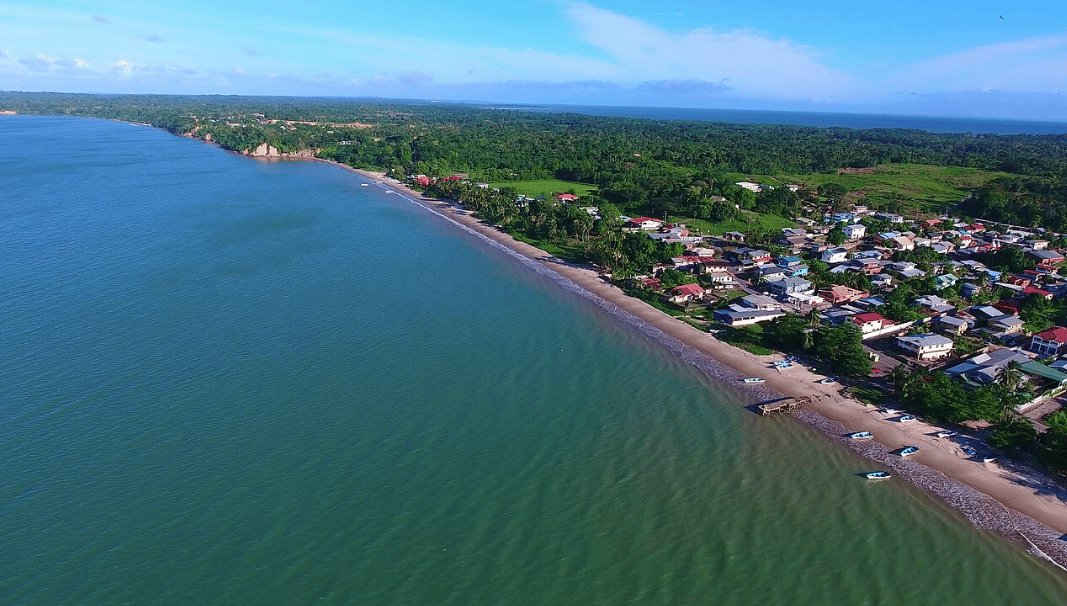
The May 1 Incident
Heritage Petroleum Company Limited detected an oil spill at its offshore Main Field operation in the Gulf of Paria at approximately 7:25 a.m. on May 1. The company immediately notified Trinidad and Tobago's Ministry of Energy and Energy Industries, the Coast Guard, and the Environmental Management Authority. According to official accounts from Port of Spain, an estimated 10 barrels were spilled before the leak was stopped the same day, with repairs completed and the facility returned to service on May 2.
Trinidad's own spill trajectory modelling indicated that if left untreated, the hydrocarbons could have crossed into Venezuelan waters. This prompted authorities to deploy chemical dispersants approximately six to eight nautical miles from the shared maritime border. Follow-up drone and vessel inspections reportedly found no visible hydrocarbons remaining on the surface after these measures.
The incident unfolded against the backdrop of longstanding energy operations in the Gulf of Paria, where companies like Heritage Petroleum continue activities that trace back to earlier structures in the local industry. Communities across the western coast have long depended on these fields for employment, yet questions about operational oversight remain central whenever releases occur near shared waters.
Venezuela's International Response
Venezuela has formally demanded information and compensation from Trinidad and Tobago over the May 1 oil spill that Caracas says originated in Trinidadian waters and risks serious environmental damage to shared Gulf of Paria ecosystems. Satellite imagery obtained by Caracas, including images dating back to April 28, showed a slick originating from Trinidad, days before the official detection date reported by Port of Spain.
Venezuela's Foreign Minister Yván Gil went public on May 12, demanding information and compensation while warning of impacts across 1,625 square kilometres spanning 12 strategic wetland systems, four national parks, and the livelihoods of more than 500 fishermen in the states of Sucre and Delta Amacuro. Acting President Delcy Rodríguez ordered a multidisciplinary team of environmental specialists, biologists and naval personnel to the affected areas to assess the situation.
This response highlights how environmental incidents in the Gulf quickly become matters of state-to-state concern, especially when satellite evidence precedes neighbourly notification. For families in Sucre and Delta Amacuro who rely on fishing, the warning of damage to wetlands and parks carries direct implications for daily sustenance and seasonal catches.
Port of Spain's Position
Port of Spain strongly disputes Venezuela's characterisation of the event, describing the incident as a minor, quickly contained 10-barrel spill. Trinidad and Tobago maintains that the response was swift, with the leak stopped on the day of detection and the site returned to service the following day after repairs.
Neither Heritage Petroleum nor the Trinidad and Tobago government publicly disclosed the incident until Venezuela raised the alarm internationally. Trinidad's modelling had already shown that hydrocarbons could cross the maritime border, yet Caracas learned of the spill not from its neighbour but from satellite imagery.
The decision to keep details internal until external pressure mounted has raised questions about how information flows between energy operators and the public in cross-border zones. Residents along the Gulf coast understand that even contained releases can affect shared marine life, making early transparency a matter of regional trust rather than solely domestic procedure.
Political Fallout at Home
Stuart Young, former Energy Minister of Trinidad and Tobago now in opposition, argues that the public and Venezuela were kept in the dark about the May 1 spill until Venezuela forced the issue internationally. He has described the handling as a deliberate cover-up of a major offshore environmental event and called for a formal investigation into who was responsible for suppressing the information.
These accusations add pressure on the energy sector at a time when operators such as Heritage Petroleum manage fields that once formed part of larger state-linked structures. Opposition voices are using the episode to question accountability mechanisms that govern offshore activities and their potential effects on neighbouring jurisdictions.
Domestic debate now centres on whether existing notification protocols between companies, ministries and the Environmental Management Authority are sufficient when modelling indicates possible transboundary movement. Families who work in or around the energy industry watch these exchanges closely, aware that reputational damage can influence future investment decisions in the Gulf.
Diplomatic Talks and Regional Implications
Energy Minister Moonilal says talks with Venezuelan counterparts are being arranged to resolve the diplomatic dispute. Such discussions would need to address both the immediate claims for information and compensation and the broader question of how future incidents are reported across the maritime boundary.
CARICOM neighbours are watching the exchange because the Gulf of Paria represents one of the few active zones where Trinidad and Tobago shares direct maritime space with a non-CARICOM state. Environmental governance questions that arise here can set precedents for how the wider community handles similar cross-border risks during hurricane season or other periods of heightened marine activity.
The episode also resonates with members of the Trinidad diaspora who follow energy and environmental news from abroad. Many maintain family ties to coastal communities and understand that diplomatic friction over shared waters can affect long-term stability in an industry already navigating global shifts in energy demand.
Human Impact on Coastal Communities
Venezuela's warning highlighted risks to more than 500 fishermen in Sucre and Delta Amacuro whose livelihoods depend on the health of 12 wetland systems and four national parks across 1,625 square kilometres. Even if Trinidad maintains that the spill remained minor and contained, the modelling that triggered dispersant use near the border underscores how quickly local waters connect across the Gulf.
In Trinidad, fishing communities along the western peninsula have similar concerns whenever releases occur near the Main Field. The absence of early public information meant that residents learned of the event only after international attention, limiting their ability to assess any immediate effects on nearshore catches or marine life they rely upon.
These human dimensions remind us that behind every diplomatic note and modelling report are households whose daily routines intersect with the Gulf's resources. Environmental incidents, however small officials describe them, carry cumulative weight for people whose income and food security are tied to these waters.
The Bigger Picture
The C360 View noted that whatever volume of oil entered the Gulf of Paria on May 1, the most damaging spill from this incident may prove to be the one in diplomatic trust between Trinidad and Tobago and Venezuela. Port of Spain's silence was telling, particularly since Trinidad's own modelling showed hydrocarbons could cross the maritime border.
This episode carries implications for Heritage Petroleum's operational transparency and for the wider Trinidad energy industry, where legacy structures from earlier state entities continue to shape current practices. Questions about timely disclosure affect how operators are perceived both locally and by international partners who monitor environmental performance in shared basins.
For CARICOM, the incident illustrates the challenges of managing cross-border environmental disputes when one party sits outside the community framework. Future cooperation on Gulf governance will likely require clearer protocols that prevent satellite imagery from becoming the first source of information for affected states.
Ultimately, the May 1 event and its aftermath point to the need for stronger mechanisms that protect both ecosystems and the relationships that sustain regional energy cooperation. Communities on both sides of the border continue to depend on the Gulf for their livelihoods, making sustained dialogue essential if trust is to be rebuilt.
By Sharon Sahatoo, Staff WriterThis article was produced with AI-assisted research and editorial support. Reporting is based on sources cited in the article.
What's Your Reaction?
 Like
0
Like
0
 Dislike
0
Dislike
0
 Love
0
Love
0
 Funny
0
Funny
0
 Wow
0
Wow
0
 Sad
0
Sad
0
 Angry
0
Angry
0

Caribbean Correspondent at Global1.News. Based in Port of Spain, Trinidad, covering Caribbean politics, economy, energy, climate, and culture. Amplifying the voices and stories of the Caribbean region.









Comments (0)