
India Boosts Naval Self-Reliance with 3 Indigenous Warships
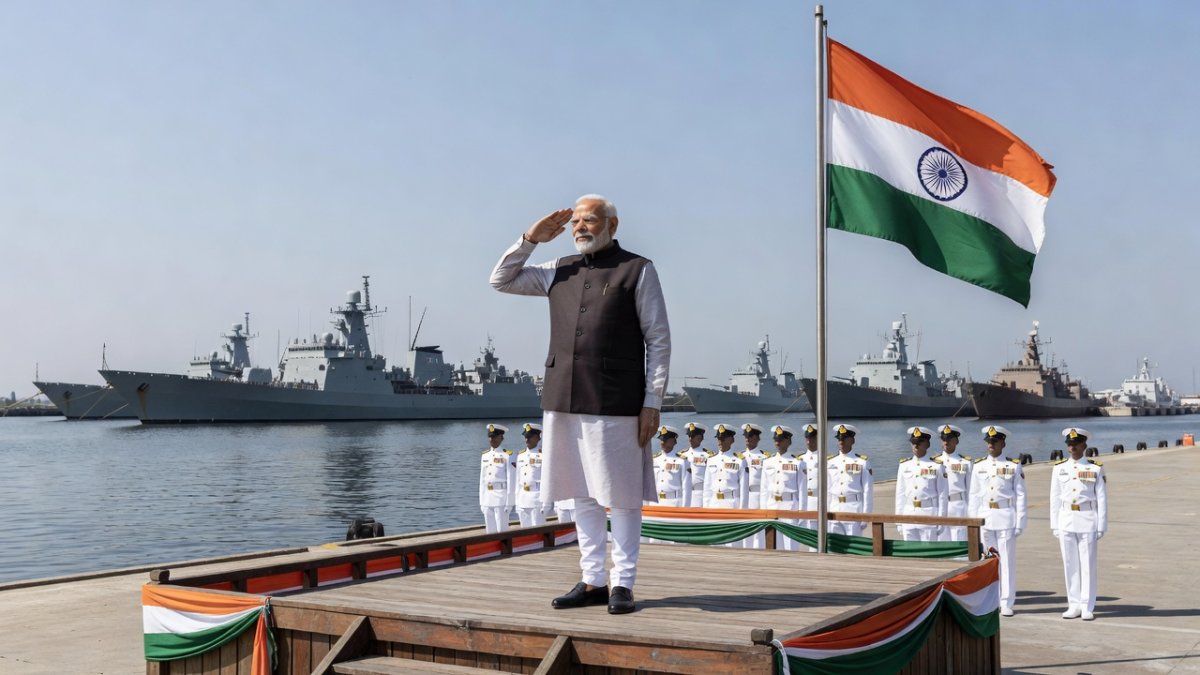
On June 21, 2026, Prime Minister Narendra Modi commissioned three frontline warships at Syama Prasad Mookerjee Port in Kolkata, West Bengal, marking a rare tri-commissioning ceremony that advances India's naval capabilities under the Aatmanirbhar Bharat framework. The vessels—INS Dunagiri, a Project 17A stealth guided-missile frigate; INS Sanshodhak, a large survey vessel; and
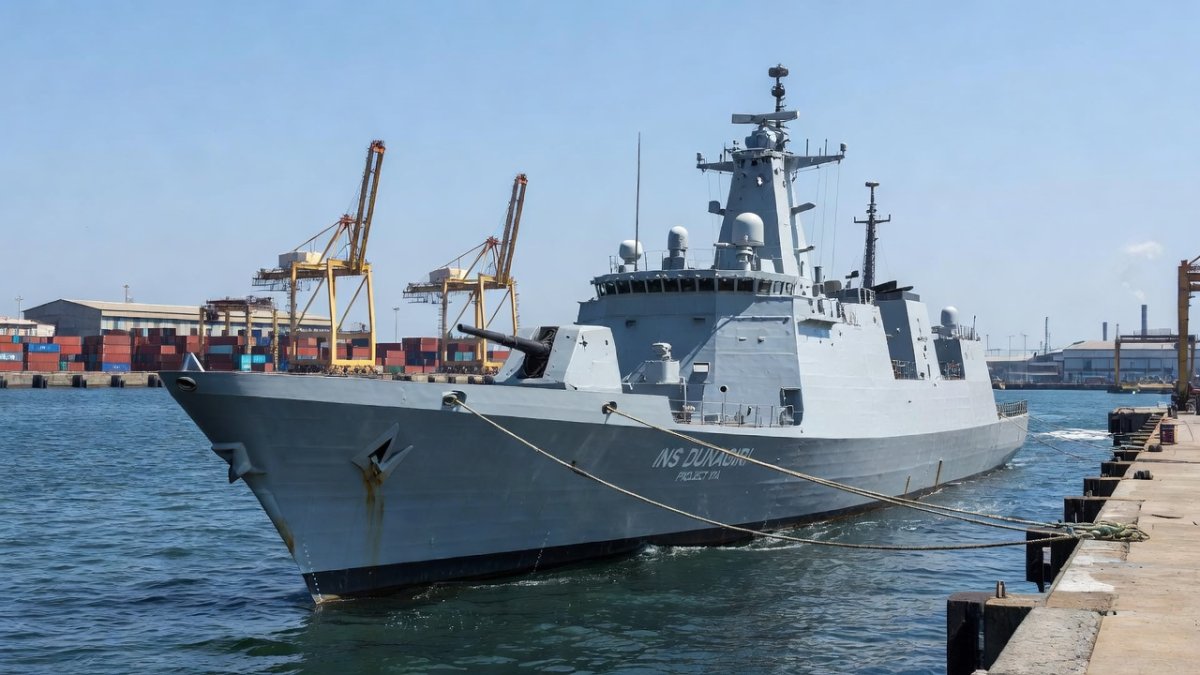
On June 21, 2026, Prime Minister Narendra Modi commissioned three frontline warships at Syama Prasad Mookerjee Port in Kolkata, West Bengal, marking a rare tri-commissioning ceremony that advances India's naval capabilities under the Aatmanirbhar Bharat framework. The vessels—INS Dunagiri, a Project 17A stealth guided-missile frigate; INS Sanshodhak, a large survey vessel; and INS Agray, an Arnala-class anti-submarine warfare shallow water craft—were all designed by the Indian Navy's Warship Design Bureau and constructed by Garden Reach Shipbuilders and Engineers (GRSE) in Kolkata. With over 75% indigenous content across the platforms, the event highlights measurable progress in reducing import dependence while strengthening maritime security in the Indian Ocean region.
The Historic Tri-Commissioning at Kolkata Port
The commissioning took place on International Yoga Day, allowing Prime Minister Modi to connect India's message of peace with the necessity of defensive strength. He stated that "a country can talk of peace only when it possesses the capability to protect itself." This simultaneous induction of three ships represents a logistical and symbolic milestone for the Indian Navy, which currently operates approximately 130-140 vessels and aims to reach a fleet of 200 warships and submarines by 2035. The location at Syama Prasad Mookerjee Port underscores West Bengal's role in India's eastern maritime infrastructure, where GRSE has long contributed to shipbuilding clusters that support both defense and commercial sectors.
Technological Achievements in Stealth and Warfare Systems
INS Dunagiri incorporates stealth design features and is armed with BrahMos surface-to-surface missiles alongside the Medium Range Surface-to-Air Missile (MRSAM) system, enabling multi-layered defense against aerial and surface threats. INS Agray, the fourth of eight planned Arnala-class vessels, carries lightweight torpedoes, indigenous anti-submarine rocket launchers, and advanced sonar systems optimized for shallow-water operations. INS Sanshodhak extends operational reach through hydrographic survey capabilities that map seabeds far beyond routine coastal patrols. These systems, developed through collaboration between the Warship Design Bureau and GRSE, demonstrate India's growing proficiency in integrating complex sensors and weapons on domestically built hulls.
Economic Impact Through MSME Participation and Job Creation
Construction of the three warships involved more than 200 micro, small, and medium enterprises (MSMEs) spread across states including West Bengal, Tamil Nadu, and Maharashtra. This supply chain generated approximately 4,000 direct jobs during the build phase, with additional indirect employment in logistics, component fabrication, and testing facilities. Taxpayers benefit from the high indigenous content exceeding 75%, which lowers foreign exchange outflows compared to earlier import-heavy acquisitions. The involvement of Kolkata-based GRSE also stimulates ancillary industries in eastern India, aligning with broader government efforts to decentralize defense manufacturing beyond traditional hubs like Bengaluru and Hyderabad.
Strategic Significance for India's Naval Readiness
The addition of these platforms directly supports the Navy's expansion target of 200 vessels by 2035, enhancing anti-submarine warfare coverage along the eastern seaboard and improving survey data for safe navigation in contested waters. INS Agray's shallow-water focus addresses vulnerabilities near ports and river mouths, while INS Sanshodhak's survey role aids in charting exclusive economic zones. For Indian citizens, this translates to stronger protection of sea lanes that carry over 90% of the country's trade by volume. Defense analysts note that sustained indigenous production reduces dependency risks during geopolitical tensions, particularly in the Indo-Pacific theater where submarine activity has increased in recent years.
Aatmanirbhar Bharat Policy Context and Future Trajectory
This tri-commissioning exemplifies the Aatmanirbhar Bharat initiative's emphasis on domestic design and production in strategic sectors. By achieving over 75% indigenous content on complex platforms like Project 17A frigates, India moves closer to self-reliance benchmarks set in the Defence Acquisition Procedure. The event also reflects policy continuity across successive governments, with GRSE's order book now supporting long-term workforce stability. Looking ahead, similar commissioning ceremonies are expected as additional Arnala-class craft and follow-on Project 17A vessels enter service, further integrating MSME networks into the defense ecosystem and contributing to skill development programs in engineering colleges across states like West Bengal and Odisha.
Implications for Taxpayers and Broader Economic Trends
From a fiscal perspective, the high localization rate minimizes recurring costs associated with imported spares and technology royalties. The 4,000 jobs created during construction represent sustained economic activity in regions where shipbuilding clusters intersect with vocational training institutes. This model supports India's larger goal of increasing the defense manufacturing sector's contribution to GDP while fostering dual-use technologies that can benefit civilian maritime industries. Citizens in coastal districts gain indirect advantages through improved port security and survey data that aids fishing and offshore energy projects.
The commissioning of INS Dunagiri, INS Sanshodhak, and INS Agray on June 21, 2026, therefore stands as a concrete step in India's naval modernization, combining technological sophistication with measurable economic multipliers under the Aatmanirbhar Bharat umbrella.
— By Dr. Raj Patel, Staff WriterThis article was produced with AI-assisted research and editorial support. Reporting is based on sources cited in the article.
What's Your Reaction?
 Like
0
Like
0
 Dislike
0
Dislike
0
 Love
0
Love
0
 Funny
0
Funny
0
 Wow
0
Wow
0
 Sad
0
Sad
0
 Angry
0
Angry
0

Caribbean Correspondent at Global1.News. Based in Port of Spain, Trinidad, covering Caribbean politics, economy, energy, climate, and culture. Amplifying the voices and stories of the Caribbean region.













Comments (0)