
Ukraine Launches Largest Drone Attack on Moscow Oil Refinery
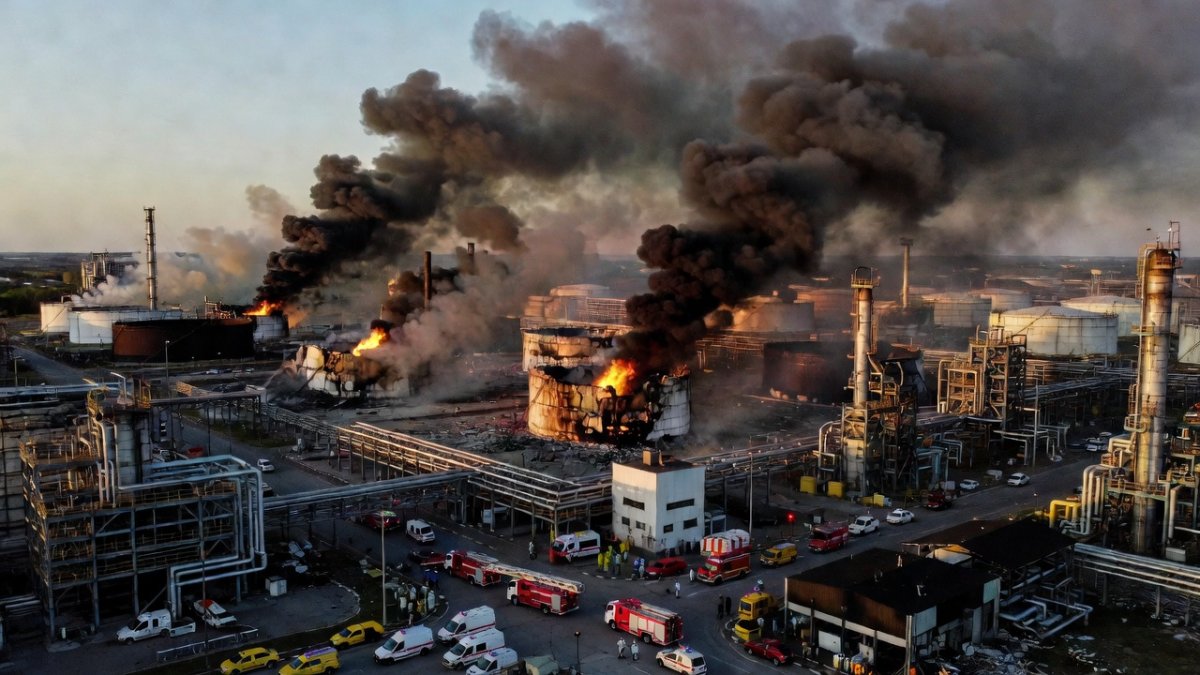
The Strike That Shook Moscow's Energy Heart On June 18, 2026, Ukrainian military sources confirmed the launch of roughly 200 drones aimed at Moscow, with the primary target being the Moscow Oil Refinery in Kapotnya, operated by Gazprom Neft and capable of processing 11 million tonnes annually. This was no random barrage. Ukrainian forces struck the facility for the second time
The Strike That Shook Moscow's Energy Heart
On June 18, 2026, Ukrainian military sources confirmed the launch of roughly 200 drones aimed at Moscow, with the primary target being the Moscow Oil Refinery in Kapotnya, operated by Gazprom Neft and capable of processing 11 million tonnes annually. This was no random barrage. Ukrainian forces struck the facility for the second time in a single week, following an earlier attack on June 16-17 that already disrupted operations. The refinery sits at the core of Russia's fuel supply chain, and hitting it twice in days signals a deliberate campaign against energy infrastructure.
Damage on the Ground and Russian Air Defense Claims
Local witnesses and social media video verified by Reuters showed debris from the drone assault damaging a residential building near the refinery. Ukrainian military sources reported that the strikes halted refining operations, with processing units and fuel tanks directly affected. Moscow Mayor Sergei Sobyanin stated that air defenses destroyed nearly 200 drones but acknowledged that some still reached their targets. The Russian Defense Ministry separately claimed 555 drones were shot down across Russia overnight, a figure that exceeds the Ukrainian-reported launch total and invites scrutiny over possible inflation or inclusion of decoys.
These competing numbers highlight the fog of drone warfare. While Russian officials emphasize successful interceptions, independent reporting from the Australian Broadcasting Corporation noted that Ukrainian drones evaded air defenses to strike the refinery. Outlets including Defence News and CNN also confirmed the refinery hit, underscoring that at least some projectiles penetrated layered defenses around the capital.
Zelenskyy's "Long-Range Sanctions" Strategy
Ukrainian President Volodymyr Zelenskyy framed the operation as "long-range sanctions" targeting Russia's energy sector. This language reflects a calculated shift: instead of solely defending against incoming missiles, Kyiv is exporting the economic pain back to Moscow. The refinery strike fits a pattern that began earlier in June when Ukraine struck St. Petersburg during the St. Petersburg International Economic Forum on June 3, demonstrating reach into Russia's second city.
Critics may call this escalation, yet the facts show Russia launched over 5,400 drones at Ukraine in June alone, according to Ukrainian Air Force data. That volume of attacks provides context for why Kyiv is responding by degrading the very fuel supplies that sustain Russian military logistics. The strategy is direct and measurable in barrels per day disrupted.
The Human Cost in Kyiv and the Broader June Offensive
Russian forces conducted a massive attack on Kyiv in early June that killed 22 people, according to Ukrainian officials. This loss of civilian life occurred amid the same month when Russia fired more than 5,400 drones into Ukrainian territory. The timing matters. Ukrainian strikes on Russian energy assets did not occur in a vacuum; they followed sustained Russian pressure on Ukrainian cities and infrastructure.
Attributing responsibility does not require moral equivalence. Russian Defense Ministry statements routinely claim precision and restraint, yet the 22 deaths in Kyiv stand as documented outcomes of their June campaign. Ukrainian operations against refineries, by contrast, have so far produced no confirmed civilian fatalities in Moscow, though falling debris did damage residential property as verified by Reuters.
Why the Refinery Matters Beyond Symbolism
The Kapotnya facility is not a symbolic target. Its 11-million-tonne annual capacity feeds central Russia's fuel distribution network. Halting operations there creates immediate downstream effects on aviation fuel, diesel, and gasoline supplies. Ukrainian military sources have indicated the goal is sustained degradation rather than one-off headlines. Repeating the strike within days suggests they intend to keep pressure on Gazprom Neft until repairs become prohibitively expensive or logistically impossible under continued threat.
Russian claims of near-total interception must be weighed against the physical evidence of damage at the site. When a refinery stops processing crude, the numbers on paper matter less than the smoke rising from damaged tanks. Independent confirmations from CNN and Defence News reinforce that the facility was hit, regardless of how many drones the Russian Defense Ministry says were neutralized.
International Reporting and the Limits of Official Narratives
Western coverage has been consistent in verifying the refinery strike. The Australian Broadcasting Corporation explicitly reported that Ukrainian drones evaded air defenses. This aligns with on-the-ground footage and satellite imagery analysis that typically follows such incidents. Russian state media, meanwhile, emphasizes the 555-drone figure from the Defense Ministry while downplaying any successful hits.
Both sides have incentives to shape the narrative. Ukrainian sources highlight successful long-range strikes; Russian sources stress defensive successes. The most reliable picture emerges when multiple independent outlets cross-reference physical damage, which in this case points to real disruption at Kapotnya. The residential building hit by debris further illustrates that even "successful" interceptions carry risks to civilians on the ground.
Looking Ahead: Energy as the New Front Line
Ukraine's approach of treating Russian energy infrastructure as a legitimate target is likely to continue as long as Russia maintains its drone campaign against Ukrainian cities. The June 18 operation, backed by Ukrainian military sources and corroborated by multiple international outlets, demonstrates both capability and intent. Moscow's air defense claims, while voluminous, have not prevented repeated strikes on high-value energy assets.
The pattern is clear: Ukrainian forces are using drones to impose costs that sanctions alone have not fully achieved. Russian officials will continue publishing interception tallies, yet the operational status of refineries like Kapotnya will ultimately reveal whose numbers reflect reality on the ground. This is the new arithmetic of the conflict, measured in tonnes of lost refining capacity rather than territory gained.
By Jessica Ali, Lead Anchor — Global 1 News
This article was produced with AI-assisted research and editorial support. Reporting is based on sources cited in the article.
What's Your Reaction?
 Like
0
Like
0
 Dislike
0
Dislike
0
 Love
0
Love
0
 Funny
0
Funny
0
 Wow
0
Wow
0
 Sad
0
Sad
0
 Angry
0
Angry
0

Editor-in-Chief at Global1.News. Atlanta-based journalist who cuts through the BS and tells it like it is. Lead anchor, host, and the voice you hear when the spin stops and the truth starts.














Comments (0)