
House Votes to End Iran War — A Bipartisan Slap at Trump's War Powers
House Votes to End Iran War — A Bipartisan Slap at Trump's War Powers Folks, if you've been watching the news today, you saw it. The United States House of Representatives just did something that doesn't happen every day. They voted to end a war. Not a symbolic resolution. Not a "we condemn" statement. An actual vote to direct an end to U.S. military engagement in Iran — invoki
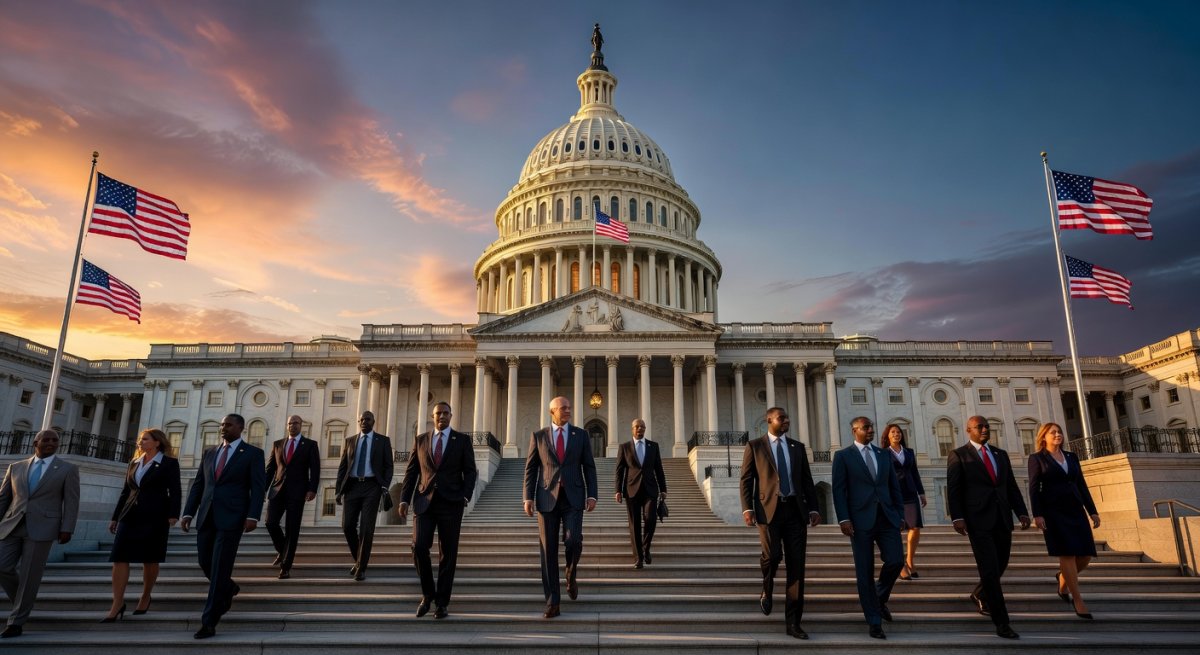
House Votes to End Iran War — A Bipartisan Slap at Trump's War Powers
Folks, if you've been watching the news today, you saw it. The United States House of Representatives just did something that doesn't happen every day. They voted to end a war.
Not a symbolic resolution. Not a "we condemn" statement. An actual vote to direct an end to U.S. military engagement in Iran — invoking the War Powers Act of 1973 in a direct, constitutional challenge to President Trump's handling of an armed conflict that has dragged on far longer than Congress ever authorized.
And here's the part that'll make you sit up straight: it was bipartisan.
The measure passed with a handful of Republicans crossing the aisle to vote with Democrats, delivering what the New York Times is calling "a bipartisan rebuke to Trump" over his handling of the Iran war. Robert Jimison and Megan Mineiro broke the story Wednesday evening, and folks — it's a big one.
What the House Actually Did
Let's cut through the spin. The House passed a War Powers Resolution that directs the president to end U.S. engagement in hostilities in Iran. This isn't advisory — the War Powers Act of 1973 gives Congress the authority to force the withdrawal of U.S. forces from unauthorized military conflicts.
The resolution invoked the law's most powerful provision: Section 5(c), which requires the president to remove U.S. forces from any hostilities where Congress hasn't declared war or specifically authorized military action. The House vote essentially says: "You didn't get our approval, and this ends now."
Now, will it actually force a withdrawal? That's the multi-billion dollar question. The War Powers Act has been tested before — and presidents of both parties have historically treated it more like a suggestion than a binding legal requirement. But a formal congressional vote changes the political calculus in ways that committee hearings and op-eds never could.
The Bipartisan Break You Don't See Every Day
Here's the thing that's got political analysts buzzing. This wasn't a party-line vote. A handful of House Republicans broke with President Trump to support the resolution. And that number matters more than you might think.
We're heading into a midterm election cycle. Republicans hold a slim majority. Every crack in party unity gets magnified. And when GOP members start voting to limit a Republican president's war powers — especially one as dominant in the party as Trump — you know something's shifted beneath the surface.
The midterms are looming. Voters are tired of overseas entanglements. And some Republican House members in swing districts are clearly reading the room: their constituents don't want more war.
I've been saying it for months on this channel — the divide between Trump and congressional Republicans on foreign policy was always going to hit a breaking point. Looks like we just found it.
The War Powers Act: A Brief History Lesson
For those of you who didn't take constitutional law in college, let me break it down fast. The War Powers Resolution was passed in 1973 — over President Nixon's veto — after the catastrophe of Vietnam. The idea was simple: the Constitution gives Congress the power to declare war, so when the executive branch commits U.S. forces to combat, Congress needs to sign off.
The law requires the president to notify Congress within 48 hours of committing forces. And it mandates that forces must be withdrawn within 60 days (with a 30-day extension) unless Congress authorizes the action or declares war.
In practice? Every president since Nixon has treated it as constitutionally dubious. They notify Congress — sometimes — but they rarely ask for permission. The result is a slow erosion of congressional war power that's left presidents of both parties free to conduct military operations around the world with minimal legislative oversight.
Wednesday's vote was a direct attempt to claw that power back.
What the Iran War Looks Like Right Now
Let's be real about where things stand. The U.S. has been engaged in military operations in and around Iran that go far beyond the "limited strikes" the administration initially described. What started as targeted responses to attacks on U.S. personnel has escalated into a sustained campaign that critics say lacks clear congressional authorization, clear goals, or an exit strategy.
Sound familiar? It should. It's the same pattern we've seen in the Middle East for two decades — mission creep that turns a limited engagement into an open-ended commitment.
The NYT report describes the vote as "the latest reflection of divisions between Republicans in Congress and President Trump on a range of issues as their interests diverge in the run-up to the midterm congressional elections." Translation: the political cost of this war is getting too high for lawmakers who have to face voters in November.
What Happens Next
Here's where it gets complicated. The House passed the resolution. But the Senate hasn't voted yet. And even if it does — even if both chambers send this to the president's desk — Trump would almost certainly veto it.
Overriding a veto requires a two-thirds majority in both chambers. That's a heavy lift, even with bipartisan support.
So what's the point? Why vote if the president can just ignore it or veto it?
Because votes like this change the narrative. They put every lawmaker on the record. They force senators to choose: are you for endless war in Iran, or are you for bringing the troops home? There's no more hiding behind "I support the troops" platitudes. This is a concrete yes-or-no vote on whether the war continues.
And for midterm voters, that record matters.
The Bigger Picture: Executive Power on the Ballot
This isn't just about Iran. It's about the fundamental balance of power in the U.S. government. For years — under both parties — the presidency has accumulated more and more authority over military action while Congress has abdicated its constitutional role.
The War Powers Resolution vote is an attempt to reassert that role. And whether it succeeds or fails legally, it sends a signal: Congress is waking up.
We're also seeing this fight play out in other arenas. The same day this vote happened, Trump signed an executive order removing job protections from federal workers — another massive expansion of executive power. These aren't separate stories. They're two sides of the same coin: a president pushing the boundaries of what the executive branch can do, and Congress slowly, fitfully, pushing back.
What You Can Do
Folks, this is where I always bring it back to you. Because democracy isn't a spectator sport.
First: find out how your representative voted. Every member of the House is on the record on this resolution. If your rep voted to end the war, thank them. If they voted to keep it going, ask them why. Call their office. Email. Show up at town halls.
Second: watch the Senate. The pressure needs to stay on. If the Senate takes up this resolution — and they should — your senators need to hear from you. Whether you're in Georgia, California, Texas, or Ohio, your voice matters.
Third: share this story. The mainstream media will cover the vote, but they'll move on fast. This channel exists to keep the spotlight on the stories that matter. Share this video. Send it to someone who needs to know what's happening.
And fourth: stay informed. The War Powers Act isn't a technicality — it's the law of the land, designed to prevent exactly the kind of situation we're in now. Know your rights. Know your Constitution. And don't let anyone tell you that Congress can't do anything about an unauthorized war. They just voted to prove otherwise.
The Bottom Line
The House just voted to end the Iran war. It's a historic moment — bipartisan, bold, and long overdue. Whether it actually ends anything depends on the Senate, the president, and most of all — you.
This is Jessica Ali, Global 1 News, Atlanta. Stay sharp, stay informed, and for the love of democracy — stay involved.
By Jessica Ali, Senior Correspondent, Global 1 News
This article was produced with AI-assisted research and editorial support. Reporting is based on sources cited in the article.
What's Your Reaction?
 Like
0
Like
0
 Dislike
0
Dislike
0
 Love
0
Love
0
 Funny
0
Funny
0
 Wow
0
Wow
0
 Sad
0
Sad
0
 Angry
0
Angry
0

Editor-in-Chief at Global1.News. Atlanta-based journalist who cuts through the BS and tells it like it is. Lead anchor, host, and the voice you hear when the spin stops and the truth starts.















Comments (0)