
Jack Smith Secretly Gets Texts from 44 Congress Members
Listen up, America — while you were scrolling through your feeds, a bombshell revelation has emerged from the shadows of the Department of Justice: former Special Counsel Jack Smith's team secretly obtained and reviewed text messages from 44 members of Congress, spanning both Republicans and Democrats, as part of his probe into Donald Trump's efforts to challenge the 2020 election results.
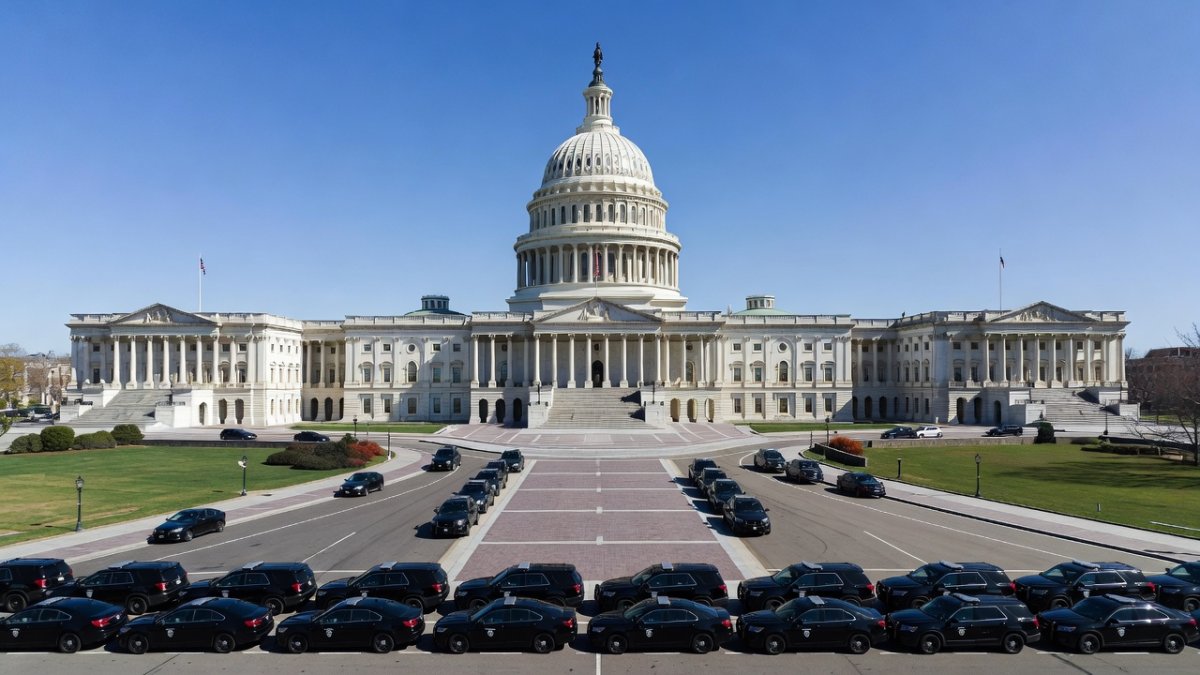
The Breaking News
The scope of this congressional sweep marks a significant escalation in post-January 6 inquiries, with records released by Senate Judiciary Chair Chuck Grassley and Sen. Ron Johnson confirming that text content, metadata, sender phone numbers, and timestamps from archived devices were all handed directly to investigators. Unlike prior high-profile probes, this approach bypassed internal safeguards, raising immediate alarms about due process. Sources including Reuters and Politico, reporting on July 14, 2026, highlight how the material included routine scheduling and strategy discussions unrelated to election certification disputes.
Fox News and the New York Post have amplified concerns that this dragnet captured lawmakers from both sides of the aisle, potentially shifting the political dynamics around oversight of special counsel operations. The subpoena's focus on White House visitor logs inadvertently pulled in congressional numbers, exposing a wide array of communications. This development comes amid ongoing debates over the credibility of the 2020 election investigations that began with Smith's appointment in November 2022.
What the Records Show
Under the Presidential Records Act, the National Archives treated these White House communications as federal property, facilitating the late 2022 subpoena that yielded multiple tranches of data spanning October 2020 to January 2021. Unredacted DOJ spreadsheets detail 44 distinct congressional accounts, encompassing message content and metadata that extended far beyond any direct links to the false electors scheme. Former Archives officials have characterized the request as unusually broad, capturing incidental details from devices that stored legislative correspondence.
This stands in stark contrast to the Mueller investigation, which routed similar records through a filter team before investigative access. The direct production here allowed Smith's team immediate review, including timestamps and phone numbers that could map networks of coordination. Historical context from the Clinton-era Whitewater controversies underscores why such protocols evolved, yet the scale here represents the first publicly confirmed instance of a special counsel accessing congressional texts at this volume.
The Filter Team Bypass
Filter teams, composed of attorneys walled off from the main investigative chain, have been a staple of DOJ practice since the 1990s to screen for attorney-client privilege and Speech or Debate Clause protections. The Justice Manual explicitly requires this step for subpoenaed materials involving members of Congress, a safeguard born from past abuses during independent counsel eras. Smith's prosecutors received the congressional texts directly, circumventing these guidelines and exposing potentially sensitive exchanges without prior review.
Legal analysts warn that such shortcuts could render derived evidence vulnerable under the fruit-of-the-poisonous-tree doctrine, with courts having narrowed the use of improperly screened congressional records in previous cases. The bypass not only violated internal manuals but also invited questions about whether deliberative legislative processes were adequately shielded. This procedural lapse amplifies risks that any downstream prosecutions might face suppression motions tied to the original collection method.
The filter team protocol has been standard DOJ practice since the 1990s, originating in the Whitewater investigation and strengthened after Clinton-era controversies exposed risks of tainting privileged materials. These internal walls were designed to shield congressional and executive communications from direct investigative eyes until relevance could be vetted. Newly released documents show Smith's prosecutors bypassed this entirely, allowing immediate access to the 44 lawmakers' texts.
This approach violated specific provisions in the Justice Manual's JM 9-13.000 series governing privileged materials review, which mandates independent screening before any substantive examination. In contrast, the Mueller investigation routed comparable congressional records through a dedicated filter team to prevent overreach. The direct handover here eliminated those safeguards, exposing metadata and content that extended well beyond election-related matters.
Legal consequences could include suppression motions and fruit-of-the-poisonous-tree challenges, echoing historical cases where improper screening narrowed or excluded evidence. Courts have previously limited prosecutions when filter protocols were ignored, potentially complicating any charges tied to these records and inviting broader scrutiny of the Arctic Frost probe's methods.
The Bipartisan Dragnet
Released logs confirm that Democratic offices were swept into the same net as Republican ones, driven by the subpoena's emphasis on White House visitor logs that incidentally captured cross-aisle communications. Examples include routine meeting confirmations and policy coordination messages with no evident connection to the 2020 election challenges, illustrating how the breadth of the request expanded the investigative footprint. This cross-party reach has altered the political calculus, fostering a shared institutional interest in tightening limits on future special counsel actions.
Observers anticipate renewed bipartisan momentum to codify stricter filter protocols, as the incident highlights vulnerabilities in legislative privacy. Republicans have decried the effort as running roughshod over constitutional norms, while the involvement of both parties may pressure Democrats to engage more actively in oversight discussions. The dragnet's incidental nature reveals how archival records can become tools for expansive inquiries without targeted intent.
The subpoena's focus on White House visitor logs and correspondence systems meant any congressional number appearing in those archives was captured regardless of relevance to the election probe. This mechanical sweep pulled in routine scheduling texts and strategy notes from both parties, creating a dragnet that extended far beyond the false electors inquiry and captured incidental legislative communications from October 2020 through January 2021.
Political fallout has shifted the equation for both parties, as institutional interests in protecting legislative privacy now override traditional partisan divisions. Lawmakers on both sides recognize that unchecked executive subpoenas could chill internal deliberations, prompting unified calls for accountability from Senate Judiciary leaders and raising questions about how future administrations might wield similar tools.
Specific legislative reforms under discussion include codifying stricter filter protocols, requiring advance notification when lawmakers' communications are swept up, and establishing a special congressional liaison for special counsel investigations. These measures aim to restore procedural guardrails and prevent future bypasses of the National Archives process.
Arctic Frost Connection
The congressional text review forms a core element of the "Arctic Frost" umbrella investigation, the internal code name for post-January 6 inquiries centered on the false electors scheme. DOJ filings describe its reach as encompassing records for over 400 Republican-linked targets, with Grassley's committee linking the congressional sweep directly to this broader framework in the latest disclosures. Previously unreported details now illuminate the full investigative footprint Smith assembled during his tenure.
This connection underscores how one subpoena to the National Archives served as an entry point for wider data collection, blending archival materials with targeted probes. The scale suggests a systematic approach that extended beyond initial public understandings of the election inquiries. Historical parallels to earlier special counsel operations show that such expansive code-named efforts often test the boundaries of prosecutorial discretion.
Grassley Calls for Testimony
Grassley and Johnson have formally requested Jack Smith's appearance before the Senate Judiciary Committee, issuing a joint statement accusing the team of acting with impunity and disregarding established protocols. Smith has yet to respond publicly, leaving former DOJ officials to speculate on whether he will opt for voluntary cooperation or force the committee to issue a subpoena. Precedents such as Robert Mueller's 2019 testimony and James Comey's 2017 closed session provide a roadmap for how such appearances might unfold.
Committee enforcement could ultimately require full Senate approval and potential court intervention if voluntary compliance is declined. The call for testimony aims to clarify the decision-making behind the filter team bypass and the handling of congressional materials. This move positions the Judiciary Committee as a central player in reasserting congressional oversight over executive branch investigations.
Constitutional Concerns
The Speech or Debate Clause provides explicit protections for lawmakers' official communications, yet the bypassed filter process raises serious questions about whether those safeguards were properly applied. Even non-privileged texts may harbor sensitive constituent information that warrants careful handling, amplifying concerns over privacy erosion in legislative work. Democrats on the committee have remained largely silent thus far, though two senior aides indicated to Politico that internal reviews of standards for future investigations are underway regardless of party control.
This episode marks the first confirmed instance of a special counsel reviewing congressional communications at this scale, testing long-standing assumptions about investigative boundaries. Sustained oversight emerges as the key mechanism for ensuring such protections are respected in practice. The implications extend to how future probes balance aggressive fact-finding with institutional respect for separation of powers.
What This Means
The revelations expose systemic gaps in how special counsel investigations interact with congressional records, potentially affecting the admissibility of evidence in any related proceedings. For everyday Americans, the episode illustrates why legislative privacy protections exist—to preserve the integrity of deliberative processes free from unchecked executive scrutiny. The credibility of the 2020 election probes, already a lightning rod since 2022, now faces additional strain from these procedural revelations.
Broader historical context reveals this as an evolution from earlier independent counsel controversies, where filter mechanisms were strengthened precisely to prevent overreach. Legal implications could prompt legislative reforms codifying stricter protocols, ensuring that both parties benefit from consistent safeguards. The American people deserve straight answers from those entrusted with extraordinary investigative powers, answers that only transparent testimony and rigorous congressional review can provide.
By Jessica Ali, Staff WriterThis article was produced with AI-assisted research and editorial support. Reporting is based on sources cited in the article.
What's Your Reaction?
 Like
0
Like
0
 Dislike
0
Dislike
0
 Love
0
Love
0
 Funny
0
Funny
0
 Wow
0
Wow
0
 Sad
0
Sad
0
 Angry
0
Angry
0

Editor-in-Chief at Global1.News. Atlanta-based journalist who cuts through the BS and tells it like it is. Lead anchor, host, and the voice you hear when the spin stops and the truth starts.












Comments (0)