
Hand Grip Strength Biomarker: Health Risks for India's Elderly
Hand Grip Strength Biomarker: Health Risks for India's Elderly (58 chars) Lancet PURE study data shows each 5 kg grip reduction raises mortality 16%. ICMR research and Ayushman Bharat integration offer low-cost screening for India's 138 million seniors facing cardiovascular and frailty risks. (158 chars) Each 5 kg reduction in hand grip strength correlates with a 16% rise in al
Each 5 kg reduction in hand grip strength correlates with a 16% rise in all-cause mortality and 17% higher cardiovascular death risk, according to the landmark 2015 Lancet PURE study of 140,000 participants across 17 countries. In India, where 138 million people aged 60 and above were counted in the 2021 Census and cardiovascular disease accounts for 28% of deaths, this simple metric offers an urgent, low-cost window into population health. With dementia cases projected to exceed 5 million by 2030, grip strength testing could transform early detection under existing national frameworks.
Grip Strength as Biomarker: Data-Driven Insights for India's Health Security
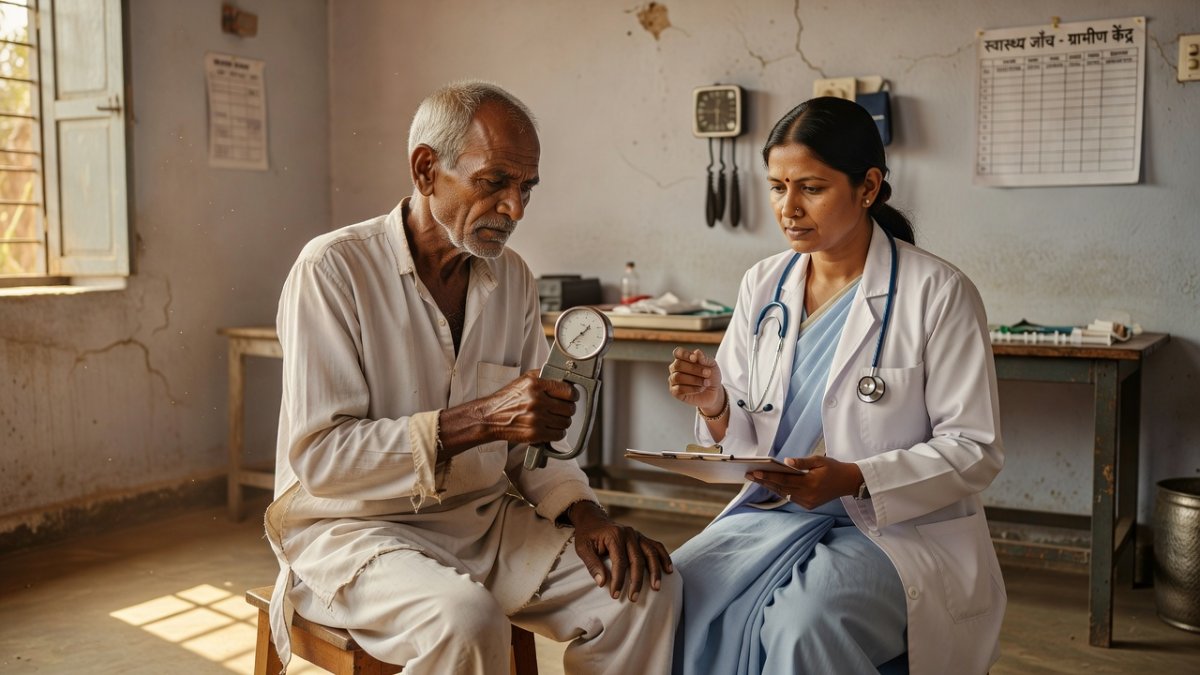
New Delhi, India – June 30, 2026 — The India Today analysis of hand grip strength as a predictive biomarker aligns closely with findings from the Lancet PURE study and multiple ICMR investigations conducted in Delhi, Chennai and Pune. Researchers measured grip using handheld dynamometers costing under Rs. 5,000, establishing clear thresholds: below 26 kg for men and 16 kg for women signals elevated health risks. After age 50, grip strength declines approximately 1% annually, accelerating frailty in a nation whose elderly population will reach 194 million by 2031.
Global Research Linking Grip Strength to Longevity
The 2015 Lancet PURE study demonstrated that grip strength outperformed systolic blood pressure as a predictor of all-cause and cardiovascular mortality. Indian normative data collected by ICMR show men aged 20-29 typically register 35-45 kg, declining to 25-32 kg by ages 60-69. Women aged 20-29 average 20-28 kg, falling to 15-20 kg after 60. These figures match WHO ICFSR frailty criteria, which explicitly include grip strength measurement for clinical assessment.
What This Means for India
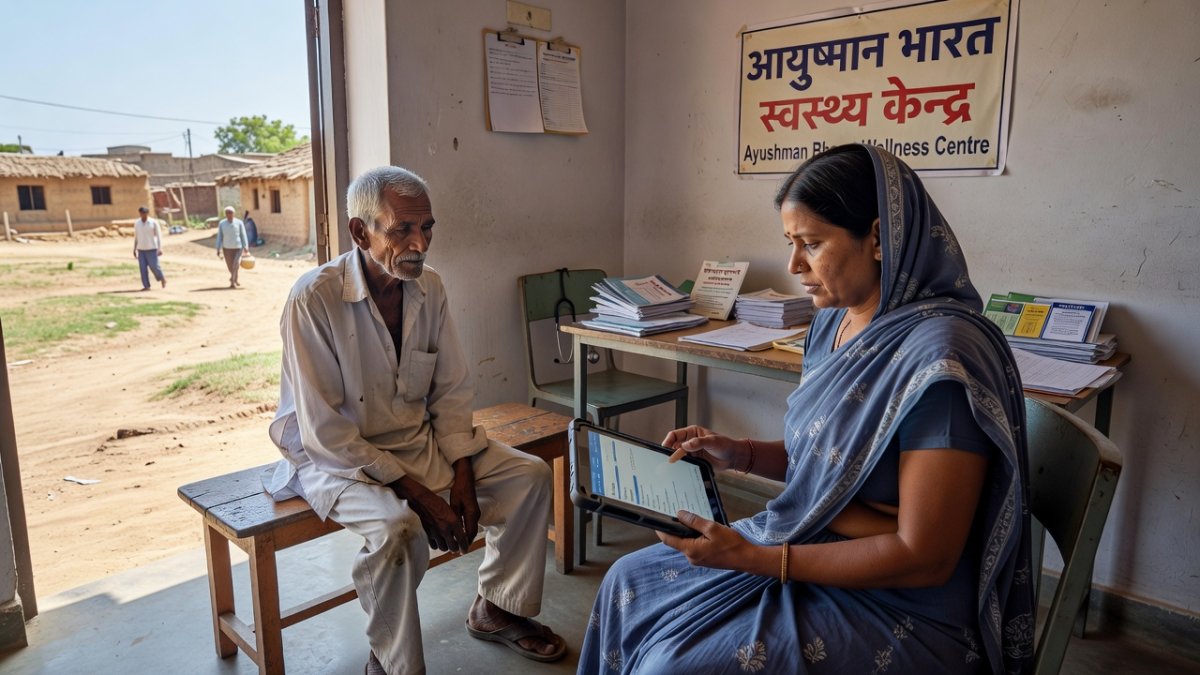
India's Ministry of Health and Family Welfare oversees 1.5 lakh Ayushman Bharat health and wellness centres where dynamometer testing could be deployed immediately. Integration would allow frontline workers to flag individuals at risk of cardiovascular events or cognitive decline without expensive imaging. With 28% of Indian deaths linked to cardiovascular disease, routine grip screening offers a scalable tool aligned with Ayushman Bharat's preventive care mandate and could reduce late-stage interventions covered under the PM-JAY insurance scheme.
Demographic Challenges and Grip Strength Trends
India's rapid demographic shift amplifies the urgency. The 1% annual post-50 decline in grip strength, compounded by rising sedentary behaviour and nutritional gaps, threatens to increase frailty prevalence. ICMR longitudinal data from urban and semi-urban cohorts confirm that individuals falling below the 26 kg/16 kg thresholds experience significantly higher rates of hospitalisation and functional dependence. Policy planners at NITI Aayog have already flagged muscle health as a priority within the National Programme for Health Care of the Elderly.
Expert Perspectives from Indian Institutions
Researchers at AIIMS New Delhi and ICMR's National Institute of Nutrition emphasise that grip strength provides an inexpensive surrogate for overall muscle mass and systemic inflammation. Public health experts at the Ministry of Health note that embedding dynamometer protocols in wellness centres would generate population-level data to refine Ayushman Bharat's non-communicable disease screening modules. Geriatricians highlight its correlation with future dementia risk, supporting calls for cognitive assessments to begin earlier in high-risk groups.
Integrating Grip Testing into Primary Care Systems
Implementation requires minimal training: auxiliary nurse midwives can perform three maximal squeezes per hand in under two minutes. Cost-effectiveness analyses suggest that screening 10,000 seniors would cost less than Rs. 50 lakh while identifying thousands needing targeted interventions under existing NCD programmes. States such as Tamil Nadu and Kerala, already piloting digital health records, are well positioned to incorporate grip metrics into Ayushman Bharat dashboards for real-time surveillance.
The Bottom Line
With India's elderly population expanding by 56 million within the next five years and cardiovascular disease remaining the leading cause of death, grip strength measurement represents an evidence-based, fiscally prudent addition to national screening protocols. Adoption across Ayushman Bharat centres could deliver measurable reductions in preventable mortality while generating robust Indian-specific datasets to guide future policy. Early action now will determine whether this biomarker translates into extended healthy lifespan for millions of citizens.
— By Dr. Raj Patel, Staff Writer
This article was produced with AI-assisted research and editorial support. Reporting is based on sources cited in the article.
What's Your Reaction?
 Like
0
Like
0
 Dislike
0
Dislike
0
 Love
0
Love
0
 Funny
0
Funny
0
 Wow
0
Wow
0
 Sad
0
Sad
0
 Angry
0
Angry
0

India/South Asia Correspondent at Global1.News. Analytical voice with a background in science and health journalism. Based in New Delhi, covering Indian politics, education, healthcare, technology, and policy. Breaks down complex data into clear, actionable reporting.













Comments (0)