
Not Just Aid and Investment: Decoupling from America Risks Israel's AI Future
Israel's AI future hangs in the balance as 103 House Democrats vote to cut $3.3B in US aid, threatening cloud compute, venture capital, and research partnerships that power the country's high-tech engine.
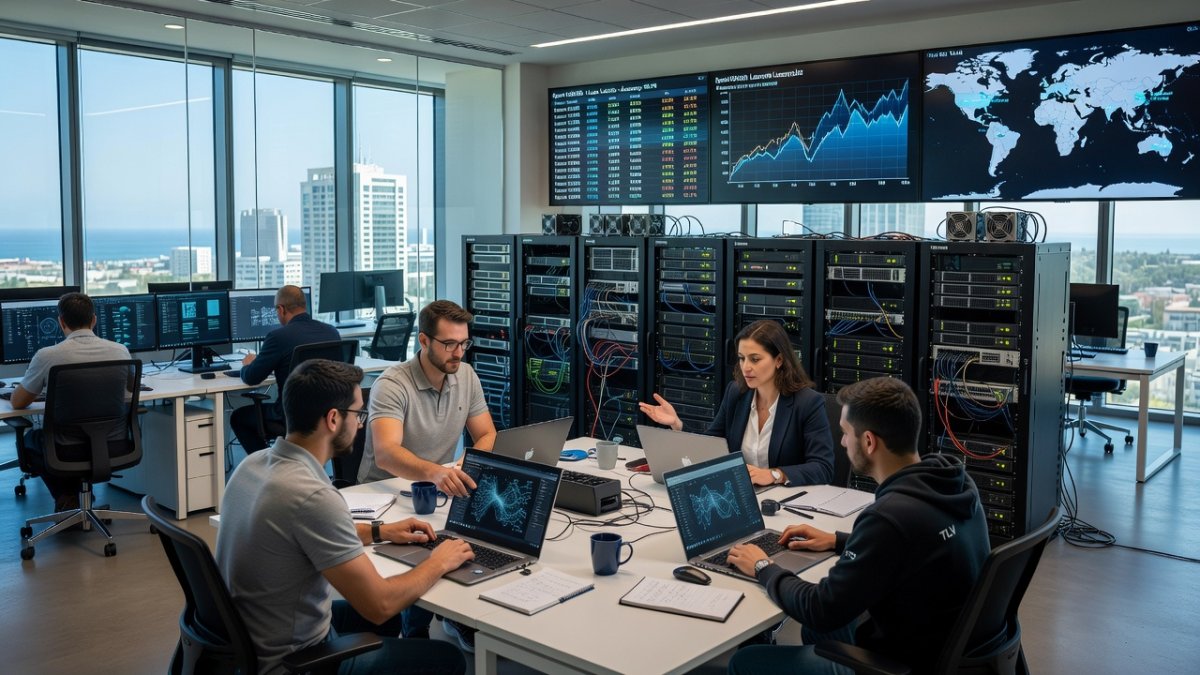
In the gleaming towers of Tel Aviv's Rothschild Boulevard and the research labs of Herzliya Pituach, Israeli engineers are training models that can parse battlefield data, optimize semiconductor design, and rewrite medical diagnostics in seconds. Yet a deeper vulnerability is emerging that no algorithm can easily solve. Artificial intelligence has become a strategic asset the United States will share only with its closest partners. The question now circulating in boardrooms and ministries is blunt: what happens if Israel is no longer counted among them?
This is not a theoretical debate. A recent vote in Washington has forced Israeli policymakers and founders to confront a hard truth. Decoupling from America risks far more than military assistance. It threatens the foundations of Israel's AI future and the high-tech economy that underpins national resilience.
A Historic Fracture in Washington
In mid-July, 103 House Democrats cast votes aimed at cutting the $3.3 billion in annual U.S. military aid to Israel. The scale of the dissent marked a historic shift. For decades, bipartisan support for the security relationship was treated as nearly automatic. That consensus is eroding at speed, driven largely by the prolonged Gaza war and the deteriorating humanitarian situation there.
From an Israeli vantage point, the numbers themselves matter less than the signal. Aid has always been only one pillar of the alliance. The deeper structure — intelligence sharing, joint R&D, market access, and technology transfer — has underwritten Israel's qualitative military edge and its civilian innovation engine. When large numbers of lawmakers in the Democratic caucus treat that relationship as optional, every downstream dependency comes under review.
Israeli officials and industry leaders are watching the trend lines carefully. The vote did not become law overnight, and the broader security package still has strong Republican and residual Democratic backing. But the direction of travel is unmistakable. Political capital once spent defending the partnership is now spent debating its terms.
AI as the New Strategic Currency
Artificial intelligence has moved from laboratory curiosity to core national-security asset. Advanced models require massive compute, specialized chips, trusted data pipelines, and secure collaboration frameworks. The United States sits at the center of all four. Access to frontier models, export licenses for high-end GPUs, and participation in joint research consortia are no longer commercial conveniences. They are instruments of statecraft.
For Israel, this shift is particularly acute. The country's defense establishment has long treated AI as a force multiplier for intelligence analysis, autonomous systems, and cyber defense. Civilian applications in health, agriculture, and fintech feed back into dual-use capabilities. When Washington decides which partners receive privileged access to sensitive AI stacks, the criteria will be political as much as technical. Friendship is being redefined in silicon terms.
The Haaretz analysis that framed this debate put it starkly: if U.S.-Israel relations continue to fray, the $3.3 billion is only the visible surface. Israel's entire AI and technology future sits on the line.
The Jerusalem Partnership That Raised the Stakes
In January, the United States and Israel signed a joint statement in Jerusalem launching a Strategic Partnership on AI Research and Critical Technologies. The document covered artificial intelligence, semiconductors, energy, space, and advanced computing. It included explicit language on protecting sensitive technologies and building a secure research environment.
That agreement was meant to lock in deeper cooperation at a moment when both sides still saw strategic alignment. It built on Israel's earlier entry into the Pax Silica initiative, an AI-focused alliance Israel joined in late 2025. The January statement elevated the relationship from participation to co-development. Israeli researchers gained a clearer pathway into U.S. national laboratories and cloud research credits. American companies secured preferred access to Israeli talent and dual-use innovation.
Yet the political ground under that partnership has shifted since the signing. What looked like an irreversible deepening now appears conditional. Partnerships of this kind depend on trust and political will. Both are under pressure.
Israel's High-Tech Engine Runs on American Fuel
Israel's high-tech sector accounts for more than half of the country's exports and a substantial share of GDP. Within that sector, AI startups form the fastest-growing and most capital-intensive segment. Their daily operations rest on American infrastructure in ways that are rarely advertised but impossible to ignore.
Training and inference workloads run overwhelmingly on the three major U.S. cloud platforms: Amazon Web Services, Google Cloud, and Microsoft Azure. These providers supply not only raw compute but also specialized AI accelerators, managed machine-learning services, and compliance frameworks that Israeli startups need to sell into regulated markets. Moving that stack elsewhere would require years and billions of dollars that most early-stage companies simply do not have.
Venture capital tells the same story. U.S. funds remain the dominant source of growth capital for Israeli AI firms. American universities and corporate labs host joint research programs that feed talent and intellectual property back into the Israeli ecosystem. Access to U.S. markets provides the revenue scale that turns promising prototypes into global products. No other single partner combines capital, compute, talent pipelines, and market depth at this level.
Clouds, Capital, and Campuses: The Four Dependencies
The dependency map is stark. First, cloud infrastructure. Israeli AI companies of every size rely on U.S. hyperscalers for elastic GPU capacity. Local alternatives or European clouds lack the density of specialized silicon and the global footprint required for low-latency applications.
Second, venture capital. While Israeli funds and sovereign vehicles have grown more sophisticated, the largest rounds for generative AI and foundation-model companies still close in New York and Silicon Valley. Term sheets from top-tier U.S. firms bring not only money but customer introductions and follow-on capacity.
Third, academic and corporate research partnerships. Joint work with American universities and industrial labs accelerates breakthroughs that Israeli teams alone cannot fund. These relationships also create the human networks that later become commercial bridges.
Fourth, market access. The United States remains the largest and most sophisticated buyer of AI software and dual-use technologies. Export controls and procurement preferences increasingly favor trusted partners. Losing preferred status would shrink the addressable market overnight.
Taken together, these four dependencies form a single system. Stress any one of them and the others feel the strain.
No Country Can Replace America Overnight
Policymakers sometimes speak of diversification as if it were a menu choice. In practice, no alternative partner can substitute for the American role in Israel's tech ecosystem. European capital is more risk-averse and less concentrated in AI. Gulf sovereign funds bring money but limited technical depth and complicated political optics. Asian manufacturing partners excel at hardware scale yet operate under different security and IP regimes.
China is not a viable option for Israeli dual-use AI given U.S. secondary sanctions and Israel's own security assessments. India offers long-term promise in talent and markets, but the infrastructure and capital markets are not yet mature enough to absorb the volume of Israeli AI activity. Singapore and selected European hubs can serve as secondary nodes, not primary ones.
This is not an argument against diversification. It is a recognition of sequencing and realism. Diversification that weakens the American channel before alternatives are ready would leave Israeli companies stranded between two incomplete systems.
The Gaza Shadow Over Silicon Valley and Washington
The political shift among Democrats is inseparable from the war in Gaza and the humanitarian crisis that has accompanied it. Images and casualty figures have reshaped public opinion in key U.S. constituencies and among younger progressive lawmakers. That domestic American debate now collides with Israel's technology needs.
Israeli officials argue that security cooperation, including AI-enabled intelligence, remains essential to both countries' interests. Critics in Washington counter that unconditional support has become politically untenable. The result is a narrowing window in which technology partnerships must be renegotiated under the shadow of a grinding conflict.
For founders in Tel Aviv and Haifa, the abstract language of "values-based foreign policy" translates into concrete risks: longer export-license reviews, hesitancy among U.S. corporate partners, and quieter conversations with American investors about "geopolitical risk premiums." The war is not only fought in the south. It is being priced into term sheets and cloud contracts.
Pax Silica and the Search for Broader Alliances
Israel's accession to the Pax Silica initiative in late 2025 was intended as insurance. The January strategic partnership with Washington was meant to deepen that insurance. Both moves correctly diagnosed that AI supply chains and research networks are becoming the new architecture of alliances.
Yet alliances are only as strong as the political will that sustains them. Pax Silica and the Jerusalem statement create frameworks. They do not automatically generate trust when congressional votes signal eroding support. Israeli strategy must therefore treat these agreements as living documents that require constant political maintenance rather than completed contracts.
Parallel outreach to like-minded partners in Europe, India, Japan, and selected Gulf states can reduce single-point dependence. The key is to build those channels without signaling that the American relationship is already lost. Markets and talent move on perceptions as much as on formal agreements.
What This Means
The immediate risk is not a sudden cutoff of cloud services or venture capital. It is a gradual tightening of the aperture through which Israeli AI companies access American resources. Export-control reviews lengthen. Joint research proposals face higher scrutiny. Corporate partners add geopolitical clauses to contracts. Investors demand higher returns to compensate for perceived political risk.
Over time, that friction compounds. Israeli startups may find themselves forced to choose between dual-use applications that attract U.S. restrictions and purely commercial products that forfeit the defense premium that has historically funded much of the ecosystem. Talent may begin to relocate toward jurisdictions with clearer access to frontier compute. The virtuous cycle that turned military necessity into civilian innovation could slow or reverse.
At the national level, the qualitative military edge that has long rested on technological superiority becomes harder to maintain if the next generation of AI tools is developed primarily among a narrower set of U.S. partners. Israel would still innovate, but it would innovate under constraint.
The strategic implication is clear. Repairing political ties with Washington is not only a diplomatic priority. It is an industrial and security necessity. Diversification of technology partnerships must proceed in parallel, but it cannot substitute for the American channel in the near term. Israeli leaders must treat the AI relationship with the same seriousness they once reserved for the security relationship — because the two have become inseparable.
Pathways Forward for Policymakers and Founders
Several concrete steps are available. First, Israeli diplomacy must expand its engagement beyond traditional security channels to include technology and commerce committees in Congress, where skepticism is concentrated. Second, the government can accelerate domestic compute capacity and sovereign cloud initiatives so that the most sensitive workloads have a local fallback, even if commercial scale remains American.
Third, industry associations in Tel Aviv and Jerusalem should codify best practices for compliance and transparency that reduce friction with U.S. partners. Fourth, academic institutions can deepen joint programs with American universities that still retain strong bipartisan support for scientific collaboration. Finally, founders themselves must build political literacy into their growth strategies. Geopolitical risk is now a core product risk for Israeli AI companies.
None of these steps is sufficient alone. Together they can buy time and options while the political relationship is repaired.
The Stakes for Israel's Innovation Economy
Israel's high-tech sector did not become half of national exports by accident. It grew from a combination of military necessity, human capital, and privileged access to the world's deepest technology markets and capital pools. That access has always been contingent on the broader alliance. Artificial intelligence simply raises the contingency to an existential level.
If the current trajectory of eroding support continues, the cost will not appear as a single dramatic rupture. It will appear as slower fundraising rounds, delayed product launches, lost research collaborations, and a gradual migration of ambition. The companies that can re-domicile or re-orient will do so. Those that cannot will shrink or sell.
For a country whose security and prosperity rest on technological edge, that outcome is unacceptable. The choice is not between dependence and independence. It is between managed interdependence with the United States and unmanaged exposure to a world in which AI power is concentrated elsewhere. Israeli strategy must still aim for the first while preparing for the second.
The conversation that began with a congressional vote over military aid has already moved into the server farms and venture offices that will shape the next decade. Israel's AI future will be decided as much in Washington's political climate as in its own laboratories. That is the new reality. Ignoring it is no longer an option.
By Hannah Berg, Staff Writer
This article was produced with AI-assisted research and editorial support. Reporting is based on sources cited in the article.
What's Your Reaction?
 Like
0
Like
0
 Dislike
0
Dislike
0
 Love
0
Love
0
 Funny
0
Funny
0
 Wow
0
Wow
0
 Sad
0
Sad
0
 Angry
0
Angry
0

Israel Correspondent at Global1.News. Based in Tel Aviv, covering Israeli politics, security, technology, and society. Provides balanced, deeply-sourced reporting on one of the most closely-watched regions in the world.















Comments (0)