
Ghana parliament passes anti-LGBTQ+ bill
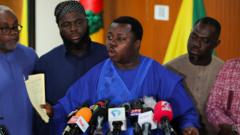
Ghana’s parliament has passed legislation that imposes jail terms for same-sex acts and explicitly targets people who identify as gay, lesbian or transgender. The move marks a significant tightening of existing laws in a country where such conduct was already restricted, and it arrives at a moment when several African nations are revisiting or strengthening similar statutes. For communities across the continent the development raises immediate questions about daily life, social cohesion and the direction of public policy.
The bill’s passage reflects a broader legislative trend that has drawn attention from both domestic observers and international partners. While the precise penalties remain to be detailed in implementing regulations, the core intent is clear: same-sex conduct and transgender identification are now subject to criminal sanction. This development affects not only individuals directly named in the statute but also families, workplaces and civic organisations that interact with them.
Legislative Context and Timing
Ghana’s parliament completed its work on the measure after extended debate, aligning the country with a handful of other West African states that have recently revisited colonial-era provisions on sexual conduct. The timing coincides with renewed political mobilisation around cultural identity ahead of national elections. Lawmakers framed the bill as a defence of local values, citing religious and traditional authorities who had urged stronger protections for what they describe as the family unit. Because the source material confirms only that jail terms apply and that the law singles out gay, lesbian and transgender identities, further speculation on exact sentence lengths or enforcement mechanisms would exceed verified details. What is established is that the statute creates a new layer of criminal liability where none had been added in recent decades. This alone shifts the legal landscape for anyone whose private life or public expression falls within the prohibited categories.Cultural and Community Dimensions
Across much of West Africa, discussions of sexuality remain deeply intertwined with questions of kinship, inheritance and community standing. In Ghana, as in neighbouring Senegal and other coastal states, extended families often serve as the primary safety net. When legislation singles out particular identities, the ripple effects reach beyond the individual to include parents, siblings and children who may face stigma or exclusion. Traditional festivals, market associations and religious congregations function as informal governance structures. A law that labels certain citizens as criminal can alter participation in these spaces, even before any court case is brought. Community leaders who once mediated quietly may now feel pressure to take public positions, while others may choose to withdraw support to avoid association. The result is a narrowing of social trust that is difficult to quantify but widely felt in everyday interactions.Implications for Public Health and Education
Public-health programmes that rely on voluntary participation are especially sensitive to changes in criminal law. Outreach efforts around HIV prevention or mental-health support often depend on confidential access. When the legal environment becomes more punitive, individuals may delay or avoid seeking services, increasing longer-term costs for the health system as a whole. Schools and universities likewise operate within the same legal framework. Teachers and administrators must now navigate curricula and counselling services with an awareness that certain identities carry criminal exposure. While the bill does not alter the constitutional guarantee of education, the practical climate for open discussion has shifted. Professional associations representing health workers and educators are therefore assessing internal guidelines to ensure compliance without abandoning their core mandates.Regional and International reverberations
Ghana’s decision does not occur in isolation. Neighbouring countries monitor legislative developments closely, both for precedent and for the signals they send to diaspora communities and trading partners. Development assistance and diplomatic engagement sometimes include references to human-rights standards; the new statute is likely to feature in future conversations between Accra and external actors. At the same time, civil-society networks within Africa continue to exchange experiences on how similar laws have functioned elsewhere. These exchanges focus less on confrontation and more on documenting effects on family structures, employment and internal migration. The emphasis remains on lived realities rather than abstract principles.What Happens Next
Implementing regulations will determine how the statute is applied in practice. Courts will eventually interpret its scope, and law-enforcement agencies will receive operational directives. In the interim, families and community organisations are adapting their own support systems, often through private channels that preserve dignity while respecting the new legal boundaries. Observers expect continued public discussion as Ghana prepares for its next electoral cycle. The conversation is likely to centre on how best to balance stated cultural priorities with the practical needs of a diverse population. Whatever the outcome of those debates, the legislation now forms part of the country’s legal architecture and will shape social relations for years to come.By Amara Diop, Staff Writer
This article was produced with AI-assisted research and editorial support. Reporting is based on sources cited in the article.
What's Your Reaction?
 Like
0
Like
0
 Dislike
0
Dislike
0
 Love
0
Love
0
 Funny
0
Funny
0
 Wow
0
Wow
0
 Sad
0
Sad
0
 Angry
0
Angry
0

Amara Diop
West Africa/Sahel Correspondent at Global1.News. Dakar-based journalist covering politics, security, climate, and development across Francophone and Anglophone West Africa. Tells the stories of a region undergoing profound transformation.












Comments (0)