
Garden Route Underwater: Second Monster Storm in a Month Triggers Level 8 Flood Warnings, Mass Evacuations in South Africa
Garden Route Underwater: Second Monster Storm in a Month Triggers Level 8 Flood Warnings, Mass Evacuations in South Africa Folks, if you've been scrolling past the headlines about South Africa's Garden Route, stop scrolling. Right now. Because what's happening along the Western and Eastern Cape coastline is not your typical rainy season — it's a full-blown crisis, and it's gett
Garden Route Underwater: Second Monster Storm in a Month Triggers Level 8 Flood Warnings, Mass Evacuations in South Africa
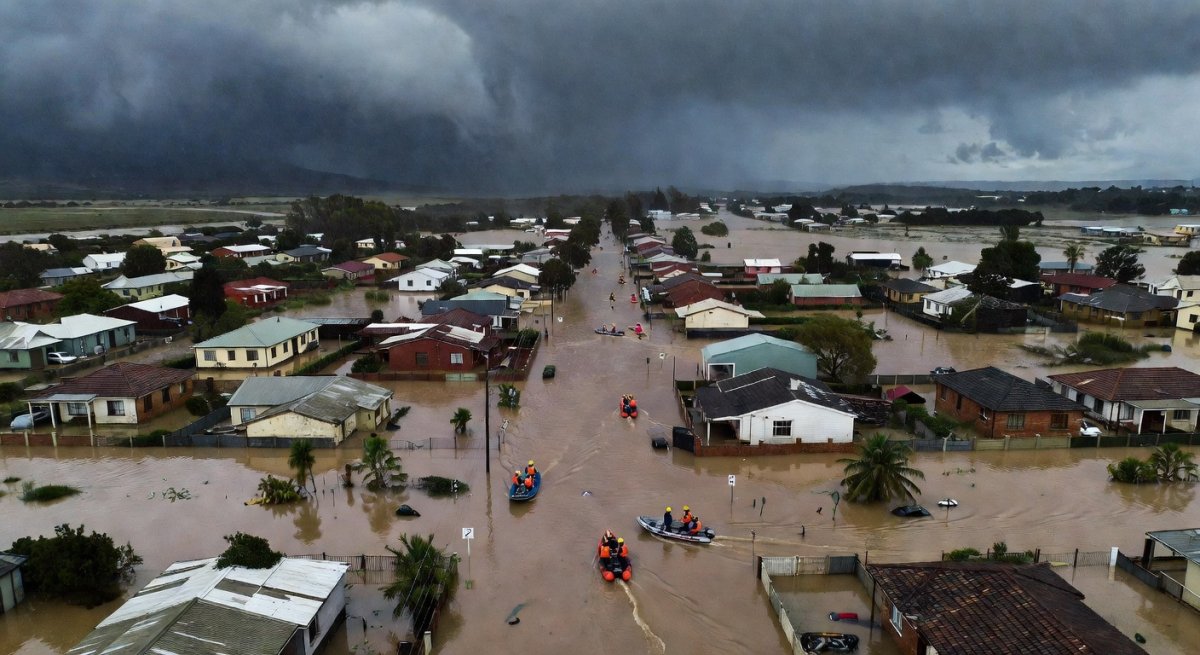
Folks, if you've been scrolling past the headlines about South Africa's Garden Route, stop scrolling. Right now. Because what's happening along the Western and Eastern Cape coastline is not your typical rainy season — it's a full-blown crisis, and it's getting worse by the hour.
A second major storm system in less than a month has slammed into the Garden Route region, and the South African Weather Service — SAWS, for those keeping score — has cranked the warning dial all the way up to Level 8. That's disruptive rainfall. That's the kind of alert that tells you: this is not a drill.
We're talking over 300 millimeters — that's nearly 12 inches — of rain in some areas. Roads washed out. Schools shuttered. Families evacuated from their homes in the middle of the night. And officials are warning that the worst may not be over yet.
Let's break down what's happening, why it matters, and what comes next.
The Storm That Won't Quit
Here's the gut punch: this is the SECOND major storm to hit the Garden Route in a matter of weeks. Back in early May 2026, a cut-off low-pressure system parked itself over the region and unloaded catastrophic rainfall that forced the South African government to declare a national disaster. Now, barely a month later, another cold front — packing hurricane-force winds and torrential rain — has rolled in off the Atlantic. The repetitiveness of these events is what has meteorologists genuinely concerned. Cut-off lows are notoriously difficult to predict, and when they stall over a region, the rainfall accumulation becomes catastrophic.
The numbers are stark. On June 2, SAWS issued a Level 8 warning for disruptive rain across the Western Cape, with specific focus on the Garden Route District Municipality — the stretch of coastline that includes tourist magnets like Knysna, George, Plettenberg Bay, and Mossel Bay. By June 3, Daily Maverick was reporting that the region was bracing for "more flooding as a second major storm hits in a month." The Citizen confirmed that 93 residents had already been evacuated, with more evacuations likely as water levels continued to rise.
Let me put that in perspective: 93 people forced out of their homes. That's 93 families. That's 93 stories of grabbing what you can and getting out before the water takes everything else. Some of these families were still recovering from the May floods when the second wave hit. The emotional toll of being displaced twice in one month — that's something no disaster statistic can fully capture.
Schools Closed, Roads Cut Off, Dams Overloaded
When a storm forces more than 120 schools to close across the Western Cape, you know this is serious. That's what happened. The Western Cape Education Department pulled the trigger, shutting down schools in the most affected areas because sending kids into classrooms when roads are flooding and buses can't run is not an option. SABC News reported that some schools in the Garden Route district remained closed even after the initial May storm passed, and now with this second system, the disruption to education is compounding.
Road closures across the Garden Route have been extensive. The N2 — the main artery connecting Cape Town to the eastern parts of the country — has been hit hard, with multiple sections closed due to flooding and debris. Secondary roads in and around Knysna and George have been reduced to rivers. The George Herald, a local paper that's been on top of this story since day one, has been posting near-constant updates about which routes are passable and which ones you should absolutely avoid. For residents in more remote areas, this isn't just an inconvenience — it's a lifeline that's been cut. Access to medical facilities, grocery stores, and emergency services has been severely limited in the worst-hit communities.
And then there's the dam situation. When you get 300mm of rain in a short period, the dams fill up fast — and some have already overflowed. The Watchers, a natural disaster monitoring site, reported that dam overflows were contributing to flash flooding downstream, adding another layer of danger to an already volatile situation. The combination of saturated ground from the May storms and fresh rainfall has created conditions where even moderate rain can trigger significant flooding — the sponge is already full.
Knysna, George, Plettenberg Bay — Ground Zero
Let me talk about Knysna specifically, because this town has been through a lot. In 2017, it was devastated by wildfires that tore through the area, destroying hundreds of homes and claiming lives. Now, nine years later, it's fighting floodwaters. The irony is brutal. The Knysna Lagoon, normally a beautiful centerpiece for tourism and recreation, has swollen dangerously, and authorities have warned residents in low-lying areas to be ready to move at a moment's notice. Moneyweb reported that a "huge storm batter[ed] Knysna," with local businesses boarding up and residents stacking sandbags at their doorsteps.
In George, the largest city in the Garden Route, stormwater systems have been overwhelmed. Streets that were dry in the morning were impassable by afternoon. SANParks — South Africa's national parks agency — issued a specific flood risk warning for the Garden Route National Park, telling visitors and locals to stay clear of river courses and low-lying trails. The national park, which draws tourists from around the world for its lush forests and coastal beauty, has been largely closed to visitors.
Plettenberg Bay, further east, has seen similar conditions. Beachfront properties are at risk. The local municipality has opened evacuation centers for displaced residents. IOL, one of South Africa's largest news outlets, reported that "severe storms have caused evacuations and road closures in both the Eastern and Western Cape." That's not just the Garden Route — it's a broader weather system wreaking havoc across multiple provinces. The Eastern Cape has seen its own share of flooding, with Algoa FM reporting that "thousands displaced as Eastern Cape floods worsen as rain continues."
The Economic Toll — Tourism Takes a Direct Hit
Let's talk money, because the Garden Route isn't just a pretty coastline — it's an economic engine for South Africa. The region is one of the country's top tourist destinations, contributing billions of rand annually to the local economy. Knysna alone sees hundreds of thousands of domestic and international visitors each year, drawn by the lagoon, the forests, the oyster farms, and the whale-watching.
When the N2 is closed, when the national park is shut down, when hotels are flooded and restaurants are underwater — that's not just a weather problem. That's an economic crisis. Small business owners along the Garden Route have been hit from both sides: first the COVID hangover, then load-shedding energy crises, and now back-to-back catastrophic storms. The Garden Route SPCA has been helping families and their animals pick up the pieces, as reported by Good Things Guy, but the economic recovery will take months, if not years.
Why This Keeps Happening — The Climate Connection
Alright, folks. I'm going to say the thing that needs to be said. You cannot have two catastrophic storms in one month — storms that trigger Level 8 warnings, a national disaster declaration, and mass evacuations — without asking some hard questions about what's changing in our atmosphere.
GroundUp, a South African nonprofit news outlet, ran an explainer titled: "What last week's storm says about climate change." And the answer, in short, is: a lot. Warmer ocean temperatures in the Agulhas Current are feeding more energy into weather systems. When cold fronts roll off the Atlantic, they're picking up more moisture and dumping it with greater intensity. This isn't a theory — it's observed data. Cut-off lows, like the ones that hit in May and this week, are becoming more frequent and more intense.
For the people of the Garden Route, that means a new reality: every rainy season carries the potential for disaster. And the infrastructure — roads, drainage systems, emergency services — was not built for this frequency of extreme events. The SAWS has been issuing increasingly urgent warnings, but warnings alone don't build flood walls. They don't upgrade stormwater systems. They don't relocate communities out of floodplains. That requires political will, funding, and planning — none of which move at the speed of climate change.
What's Being Done Right Now
The South African government, through the National Disaster Management Centre, has been coordinating response efforts. The May storm was already classified as a national disaster, which unlocked funding for relief and recovery. But with a second storm hitting before the first one was fully cleaned up, resources are being stretched thin. Global Times reported that the severe weather was "officially classified as a national disaster" back in May, and now the government is facing calls to extend and expand that declaration to cover the new damage.
Local municipalities have opened evacuation shelters. The Gift of the Givers, a prominent South African humanitarian organization, has been active in the region, distributing food, blankets, and supplies to displaced families. The SPCA has been helping animals and their owners — because in a flood crisis, pets get left behind too, and organizations like the Garden Route SPCA have been working to reunite families with their four-legged members. Emergency services have been stretched to their limits, with rescue crews working around the clock to reach stranded residents in the worst-hit areas.
The South African Weather Service continues to issue updates, and the public is being urged to monitor warnings, avoid travel in affected areas, and — this is the hard one — be ready to leave if told to do so.
What You Can Do
If you're watching this from outside South Africa and wondering if there's anything you can do — yes, there is.
First, share this story. The Garden Route floods are a major disaster with significant human impact, and the more people know about it, the more pressure there is for a robust response. Don't let this get buried in the news cycle. Post it. Share it. Talk about it.
Second, if you can, consider donating to relief organizations working on the ground. Gift of the Givers is one of the most trusted humanitarian groups in South Africa. They accept international donations and have a proven track record of getting aid where it's needed most. Every rand — or dollar — counts when families have lost everything.
Third, and this is the long-term one — pay attention to climate adaptation. What's happening in South Africa's Garden Route is a preview of what coastal communities everywhere are going to face more frequently. Flood defenses, early warning systems, and resilient infrastructure aren't optional anymore. They're survival necessities. If your local officials aren't talking about climate resilience, ask them why.
The people of Knysna, George, Plettenberg Bay, and Mossel Bay are resilient. They've survived fires, floods, and economic hardship. But resilience has its limits. What they need right now is not just grit — it's help. It's attention. It's the world not looking away while another extreme weather event upends lives.
I'm Jessica Ali, and this is Global 1 News. Stay safe, stay informed, and for the love of everything — stay out of floodwaters. They're deeper, faster, and more dangerous than you think.
By Jessica Ali, Staff Writer — Global 1 News 🔥
This article was produced with AI-assisted research and editorial support. Reporting is based on sources cited in the article.
What's Your Reaction?
 Like
0
Like
0
 Dislike
0
Dislike
0
 Love
0
Love
0
 Funny
0
Funny
0
 Wow
0
Wow
0
 Sad
0
Sad
0
 Angry
0
Angry
0

Editor-in-Chief at Global1.News. Atlanta-based journalist who cuts through the BS and tells it like it is. Lead anchor, host, and the voice you hear when the spin stops and the truth starts.












Comments (0)