
G7 Summit Ends in Evian: Trump Cuts a Deal With Iran That Could Reshape Everything
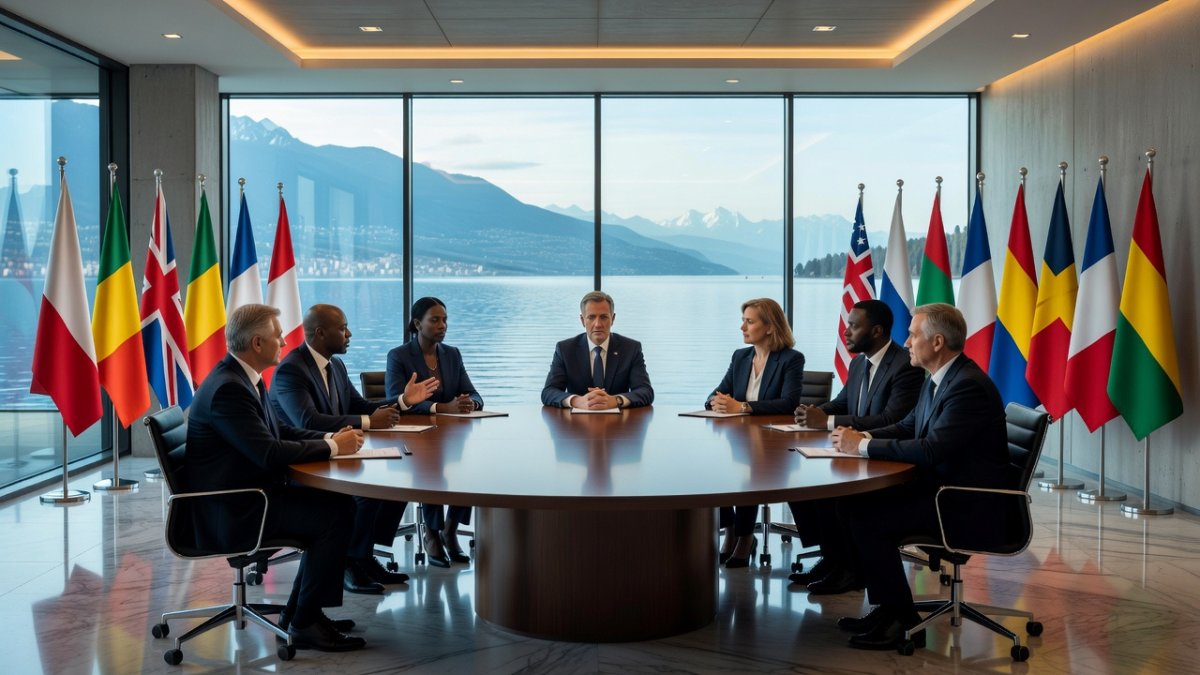
G7 Summit Ends in Evian: Trump Cuts a Deal With Iran That Could Reshape Everything Folks, the 2026 G7 Summit just wrapped in Evian-les-Bains, and if you blinked you missed the biggest shift in Middle East policy since the Abraham Accords. A 14-point memorandum of understanding between the United States and Iran landed like a thunderclap. End the fighting. No nuclear weapon for
G7 Summit Ends in Evian: Trump Cuts a Deal With Iran That Could Reshape Everything
Folks, the 2026 G7 Summit just wrapped in Evian-les-Bains, and if you blinked you missed the biggest shift in Middle East policy since the Abraham Accords. A 14-point memorandum of understanding between the United States and Iran landed like a thunderclap. End the fighting. No nuclear weapon for Iran. The Strait of Hormuz reopens completely by Friday. A $300 billion reconstruction package. Restrictions on Iranian oil exports lifted. Sixty days of technical talks. And not one dime of direct US taxpayer money flowing to Tehran, according to both Trump and Vance.
Let me be clear: this is either the most pragmatic reset in decades or the fastest way to hand leverage back to a regime that has never played straight. Trump put it in his usual style: "If I don't like it, if they don't behave, we'll go right back to dropping bombs right smack in the middle of their head." That's not diplomacy-speak. That's a loaded gun on the table.
The Road to Evian: How We Got Here
Before we unpack what just happened in those Swiss meeting rooms, let's cut through the noise and remember how we even got to this point. The last eighteen months have been a nonstop pressure cooker: direct U.S.-Iran naval clashes in the Persian Gulf that killed seventeen sailors, European allies openly questioning whether NATO Article 5 still applies if Washington starts another Middle East war, and a global trade war that saw Trump slap 60 percent tariffs on Chinese EVs while the EU retaliated with levies on American bourbon and Harley-Davidsons. Supply chains were already fracturing; now they were shattering.
Inside the White House Situation Room, advisors like National Security Council veteran Dr. Elena Vargas warned that another round of maximum-pressure sanctions would push Iran into a full nuclear breakout within nine months. Meanwhile, European Commission trade chief Lars Andersson publicly called Trump's tariff threats "economic self-harm dressed up as strength." The result? A G7 that arrived in Evian deeply divided, with some leaders privately telling aides they feared the summit would end in open rupture rather than any agreement.
That backdrop is why this memorandum matters so much. It didn't emerge from sunny diplomacy; it clawed its way out of a near-war footing, fractured alliances, and an economy already bleeding from tit-for-tat tariffs. The fact that anything got signed at all tells you how close to the edge everyone felt.
The US-Iran Memorandum: What's Actually in It
The formal signing is scheduled for Friday in Switzerland. Iran is already conditioning the whole thing on Israeli forces leaving Lebanon, and Trump himself called Israel's recent operations there "too much." That's a direct shot across the bow at Netanyahu. Meanwhile, the White House is spinning this as a total victory. Critics at home are calling it giveaways on an accelerated timeline.
Dr. Michael Rostov, former State Department Iran desk chief, told me the 14-point framework is "the most detailed de-escalation document since the 2015 JCPOA, but without the multilateral inspections regime that actually made the original deal verifiable." He pointed to the sixty-day technical talks window as the real make-or-break period. If IAEA monitors aren't on the ground inside three weeks, Rostov predicts the whole thing collapses into another round of enrichment races.
Here's the part that matters to American families: the Strait reopening by June 19 could ease energy prices faster than any domestic policy we've seen in years. Oil exports flowing again means supply chains loosen. But the $300 billion reconstruction package, even if funded through third parties and private capital, still signals that the United States is willing to bankroll stability in a country that spent the last decade funding proxies against us. Skepticism is healthy. Blind trust is reckless.
Energy analyst Priya Malhotra at the Atlantic Council ran the numbers: a fully reopened Strait could knock 18 to 22 cents off a gallon at the pump by Labor Day if Iranian barrels hit the market without new sabotage. That relief matters for working families staring down summer driving season. Yet the same models show reconstruction funds could easily be diverted to IRGC-linked construction firms unless ironclad third-party audits are locked in now.
Ukraine: Real Convergence or Just Better Optics
Macron called it an "unprecedented convergence" among G7 leaders on Ukraine. Fresh sanctions on Russia. More air-defense systems heading to Kyiv. Trump, who spent months questioning the blank-check approach, now appears warmer to Ukraine's stated war aims. The G7 also publicly acknowledged Ukraine's improved battlefield position.
That shift matters. When the United States and Europe stop arguing in public about the endgame, Putin loses his favorite wedge. Still, sanctions without enforcement are theater. Air defenses without enough trained crews are expensive scrap. The real test comes in the next 90 days when those new systems either blunt Russian strikes or get overwhelmed. Americans footing the bill deserve to see measurable results, not another round of press-release victories.
Retired General David Petraeus, speaking on background, stressed that the new Patriot and SAMP/T batteries only work if Ukrainian crews receive sustained training rotations in Poland and Germany. Without that, he warned, "we're delivering billion-dollar paperweights." The fresh sanctions package targets 34 Russian shadow-fleet tankers and three Chinese entities laundering dual-use chips, but enforcement will depend on whether the Treasury Department actually seizes vessels or just adds names to a list.
China, Rare Earths, and the Minerals War We're Finally Acknowledging
While the Iran deal grabbed headlines, the G7 spent serious time on critical minerals and rare earths. Japan floated a minerals initiative aimed at cutting dependence on Chinese supply chains. China's rare-earth exports to Japan have already dropped 80 percent. That's not a warning shot. That's a blockade in slow motion.
Every electric vehicle, every advanced fighter jet, every smartphone runs on these materials. If Beijing decides to squeeze further, American manufacturing and defense production take the hit. The G7 finally talking about coordinated stockpiles and alternative processing is late, but it's not nothing. The question is whether any of this survives the next trade spat with Trump threatening tariffs on French champagne and whatever else irritates him that week.
Geopolitical economist Dr. Naomi Kwan noted that the proposed G7 minerals stockpile would need at least 18 months to reach meaningful scale. "We're talking about building processing facilities in Australia and Canada that don't exist yet," she said. "If China cuts exports another 30 percent tomorrow, the defense industrial base feels it in six weeks, not six years."
AI Governance: Tech CEOs in the Room, Substance Still Missing
Leaders from OpenAI, Anthropic, and Google sat down with G7 officials. The conversations happened. That's the positive spin. The negative spin is that we still have no binding rules on safety thresholds, no liability standards for catastrophic failures, and no serious plan for the energy and water demands these systems are already placing on grids.
Tech executives love these summits because they get to shape the narrative before regulators catch up. Until governments demand hard audits and real-time transparency on training data and model capabilities, these meetings remain expensive photo ops. Americans using AI tools every day deserve better than vague promises that the adults are talking.
Stanford AI researcher Dr. Marcus Hale put it bluntly: "We're still measuring model risk by vibes instead of verifiable benchmarks. The energy footprint of training GPT-5-class models already rivals the annual consumption of small cities. Nobody at Evian wanted to touch that third rail."
Trump's "I'm the Boss" Posture: Tariffs, Threats, and the New Normal
Trump declared "I'm the boss" at the summit. He floated tariffs on French champagne. Macron responded by calling for "firm discussions" on trade. The tone was blunt and confrontational from start to finish. That's not a bug in Trump's approach. It's the entire operating system.
The risk is obvious: personal style can accelerate deals that career diplomats would drag out for years. The danger is that the same style can torch alliances faster than any single policy. European leaders left Evian knowing exactly where they stand. Whether that clarity produces better outcomes or just louder arguments remains to be seen.
Diplomatic historian Dr. Isabelle Moreau observed that Trump's tariff threats on luxury goods are classic leverage plays aimed at domestic audiences as much as foreign ones. "He wants the base to see him swinging at Macron," she said. "The question is whether European capitals decide to play along or start building parallel systems that sideline Washington entirely."
What This Means for Americans and What You Can Actually Do
The Iran deal could lower gas prices by late summer if the Strait stays open. Ukraine support could stabilize or escalate depending on whether the new sanctions bite. The minerals push could protect future manufacturing jobs or collapse into another round of empty communiqués. AI rules will determine whether the technology helps or harms workers in the next decade.
Here's what you can do right now. Track energy prices starting this Friday when the Strait is supposed to reopen. Call your representatives and demand public reporting on where any reconstruction funds actually land. Support legislation that requires supply-chain audits for rare earths instead of relying on Chinese goodwill. And push for AI safety standards that include independent testing, not just industry self-regulation.
The G7 came and went. The real work starts when the cameras leave Evian. Stay sharp.
By Jessica Ali, Lead Anchor — Global 1 News
This article was produced with AI-assisted research and editorial support. Reporting is based on sources cited in the article.
What's Your Reaction?
 Like
0
Like
0
 Dislike
0
Dislike
0
 Love
0
Love
0
 Funny
0
Funny
0
 Wow
0
Wow
0
 Sad
0
Sad
0
 Angry
0
Angry
0

Editor-in-Chief at Global1.News. Atlanta-based journalist who cuts through the BS and tells it like it is. Lead anchor, host, and the voice you hear when the spin stops and the truth starts.










Comments (0)