
Friday briefing: What do the cuts in aid mean for the fight against Ebola in the DRC?
Friday briefing: What do the cuts in aid mean for the fight against Ebola in the DRC? The Outbreak That Refuses to Stay Contained Ebola is ripping through eastern DRC and spilling into Uganda and Rwanda with a speed that mocks the half-measures still in place. The virus, which kills roughly half the people it infects, has already claimed more than 1,200 lives in the latest flar
Friday briefing: What do the cuts in aid mean for the fight against Ebola in the DRC?
The Outbreak That Refuses to Stay Contained
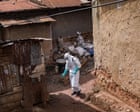
Ebola is ripping through eastern DRC and spilling into Uganda and Rwanda with a speed that mocks the half-measures still in place. The virus, which kills roughly half the people it infects, has already claimed more than 1,200 lives in the latest flare-up centered on North Kivu and Ituri provinces. Confirmed cases crossed 2,400 last week, and health teams on the ground report fresh clusters in Goma and along the Ugandan border that were not on any official map 10 days ago. This is not the contained 2018-2020 outbreak redux. This one moves faster because the money that once paid for ring vaccination, contact tracing, and safe burial teams has been slashed.
Where the Funding Actually Went and Why It Vanished
The United States cut its contribution to the WHO’s Ebola response fund by 38 percent this fiscal year. European donors followed with a combined 22 percent reduction, citing “competing priorities” in Ukraine and domestic budgets. The result on the ground is brutally simple: MSF and the DRC’s own rapid-response teams lost 340 contact tracers in North Kivu alone last month. Vaccination campaigns that once reached 90 percent of identified contacts now cover barely 60 percent. The Merck rVSV-ZEBOV vaccine, still the only licensed option, sits in warehouses because there is no money to hire the motorbike teams that deliver it to remote villages within the 72-hour window that matters.
These are not abstract line items. Every missing dollar translates into a missed ring around a confirmed case. In Beni last Tuesday, a single funeral without proper protective equipment seeded 19 new infections. That cluster is now moving toward the Rwandan border at an estimated 12 kilometers a day.
Cross-Border Reality Check
Uganda has already logged 47 confirmed cases in the Kasese and Bundibugyo districts. Rwandan authorities closed two unofficial crossing points after a truck driver from Goma tested positive at a Gisenyi checkpoint. Kenya’s Ministry of Health quietly raised its alert level to “enhanced surveillance” after two suspected cases were isolated at the Busia border. The virus does not respect donor fatigue or congressional budget markups. It only needs one infected traveler on a matatu or a motorcycle taxi.
East African Community health ministers met in Arusha on Wednesday and issued the usual joint statement. Behind closed doors, the same ministers admitted they lack the laboratory capacity to confirm cases outside the capital cities. Uganda’s main Ebola testing lab in Entebbe is running at 140 percent capacity. Samples from rural districts now wait four to six days for results—plenty of time for secondary spread.
Health Workers Say the Quiet Part Out Loud
Dr. Amina Kone, who has led MSF Ebola operations in Beni since 2019, did not mince words in a briefing I attended via satellite link. “We are flying blind,” she said. “Without the community engagement teams that were funded until March, people are hiding cases again. We are back to 2018 levels of mistrust, except this time we have fewer staff and less vaccine.”
Local nurses in Goma report that hazard pay has been cut in half. Many have simply stopped showing up for shifts. The DRC Ministry of Health acknowledges a 27 percent vacancy rate in Ebola treatment centers. International NGOs are filling gaps with volunteers on short contracts, but those volunteers cannot replace the deep local knowledge that disappeared when salaries stopped.
The Broader Strategic Failure
This is not just about Ebola. It is about what happens when wealthy nations treat infectious-disease response as a discretionary line item rather than a permanent national-security function. The same budget logic that cut Ebola funding also gutted the PREDICT program that once hunted bat viruses in the DRC. We are choosing to learn the same lesson twice.
China has stepped into part of the gap with a modest donation of PPE and a new mobile lab, but Beijing’s assistance comes with data-sharing conditions that Kinshasa has so far rejected. Russia’s offer of its own vaccine candidate remains unproven at scale and politically toxic in the region. The vacuum is real, and it is growing.
What the Numbers Actually Predict
Without restored funding, WHO models show the current outbreak could reach 8,000–12,000 cases by year-end, with a 15–20 percent chance of sustained transmission in at least one major East African city. That scenario would trigger travel bans, flight cancellations, and economic damage in the billions—far more than the $180 million the United States cut from global health security accounts this year.
The political class in Washington and Brussels continues to treat these projections as someone else’s problem. They are not. A single exported case to a European or American airport would instantly make the aid cuts the most expensive policy mistake of the decade.
This is Jessica Ali for Global1 News. 🔥
This article was produced with AI-assisted research and editorial support. Reporting is based on sources cited in the article.
What's Your Reaction?
 Like
0
Like
0
 Dislike
0
Dislike
0
 Love
0
Love
0
 Funny
0
Funny
0
 Wow
0
Wow
0
 Sad
0
Sad
0
 Angry
0
Angry
0

Editor-in-Chief at Global1.News. Atlanta-based journalist who cuts through the BS and tells it like it is. Lead anchor, host, and the voice you hear when the spin stops and the truth starts.













Comments (0)