
Fox's $787.5 Million Reckoning: Inside the Dominion Defamation Case That Nearly Went to Trial
The Week That Nearly Changed Media History In mid-April 2023, the Dominion Voting Systems defamation lawsuit against Fox News stood on the brink of a full trial in Wilmington, Delaware. Jury selection wrapped on Thursday with 300 potential jurors summoned to Courtroom 7E. The presiding judge observed that there were more than enough jurors available to begin proceedings the fol
The Week That Nearly Changed Media History
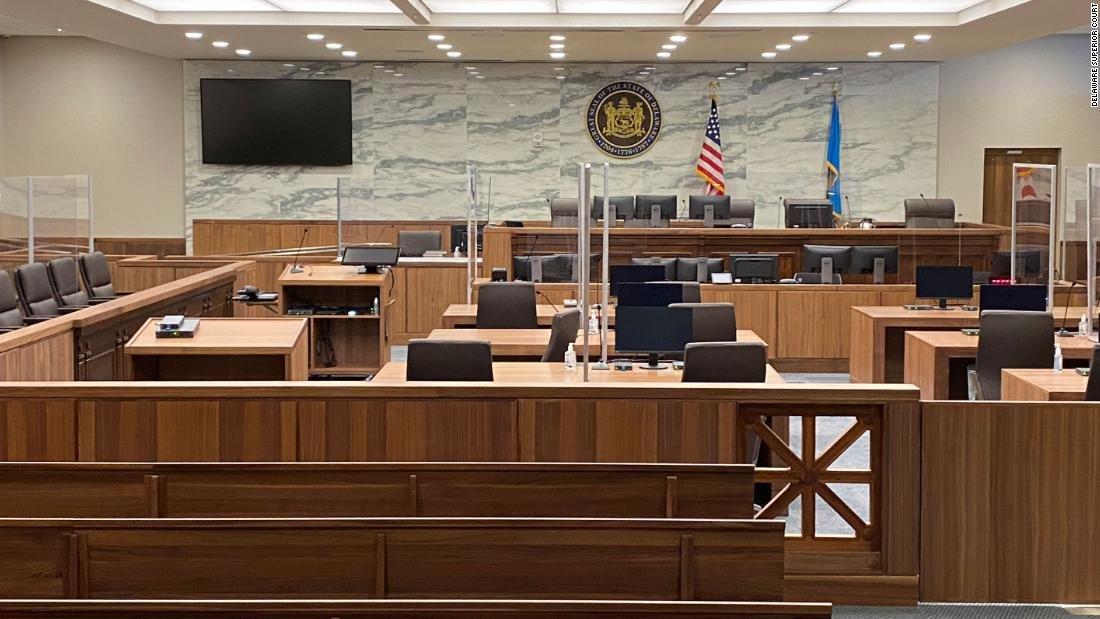
In mid-April 2023, the Dominion Voting Systems defamation lawsuit against Fox News stood on the brink of a full trial in Wilmington, Delaware. Jury selection wrapped on Thursday with 300 potential jurors summoned to Courtroom 7E. The presiding judge observed that there were more than enough jurors available to begin proceedings the following Monday. All signs pointed to opening arguments in what would have been the largest media defamation case in American history.
That trial never occurred. On April 18, 2023, the parties announced a $787.5 million settlement, the largest defamation payout in U.S. history. The abrupt resolution closed a chapter that had threatened to expose years of internal Fox communications and on-air statements about the 2020 election. What remained was a vivid snapshot of how close the network came to facing public scrutiny under oath.
The moment crystallized a rare instance when a major cable outlet could no longer rely on deflection. Dominion’s evidence had already forced pretrial rulings that limited Fox’s usual defenses. The courtroom setting promised to strip away the insulation that had protected the network for more than two years.
Image: Reuters / CNN
How Fox Dodged Accountability for Years
For more than two years after the 2020 election, Fox News deflected Dominion’s allegations through on-air commentary and legal maneuvers. Hosts continued to question the integrity of Dominion machines even as internal messages revealed private skepticism. The network treated the lawsuit as another partisan attack rather than a direct challenge to its reporting practices.
That strategy worked in the political arena but faltered once discovery produced emails and text messages from top executives and talent. Rupert Murdoch, Fox Corporation’s chairman, and CEO Suzanne Scott appeared in depositions that documented their awareness of the claims’ weakness. The contrast between private doubts and public amplification became central to Dominion’s case.
By the time jury selection began, the pattern of deflection had already cost Fox significant credibility with the court. The judge’s impatience during pretrial hearings signaled that standard media defenses would receive little deference once testimony started.
The $1.6 Billion Claim That Forced a Reckoning
Dominion’s $1.6 billion lawsuit alleged that Fox knowingly broadcast false claims that its voting machines had rigged the 2020 presidential election. Specific segments on multiple programs asserted that Dominion software switched votes from Donald Trump to Joe Biden. Those statements were presented as factual reporting rather than opinion.
The scale of the suit reflected both the financial harm Dominion claimed and the unprecedented nature of the allegations. No other media defamation case had sought damages in that range against a national cable network. The complaint cited dozens of broadcasts in the weeks after the election that repeated the rigging narrative without evidence.
Once internal communications surfaced, the gap between what Fox executives knew and what aired became difficult to ignore. The lawsuit transformed from a routine business dispute into a test of whether a news organization could be held responsible for amplifying demonstrably false election claims.
Murdoch, Carlson, Hannity and the Evidence Trail
Depositions and documents placed Rupert Murdoch, Suzanne Scott, Tucker Carlson, and Sean Hannity at the center of the evidence trail. Messages showed hosts and producers privately expressing disbelief in the fraud allegations while continuing to platform guests who promoted them. Carlson and Hannity, in particular, appeared in texts that questioned the credibility of the claims they discussed on air.
Murdoch’s own testimony acknowledged awareness that some of the statements lacked factual support. Scott, as CEO, received regular briefings on the litigation yet the network maintained its editorial course. These records formed the backbone of Dominion’s argument that Fox acted with actual malice.
The evidence trail made clear that the decision to air the claims was not the result of isolated mistakes. It reflected institutional choices made at the highest levels of the organization over an extended period.
The Courtroom Rules Fox Could Not Escape
Once inside Courtroom 7E, Fox would have operated under strict evidentiary rules rather than the looser standards of cable commentary. The judge had already issued rulings that narrowed the scope of permissible defenses. Pretrial proceedings demonstrated that the usual “no spin zone” protections would not apply to statements presented as news.
Jury selection itself underscored the shift. Three hundred citizens were summoned, and the court determined there were more than enough qualified individuals to empanel a panel capable of weighing complex evidence. That process removed the case from the echo chamber of partisan media and placed it before ordinary Delaware residents.
The courtroom environment promised to require Fox witnesses to answer direct questions about internal communications without the ability to pivot to political talking points. That constraint represented the most significant departure from the network’s prior experience with lawsuits.
Settlement Day: The $787.5 Million Question
On April 18, 2023, the parties announced the $787.5 million settlement before opening arguments could begin. The figure represented the largest defamation settlement in U.S. history and avoided a verdict that could have exceeded the original $1.6 billion demand. Dominion received substantial compensation without the uncertainty of a jury decision.
For Fox, the payment closed the immediate legal threat but left unanswered questions about editorial oversight. The network avoided the spectacle of its top executives and hosts testifying under oath about the gap between private knowledge and public statements. The settlement preserved some insulation even as it acknowledged the cost of the earlier broadcasts.
The resolution also set a precedent for future plaintiffs considering similar claims against large media companies. The size of the payout signaled that reputational and financial exposure could no longer be dismissed as a manageable cost of doing business.
What the Dominion Case Still Means for Media Accountability
The Dominion litigation demonstrated that internal communications can override traditional protections when false statements cause measurable harm. The April 2023 jury selection process showed that courts are willing to empanel ordinary citizens to evaluate complex media cases when the evidence warrants it. That precedent remains relevant for any outlet that treats election integrity claims as routine content.
The settlement did not produce a judicial finding of liability, yet the record of private doubts versus public assertions stands as a cautionary document. Media organizations that amplify unverified allegations now face heightened risk that discovery will expose inconsistencies between editorial choices and internal assessments.
Ultimately, the case that nearly reached opening arguments in Courtroom 7E forced a reckoning with the limits of deflection. While the trial itself never occurred, the $787.5 million outcome underscored that accountability can arrive through settlement when the evidence trail is sufficiently clear. The episode continues to shape expectations for how major newsrooms handle politically charged claims.
By Jessica Ali, Staff WriterThis article was produced with AI-assisted research and editorial support. Reporting is based on sources cited in the article.
What's Your Reaction?
 Like
0
Like
0
 Dislike
0
Dislike
0
 Love
0
Love
0
 Funny
0
Funny
0
 Wow
0
Wow
0
 Sad
0
Sad
0
 Angry
0
Angry
0

Editor-in-Chief at Global1.News. Atlanta-based journalist who cuts through the BS and tells it like it is. Lead anchor, host, and the voice you hear when the spin stops and the truth starts.















Comments (0)