
Twin earthquakes strike Venezuela near Caracas: M7.2 and M7.5 doublet devastates capital
In the sweltering afternoon heat of June 24, 2026, María González clutched her young daughter as the ground beneath their modest hillside home in Caracas’s San Bernardino neighborhood began to roar like a freight train. The 38-year-old mother had just returned from the market when the first violent jolt struck, followed seconds later by an even more ferocious lurch that sent co
In the sweltering afternoon heat of June 24, 2026, María González clutched her young daughter as the ground beneath their modest hillside home in Caracas’s San Bernardino neighborhood began to roar like a freight train. The 38-year-old mother had just returned from the market when the first violent jolt struck, followed seconds later by an even more ferocious lurch that sent concrete walls cracking around them. Venezuela’s location along the restless boundary where the Caribbean Plate grinds against the South American Plate has long made such terror a latent possibility, yet the added stresses of intensifying climate-driven rainfall on already fragile slopes have heightened landslide risks in the very barrios where millions of Latin Americans live. This human story of survival amid geological fury echoes across the region, from Mexico’s Pacific coast to Chile’s Andean spine.
Deadly Doublet Devastates Venezuela: 7.5 Quake Leaves Caracas in Ruins
Caracas, Venezuela – June 25, 2026 — Article body starts here..
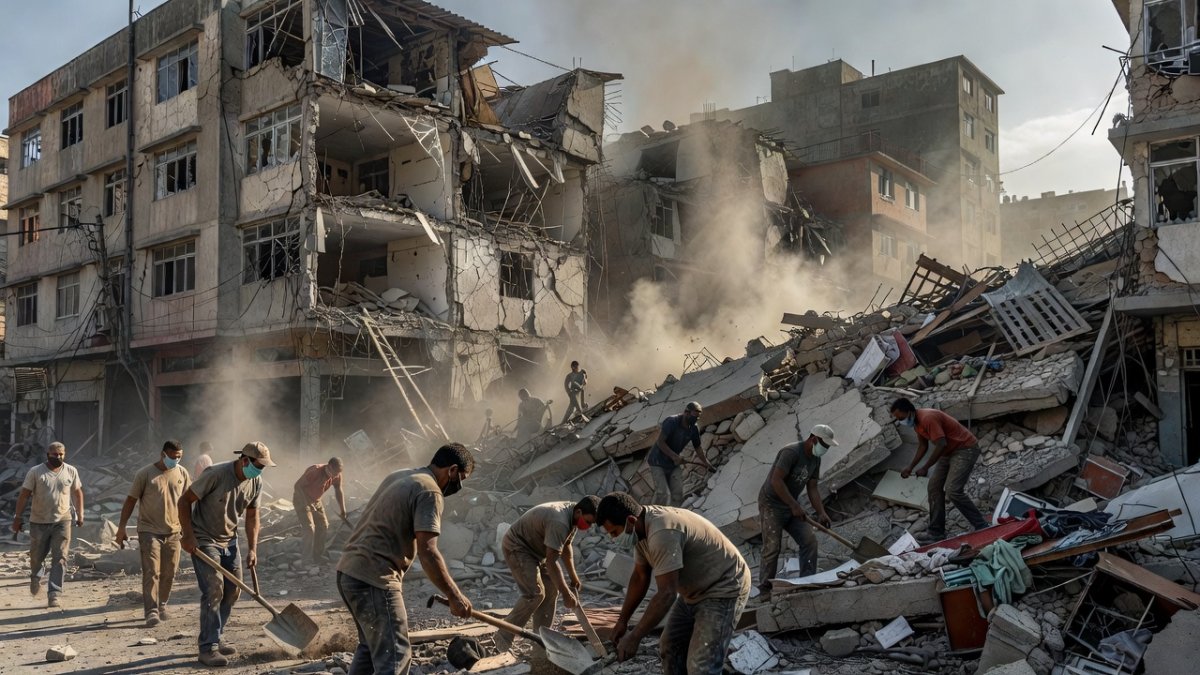
The Seismic Doublet — What Happened Beneath Venezuela
The June 24, 2026 Venezuela earthquake doublet began at 3:17 p.m. local time when a magnitude 7.2 foreshock ruptured along the Boconó Fault system near Morón, straddling Yaracuy and Carabobo states roughly 100 to 160 kilometers west of Caracas. Just 39 to 60 seconds later, the mainshock of magnitude 7.5 struck at a shallow depth between 10 and 22 kilometers, unleashing far greater energy. The United States Geological Survey immediately classified the sequence as a “severe seismic doublet sequence,” noting how the brief interval between events prevented any meaningful public warning. Right-lateral strike-slip motion with transpression along the Caribbean–South American Plate boundary generated intense ground acceleration that propagated eastward into the capital. FUNVISIS, Venezuela’s 24-hour seismic monitoring agency known as SomosFunvisis, recorded hundreds of aftershocks within the first twelve hours. QLARM rapid-loss models projected fatality ranges of 230 to 1,800 for a standalone M7.0 and 2,000 to 12,000 for an M7.5, underscoring the lethal potential of shallow events in densely populated Latin American corridors. The USGS PAGER system issued a Red Alert, stating that high casualties and extensive damage were probable and that a widespread disaster was likely. These numbers reflect not only raw magnitude but the chronic infrastructure fragility shared by many nations along the Andean and Caribbean margins.
Caracas Under Siege — Collapse and Rescue
Within minutes of the doublet, entire apartment blocks in Altamira, San Bernardino, and Los Palos Grandes pancaked into rubble. Rescue teams converged on Edificio Petunia, where neighbors reported dozens trapped beneath twisted rebar and concrete slabs. Using only shovels, picks, and ropes, volunteers worked through the night while aftershocks continued to rattle the ruins. Diosdado Cabello described the affected zones as “complicated” and “alarming,” acknowledging that split highways and buckled roads had severed access routes into the capital. At Simón Bolívar International Airport in Maiquetía, ceilings collapsed and runways suffered structural damage, grounding all flights. Shattered glass rained across downtown avenues, and informal hillside barrios suffered landslides that buried homes already weakened by years of neglect. A preliminary civil-defense report tallied 236 to 300 fatalities, more than 2,000 injuries, and at least 80,000 families left homeless—an estimate still considered unconfirmed as search operations expand. The scene recalled the 2010 Haiti earthquake, where similar infrastructure vulnerability turned a moderate seismic event into a national catastrophe. International aid discussions have begun, yet power outages continue to cripple coordination among responders across the Caracas metropolitan area and coastal states.
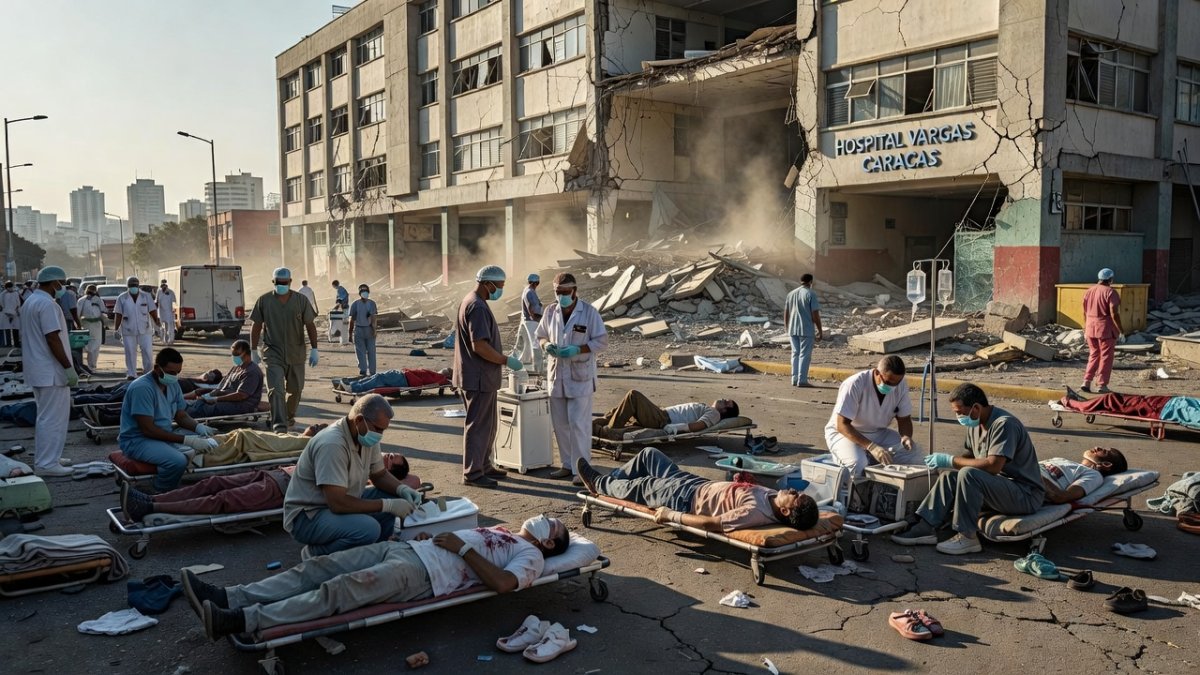
Hospitals at Breaking Point — A Health System in Crisis
Caracas’s Pérez de León hospital quickly overflowed, forcing staff to treat patients on stretchers lined along sidewalks under the open sky. The Puerto Cabello hospital was fully evacuated after structural cracks appeared in its main wing. Pre-existing shortages of medicines, surgical equipment, reliable electricity, and ambulances—longstanding challenges across much of Latin America—were critically exacerbated by the loss of backup generators and blocked supply roads. Doctors reported performing amputations by flashlight while aftershocks shook operating tables. The tsunami advisory issued for Venezuela’s coast, Aruba, Bonaire, Curaçao, Puerto Rico, and the Virgin Islands was lifted within hours, yet the coastal evacuation had already strained scarce medical resources. With 80,000 families displaced, health officials fear secondary outbreaks of waterborne disease in crowded shelters. The doublet’s shallow depth amplified shaking in urban cores, turning hospitals into both victims and lifelines. Regional comparisons with Chile’s 2010 Maule quake and Mexico’s 2017 Puebla event highlight how robust pre-positioned medical stockpiles can reduce mortality; Venezuela’s gaps now stand in stark relief.
Seismic History and Tectonic Reality — What Makes Venezuela Vulnerable
The 2026 doublet eerily mirrors the catastrophic 1812 Caracas doublet that killed tens of thousands and reshaped colonial Venezuela. Both sequences occurred along the same Boconó Fault system where the Caribbean Plate slides past the South American Plate in a right-lateral strike-slip regime punctuated by transpression. Shallow depths between 10 and 22 kilometers allow seismic waves to reach the surface with minimal attenuation, a geological reality shared by many Latin American nations from Colombia’s coffee axis to Peru’s coastal deserts. FUNVISIS has monitored this boundary continuously, yet the 39-to-60-second interval between the M7.2 foreshock and M7.5 mainshock left no time for meaningful public alerts. Historical records show that Caracas has endured repeated doublet events, each exposing the same vulnerabilities: steep hillside settlements and aging mid-rise construction. The USGS Red Alert correctly anticipated widespread destruction, confirming that tectonic setting alone does not dictate disaster—human settlement patterns do. As climate change intensifies rainfall on these slopes, the interplay between seismic and hydrometeorological hazards grows more dangerous for the entire Caribbean–Andean corridor.
Building Codes vs. Ground Truth — The Enforcement Gap
Venezuela maintains COVENIN 1756-1:2019 seismic design standards, yet enforcement gaps remain widespread, particularly in informal barrios where residents build without permits or engineering oversight. The doublet exposed this divide: engineered structures in central Caracas suffered partial collapses, while hillside dwellings slid into ravines. Similar enforcement shortfalls plague much of Latin America, from Ecuador’s coastal cities to Guatemala’s volcanic highlands. The 80,000 families now homeless represent the human cost of these regulatory failures. Rescuers continue working with rudimentary tools because heavier equipment cannot reach damaged zones along split highways. International comparisons reveal that nations investing in retrofits and strict code compliance—such as Chile after 2010—dramatically reduce fatalities. Venezuela’s preliminary civil-defense figures of 236 to 300 deaths may rise as rubble clearance proceeds, underscoring how code-on-paper fails when political will and resources lag. The doublet serves as a regional wake-up call that building standards must be matched by consistent inspection and community education.
What This Means for Latin America — Regional Earthquake Preparedness
The Venezuela doublet reverberates beyond national borders, reminding every Latin American capital that shallow strike-slip events along plate boundaries can overwhelm even well-prepared systems. Discussions of international aid now include offers of search-and-rescue teams, medical supplies, and temporary shelter from neighboring countries that have faced their own seismic crises. QLARM models and USGS PAGER alerts provide rapid situational awareness, yet local response capacity remains the decisive factor. Power outages that disrupted rescue communications highlight the need for redundant satellite systems across the region. Informal settlements on steep terrain, common from Rio de Janeiro’s favelas to Lima’s pueblos jóvenes, face identical landslide risks when shaking coincides with heavy rains. The 2010 Haiti parallel is unavoidable: both nations suffered disproportionate losses because chronic underinvestment in infrastructure met sudden geological violence. Regional forums such as the Latin American and Caribbean Disaster Risk Reduction Network must accelerate joint training and equipment prepositioning if future doublets are to claim fewer lives.
The Bottom Line — Aftershocks and the Road to Recovery
Aftershocks continue to jolt the Caracas basin, prompting officials to urge residents to remain in open areas rather than returning to damaged homes. The preliminary toll—236 to 300 fatalities, over 2,000 injured, and 80,000 families homeless—will likely climb as search operations reach deeper rubble. Hospitals remain overwhelmed, and the health system’s pre-existing frailties have been laid bare. Yet the same tectonic forces that produced the doublet also offer a chance for renewed regional solidarity. International aid discussions are underway, and the lessons from 1812, 2010 Haiti, and countless other Latin American quakes must finally translate into enforceable building codes, hillside stabilization, and robust emergency medical networks. Venezuela’s pain today is a warning for the entire hemisphere: when plates shift, preparation determines whether communities fracture or endure. Recovery will be measured not only in rebuilt homes but in the political will to close the gap between seismic science and everyday safety for millions living along the continent’s restless edges.
By Elena Vasquez, Staff WriterThis article was produced with AI-assisted research and editorial support. Reporting is based on sources cited in the article.
What's Your Reaction?
 Like
0
Like
0
 Dislike
0
Dislike
0
 Love
0
Love
0
 Funny
0
Funny
0
 Wow
0
Wow
0
 Sad
0
Sad
0
 Angry
0
Angry
0

Latin America Correspondent at Global1.News. Based in Mexico City, covering politics, economics, energy, and culture across the region. Brings an on-the-ground perspective to stories spanning from the Rio Grande to Patagonia.












Comments (0)